PHEV Home Charging Guide: Is a 3-Pin / Schuko Socket Safe, Do You Need a Wallbox, and Does DC Fast Charging Matter?
Can you safely charge a PHEV from a standard domestic socket? A deep technical breakdown of continuous 10A thermal limits, 8-12 hour charging times for 20+ kWh packs, dedicated 7.4/11 kW Wallbox benefits, and the emerging role of 50 kW DC fast charging.
For drivers exploring or recently taking delivery of a plug-in hybrid electric vehicle (PHEV), the most frequent questions on search engines revolve around charging infrastructure, home socket safety, and charging speeds.
Unlike pure battery electric vehicles (BEVs) with colossal 60–100 kWh battery packs where trickle charging is impractical, modern 2026 PHEVs feature traction batteries ranging between 18 kWh and 34 kWh. This raises immediate practical questions: "Can I just plug my car into a standard 230V wall socket? Is it a fire hazard, or do I strictly need a dedicated home Wallbox?"
In this comprehensive engineering guide, we examine the physical limits of 3-pin / Schuko household sockets, the electrical safety of dedicated AC Wallboxes, and the emerging game-changer in European PHEVs: DC CCS2 fast charging.
1. Domestic Household Sockets (3-Pin / Schuko): The Realities of 2.3 kW
Most automotive manufacturers bundle a portable "Mode 2" emergency charging brick in the trunk designed for standard wall outlets.
A. Power Delivery & Charging Times
European domestic sockets operate at 230V. To avoid overloading house wiring, the in-cable control box throttles electric current to a continuous 10 Amperes:
$$Charging Power = 230 V × 10 A ≈ 2.3 kW$$
Factoring in normal thermal dissipation and onboard charger conversion losses (~10–12%), effective power delivered into the battery chemistry sits around 2.0 kW.
| Net Usable Battery | Reference Model | Charge Time via 2.3 kW Socket (0% → 100%) |
|---|---|---|
| 13.8 kWh | Hyundai Santa Fe / Kia Sorento | ~7.5 Hours |
| 18.3 kWh | BYD Seal U DM-i | ~10.0 Hours |
| 19.7 kWh | VW Tiguan eHybrid / Škoda Superb iV | ~10.8 Hours |
| 25.7 kWh | Volkswagen Passat eHybrid | ~14.0 Hours |
| 34.5 kWh | Jaecoo 8 / Omoda 9 Super Hybrid | ~19.0 Hours |
B. Thermal Safety & Fire Hazards
Standard household sockets were engineered to power high-draw appliances like kettles or vacuum cleaners for 10 to 20 minutes, not to sustain a heavy 10A continuous draw for 10 to 14 consecutive hours.
- Persistent high currents can cause thermal fatigue in domestic socket terminals.
- Older residential installations with 1.5 $mm²$ wire cross-sections may overheat behind wall cladding.
- Voltage drops can trigger nuisance circuit breaker trips.
Engineering Rule: Treat domestic socket charging as an emergency backup. When using a household plug, dial down the charge rate on your vehicle touchscreen to 8A or 6A unless you have had the circuit professionally inspected.
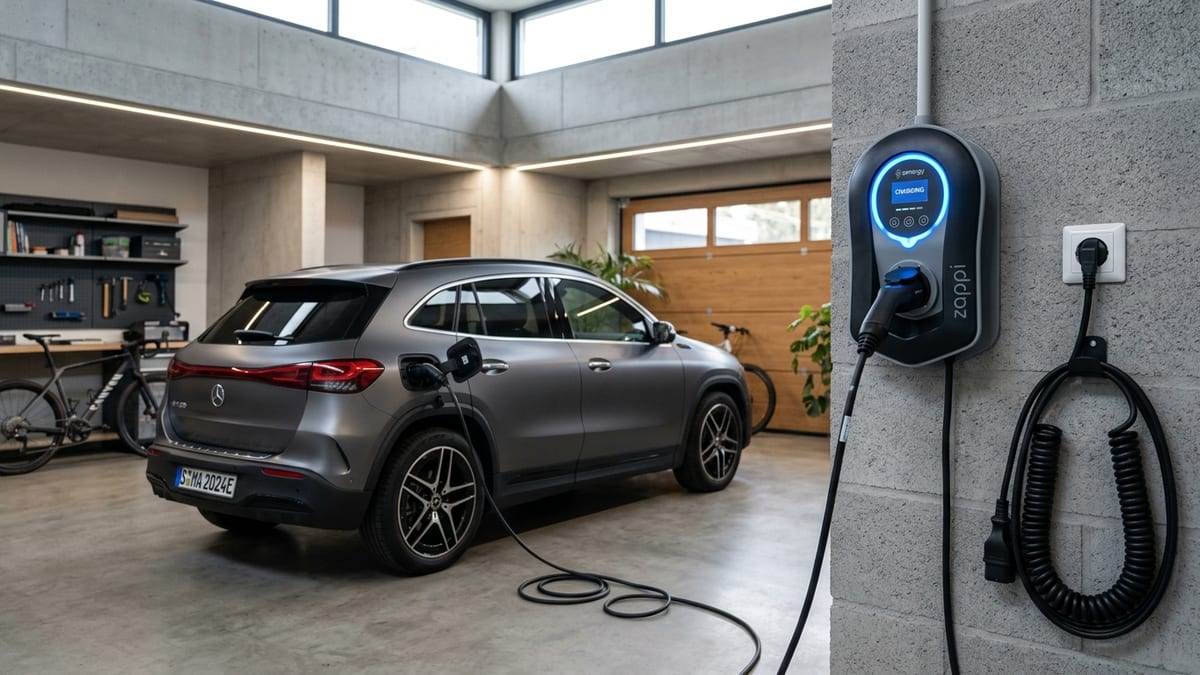
2. Dedicated AC Wallbox (7.4 kW / 11 kW): The Safety & Speed Standard
A dedicated AC Wallbox is hardwired straight to your consumer distribution unit with dedicated heavy-duty cabling (4–6 $mm²$) and Type B RCD protection.
- Single-Phase 7.4 kW (32A): Replenishes a 19.7 kWh battery pack in ~2.5 hours.
- Three-Phase 11 kW (3x16A): If your property has three-phase power and your vehicle features an 11 kW On-Board Charger (OBC), replenishment drops to just ~1 hour 45 minutes.
3 Major Benefits of a Home Wallbox:
- Uncompromised Fire Safety: Certified for continuous heavy current draws without thermal stress.
- Off-Peak Electricity Savings: Schedule overnight charging between 01:00 and 06:00 to capitalize on cheap EV tariffs, cutting fuel running costs by up to 70% versus petrol.
- Mains Pre-Conditioning: Warm the cabin and battery pack on freezing winter mornings using grid electricity before unplugging, preserving up to 25% of your pure electric range.
3. Next-Generation DC Fast Charging (CCS2 50 kW): A Game-Changer
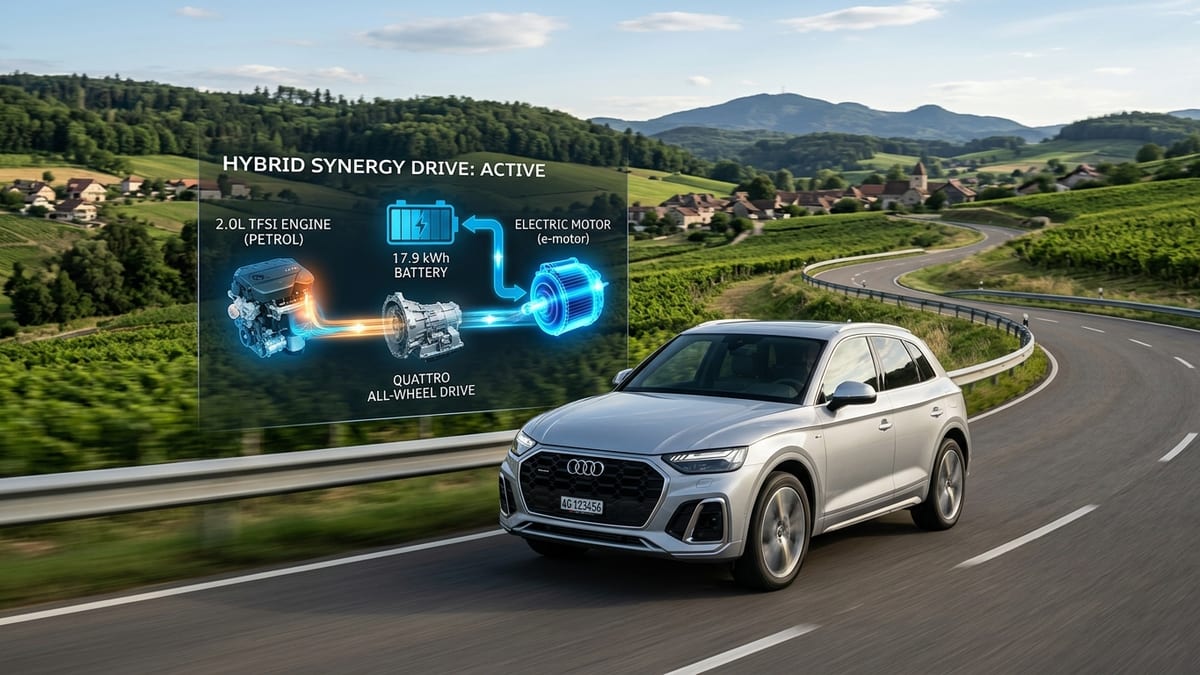
Early plug-in hybrids only supported slow AC charging. Today, leading European and international automakers have introduced Direct Current (DC CCS2) fast charging:
- Volkswagen Group (MQB evo): Tiguan eHybrid, Passat eHybrid, Škoda Kodiaq iV, Superb iV offer 50 kW DC.
- Toyota RAV4 Plug-in (2026): Equipped with 50 kW DC charging.
- Jaecoo 8 / Chery DHT: Delivers up to 70 kW DC peak power.
What Does This Mean on the Motorway?
At a 50 kW DC public charging station, taking a 20 kWh battery from 10% to 80% takes merely 20 to 25 minutes. During a brief coffee break at highway service stations, you can fully restore 80–100 km of zero-emission driving range.
4. Charging Speed & Safety Comparison Matrix
| Charging Source | Output Power | 20 kWh Charge Time | Electrical Requirements | Optimal Use Case |
|---|---|---|---|---|
| Domestic 3-Pin / Schuko | 2.3 kW (10A) | 10 – 12 Hours | Standard plug (Thermal risk on prolonged use) | Emergency & overnight trickle |
| Commando Socket (CEE 16A) | 3.7 kW (16A) | 6 – 7 Hours | Dedicated 2.5 mm² circuit | Budget-friendly garage upgrade |
| Single-Phase Wallbox | 7.4 kW (32A) | 2.5 – 3 Hours | Dedicated 6 mm² line + Type B RCD | The sweet spot for domestic charging |
| Three-Phase Wallbox | 11 kW (3x16A) | 1.8 – 2.2 Hours | 3-phase domestic supply | Fastest residential AC replenishment |
| Public DC CCS2 | 50 – 70 kW | 20 – 25 Mins (to 80%) | Public high-power DC station | Motorway road trips & quick turnaround |
5. Summary & Verdict
To unlock the maximum financial return and whisper-quiet refinement from a plug-in hybrid, home charging is essential.
If your daily commute spans 40 to 80 km, installing a dedicated 7.4 kW or 11 kW Wallbox guarantees complete electrical safety, maximum convenience, and optimal battery conditioning. For frequent motorway travelers, choosing a vehicle equipped with DC fast charging (CCS2) bridges the gap between hybrid versatility and electric speed.