Volkswagen Tiguan eHybrid (2024+) (2025)
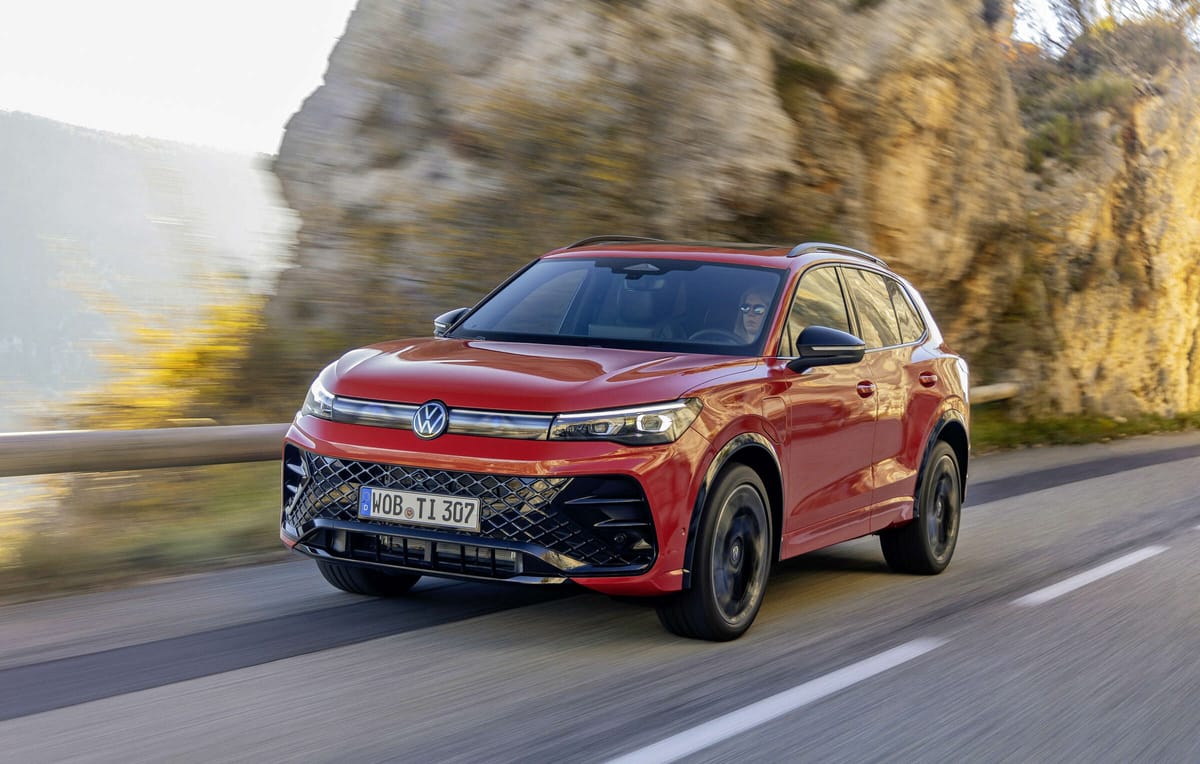
Applies to 78 miles (125 km) electric range.
Annual liability: £712 (40% tax band).
Saved each year compared to equivalent 32% BiK petrol/diesel company car (£4,559/yr).
Adjust Vehicle Price & Tax Bracket
Euro 6e-bis UK BiK Shield Certified (80+ km / 50+ mi)
Because the Volkswagen Tiguan eHybrid (2024+) delivers 78 miles (125 km) electric range, it remains fully protected in the lowest HMRC benefit tiers even under the revised 2,200 km Utility Factor standard.
Calculations are based on 2025/2026 statutory rates and tax law for illustrative purposes.
Frequently Asked Questions: Euro 6e-bis & Company Car Taxation
Clear answers addressing Utility Factor shifts, UK BiK rate jumps, Germany 0.5% rules, and Poland 150,000 PLN depreciation limits.
What is the Euro 6e-bis regulation and how does it change PHEV CO₂ emissions?▼
Euro 6e-bis is an updated European vehicle emissions regulation that revises the mathematical Utility Factor (UF) used in WLTP testing. While older tests assumed an 800 km reference distance with high electric driving shares, Euro 6e-bis expands this reference distance to 2,200 km (and up to 4,260 km under Euro 6e-bis-FCM). This adjustment reflects real-world OBFCM fleet telemetries showing that drivers plugged in less frequently than assumed. Consequently, official laboratory CO₂ figures for PHEVs roughly double unless the vehicle is equipped with a large 20–30 kWh battery.
How will Euro 6e-bis affect UK Company Car Benefit-in-Kind (BiK) tax rates in 2026/2027?▼
In the UK, HMRC BiK tax rates for PHEVs with CO₂ ≤ 50 g/km range from 2% (for 130+ miles range) to 8% (for 40–69 miles range). If Euro 6e-bis pushes a model’s laboratory CO₂ above 50 g/km (for example, from 45 g/km to 96 g/km), the vehicle jumps into standard combustion BiK brackets (24% or higher). For a 40% income taxpayer, this adds approximately £2,500 to £3,500 per year in personal out-of-pocket tax. However, PHEVs with 80+ km (50+ miles) range retain lower BiK bands and remain protected.
Does the German 0.5% Dienstwagenbesteuerung rule change under Euro 6e-bis?▼
Under German income tax law (§ 6 Abs. 1 Nr. 4 EStG), company cars qualify for the 0.5% taxable benefit rule if they emit ≤ 50 g/km CO₂ OR deliver an electric range of at least 80 km. While Euro 6e-bis may push smaller-battery models above 50 g/km (disqualifying them and doubling their taxable rate to 1.0%), all PHEVs with 80+ km WLTP range are 100% protected and remain eligible for 0.5% taxation.
How does Euro 6e-bis impact corporate fleet depreciation limits in Poland?▼
Under Polish corporate tax legislation (CIT/PIT), vehicles emitting ≤ 50 g/km CO₂ enjoy a preferential tax depreciation ceiling of 150,000 PLN, compared to only 100,000 PLN for combustion vehicles. If Euro 6e-bis recalculations cause a vehicle to exceed 50 g/km CO₂, the company loses 50,000 PLN of tax deductible cost base, leading to up to 9,500 PLN in extra income tax liability.
Which PHEVs are future-proof against Euro 6e-bis fleet tax increases?▼
Models equipped with large battery packs delivering 100+ km WLTP electric range—such as the Volkswagen Tiguan eHybrid (125 km), Škoda Kodiaq iV / Superb iV (123–133 km), Passat eHybrid, Audi A3 TFSI e (133 km), BYD Seal U DM-i, and Jaecoo 8 (134–145 km)—safely maintain low official CO₂ ratings and preserve maximum fleet tax benefits across Europe.