2026 Škoda Kodiaq iV vs Volkswagen Tiguan eHybrid: 25.7 kWh Battery, 50 kW DC Fast Charging & Real Winter Range Comparison
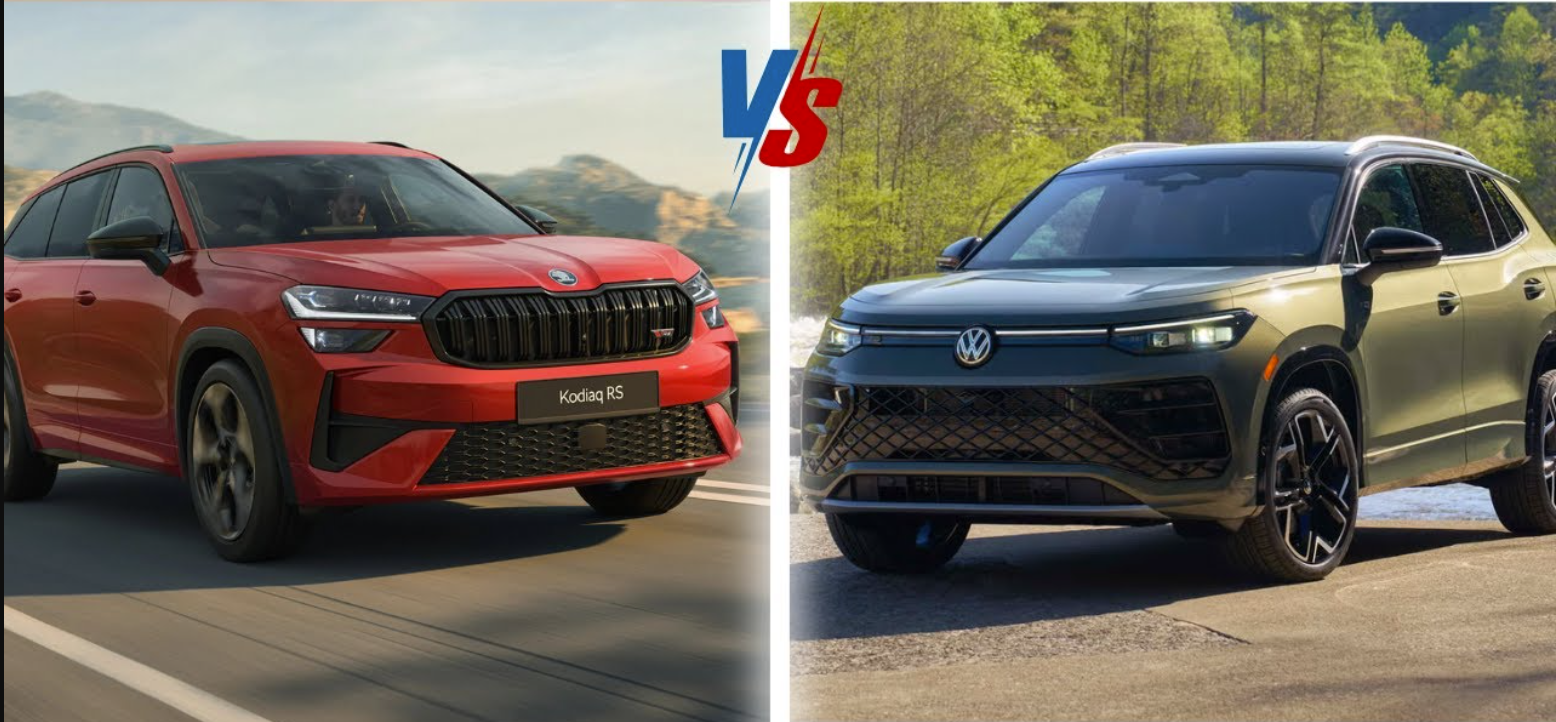
Two MQB evo platform siblings compared: Škoda Kodiaq iV vs VW Tiguan eHybrid. Detailed engineering audit of the 25.7 kWh NMC pack, 50 kW DC fast charging, real-world winter degradation, and 630L vs 490L boot space.
When the Volkswagen Group engineered the MQB evo platform, it set out to solve the three historic weaknesses that kept European family SUV buyers hesitant about Plug-in Hybrids: inadequate electric range, painstakingly slow AC-only charging, and severely compromised luggage compartments.
Both the Škoda Kodiaq iV and the Volkswagen Tiguan eHybrid showcase this second-generation PHEV architecture. Under their hoods sits the modernized 1.5 TSI evo2 four-cylinder engine paired with a 25.7 kWh high-voltage lithium-ion battery and 50 kW CCS2 DC fast-charging capability.
Yet, beneath this shared corporate DNA lies a stark philosophical split in packaging, exterior dimensions, and family utility. Is the Czech flagship's cavernous boot worth the price step, or does Wolfsburg's compact agility make the Tiguan the smarter daily driver? Let us dive into the engineering data.
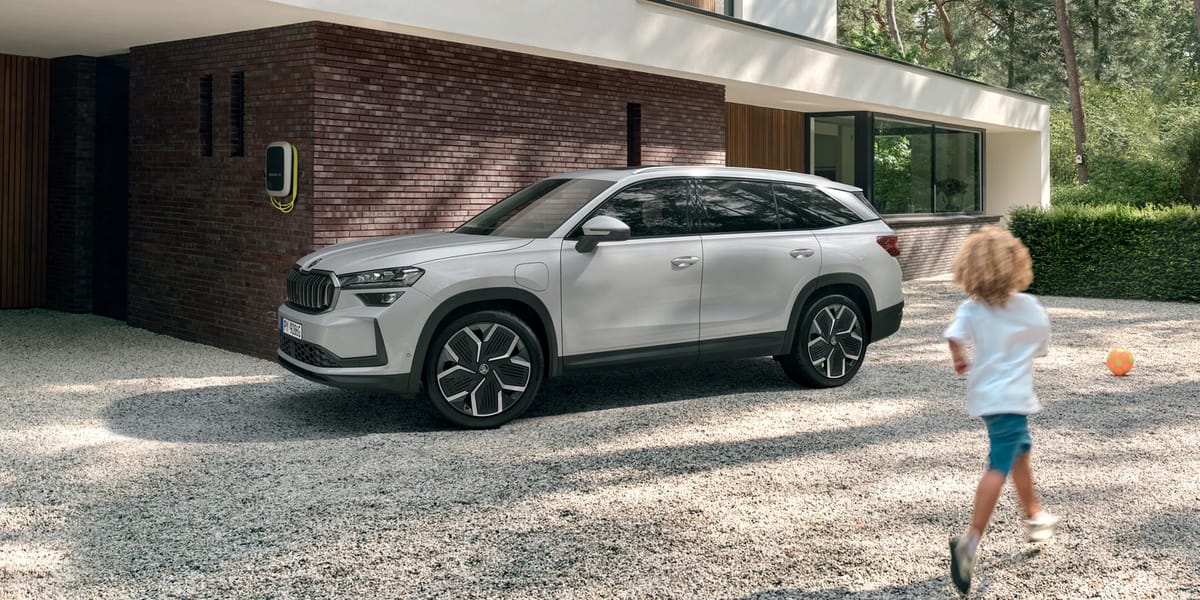 2025
Kodiaq iV (2025)
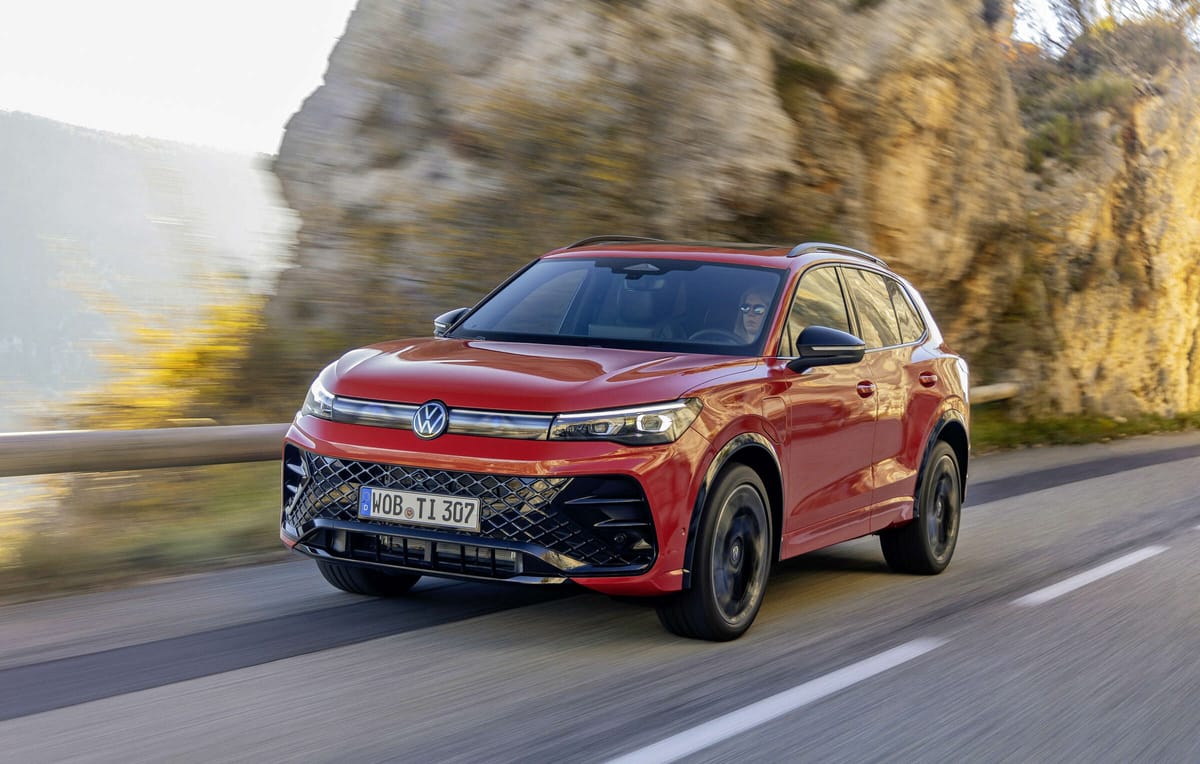 2025🏆 125 km EV
Tiguan eHybrid (2024+)
Technical Specifications: Platform & Powertrain Architecture
Both models utilize Volkswagen Group’s transverse front-wheel-drive PHEV architecture. Gone is the previous 1.4 TSI (EA211) paired with a 13 kWh battery; in its place is a heavily revised powertrain optimized for thermal efficiency and sustained high-voltage output.
| Technical Parameter | Škoda Kodiaq iV (2025/2026) | Volkswagen Tiguan eHybrid (2024+) |
|---|---|---|
| Combustion Engine | 1.5 TSI evo2 (EA211 evo2), Miller cycle, VTG turbo | 1.5 TSI evo2 (EA211 evo2), Miller cycle, VTG turbo |
| Engine Displacement | 1,498 cc (4-cylinder turbocharged) | 1,498 cc (4-cylinder turbocharged) |
| Engine Power / Torque | 110 kW (150 hp) @ 5,500 rpm / 250 Nm | 110 kW (150 hp) @ 5,500 rpm / 250 Nm |
| Electric Motor | Permanent Magnet Synchronous (PSM) in DSG casing | Permanent Magnet Synchronous (PSM) in DSG casing |
| Electric Motor Output | 85 kW (115 hp) / 330 Nm | 85 kW (115 hp) / 330 Nm |
| Combined System Power | 150 kW (204 hp) [272 hp planned] | 150 kW (204 hp) or 200 kW (272 hp) |
| Combined System Torque | 350 Nm | 350 Nm (or 400 Nm in 272 hp trim) |
| Transmission | 6-speed dual-clutch e-DSG (DQ400e evo) | 6-speed dual-clutch e-DSG (DQ400e evo) |
| Drivetrain | Front-Wheel Drive (FWD) | Front-Wheel Drive (FWD) |
| Battery Gross / Usable | 25.7 kWh / 19.7 kWh | 25.7 kWh / 19.7 kWh |
| Battery Chemistry | Liquid-cooled NMC (96 cells, ~353V nominal) | Liquid-cooled NMC (96 cells, ~353V nominal) |
| AC Charging (Type 2) | 11 kW (3-phase 16A) (~2h 30m 0-100%) | 11 kW (3-phase 16A) (~2h 30m 0-100%) |
| DC Fast Charging (CCS2) | 50 kW peak (~26 min 10-80%) | 50 kW peak (~26 min 10-80%) |
| Official WLTP Electric Range | 123 km | 125 km |
| Boot Space (VDA) | 630 Liters (expandable to 1,775 L) | 490 Liters (expandable to 1,486 L) |
| Seating Capacity | 5 Seats only (3rd row deleted for battery) | 5 Seats |
| Curb Weight (EU) | ~1,985 kg | ~1,792 - 1,860 kg |
The integration of Variable Turbine Geometry (VTG) on a petrol engine is a key highlight of the 1.5 TSI evo2. By pairing the Miller combustion cycle with rapid boost delivery, the combustion engine smoothly takes over propulsion when passing or during depleted-battery cruising, eliminating the harsh transitional shudder common in older hybrid setups.
Battery Engineering & 50 kW DC Fast-Charging Breakthrough
For years, European PHEV drivers faced a frustrating charging bottleneck: while pure BEVs enjoyed ubiquitous 50 kW to 350 kW DC chargers at motorways, PHEVs were locked out, relying on slow 3.6 kW or 7.4 kW single-phase onboard chargers. Stopping for 30 minutes at an Ionity or Fastned hub yielded a negligible 3 to 7 km of charge.
The MQB evo architecture alters this dynamic entirely. Both vehicles feature a dedicated CCS Combo 2 inlet positioned on the front left fender.
- 50 kW DC Fast Charging: With a maximum DC acceptance rate of 50 kW, the 19.7 kWh usable pack charges from 10% to 80% SoC in just 25 to 26 minutes. This allows drivers taking cross-continental European road trips to plug in during a short coffee stop and immediately regain 60 to 75 km of pure-electric highway driving. You can explore all fast-charging plug-in hybrids in our DC Fast Charging PHEVs Directory.
- 11 kW Three-Phase AC Onboard Charger: Upgraded from the previous 3.6 kW single-phase limit, both models now pull 16 amps across all three phases on European wallboxes. A full zero-to-100% overnight charge takes only 2 hours and 30 minutes, making off-peak dynamic electricity tariffs highly profitable.
Real-World Electric Range & Winter Degradation Audit
While the WLTP homologation cycle claims 123 km for the Kodiaq iV and 125 km for the Tiguan eHybrid, real-world driving across Europe's four seasons presents distinct behavioral profiles.
What is the Real-World Range of the Škoda Kodiaq iV (2025)?
Official WLTP ratings are measured in a controlled 23°C laboratory. Test how winter sub-zero temperatures (-10°C), sustained 130 km/h highway speeds, and terrain elevation impact actual battery range on your specific commute.
1. Spring & Summer Performance (15°C to 24°C)
In mild ambient temperatures without extreme HVAC demand, both SUVs easily surpass 95 km of zero-emission commuting.
- Tiguan eHybrid: Due to its lighter weight (approx. 150 kg lighter) and smaller frontal cross-section ($A imes c_d$), the Tiguan averages 16.5 - 18.2 kWh/100 km in mixed suburban/city commuting, translating to a genuine 100 - 110 km of real electric range.
- Kodiaq iV: The larger bodywork and heavier curb weight result in an average of 17.8 - 19.5 kWh/100 km, yielding 92 - 102 km of pure electric driving.
2. Winter Sub-Zero Reality (-5°C to 0°C)
[!IMPORTANT]
No Standard Heat Pump: Neither the Škoda Kodiaq iV nor the Volkswagen Tiguan eHybrid comes equipped with a heat pump as standard equipment. Cabin heating is powered by a high-voltage PTC resistive ceramic element that draws between 4.5 kW and 6.0 kW of electrical power upon initial cabin warmup.
When driving at -3°C with the cabin thermostat set to 21°C:
- The electrical load of the HV-PTC heater combined with higher internal battery resistance reduces usable capacity efficiency by approximately 28% to 34%.
- Real-World Winter Range: The Tiguan eHybrid delivers 68 to 76 km in freezing urban conditions. The Kodiaq iV achieves 64 to 71 km.
- Pro Tip: Always utilize the infotainment pre-conditioning schedule while connected to an 11 kW wallbox. Heating the cabin from the grid preserves the entire 19.7 kWh usable battery for traction. Calculate your specific daily trip consumption with our interactive PHEV Range Calculator.
Family Practicality, Boot Volume & Passenger Comfort
This is where the two corporate cousins diverge significantly.
Škoda Kodiaq iV:    [ 630 Liters VDA ] ======================================== (Max 1,775 L)
VW Tiguan eHybrid:  [ 490 Liters VDA ] ============================= (Max 1,486 L)
The Škoda Kodiaq Advantage: Unmatched Boot Space
The Kodiaq measures 4,758 mm in length with a generous 2,791 mm wheelbase. Even after accommodating the high-voltage battery under the rear floor, it provides a monumental 630 liters of VDA luggage capacity. Fold the rear backrests, and storage balloons to 1,775 liters.
[!WARNING]
No 7-Seat Option on PHEV: The standard combustion Kodiaq is famous for its optional 7-seat configuration. However, on the Kodiaq iV PHEV, the 7-seat layout is not available. The physical volume demanded by the 25.7 kWh battery pack, rear axle cradle, and cooling lines permanently occupies the third-row folding cavity.
The Volkswagen Tiguan Packaging: Compact Agility
The Tiguan is 4,539 mm long with a 2,681 mm wheelbase (219 mm shorter overall). Its boot capacity stands at 490 liters, expanding to 1,486 liters. While 140 liters smaller than the Kodiaq, the Tiguan features a standard sliding rear bench (180 mm travel), allowing parents to trade rear legroom for an additional ~50 liters of cargo volume when strollers or holiday luggage require extra depth.
In tight European multi-storey parking garages (especially in German or French inner cities), the Tiguan’s tighter turning circle (11.5 m vs 11.8 m) and shorter overhangs make everyday maneuvering noticeably less stressful.
Interactive Long-Distance Route Simulator
How do both vehicles handle a realistic 650 km European holiday journey (e.g., Munich to Lake Garda or Warsaw to Gdańsk) when starting with a 100% charged battery? Test both models on real motorways below:
Germany 🇩🇪 & France 🇫🇷 Popular Routes Comparison
Visual side-by-side simulation across flat highway corridors and hilly Alpine passes—showing exact ICE transition kilometer, downhill regenerative recovery, and total trip energy cost.
Munich → Garmisch-Partenkirchen
A95 / B2 • Bavyera AlpleriClassic Bavarian Alps benchmark climbing from Munich (520m) over the 885m Eschenlohe crest before descending into Garmisch (708m). Tests uphill battery load, weight penalty, and downhill regen recovery.
Škoda Kodiaq iV (2025)
Volkswagen Tiguan eHybrid (2024+)
⛰️Route Elevation Profile & Terrain Slope Telemetry
Altitude gains/descents, gravity potential energy, and regenerative battery recovery along the journey.
HVAC draw, air density (ρ), and BMS cold regen limits adapt dynamically to altitude and microclimate at every kilometer.
Explore live map polylines, custom speeds, and full telemetry
Depleted-Battery Fuel Consumption (Hybrid Mode)
Once the high-voltage battery drops to its lower threshold (~20% SoC), the vehicle operates as a conventional full hybrid:
- Tiguan eHybrid: Averages 5.4 - 5.8 L/100 km on secondary roads, climbing to 6.8 - 7.3 L/100 km at continuous 130 km/h Autobahn speeds.
- Kodiaq iV: Averages 5.8 - 6.3 L/100 km in mixed routes, reaching 7.3 - 7.9 L/100 km on 130 km/h motorway cruises.
European Pricing & Ownership Verdict
| Feature / Factor | Škoda Kodiaq iV | Volkswagen Tiguan eHybrid |
|---|---|---|
| Starting Price (Germany) | ~€47,500 (Selection) | ~€41,900 (Life) / ~€48,655 (Elegance) |
| Starting Price (Poland) | ~226,000 PLN | ~208,500 PLN |
| Infotainment Screen | 13.0-inch free-standing + Smart Dials | 12.9-inch or optional 15.0-inch screen |
| Ergonomics & Controls | Physical Smart Dials with rotary haptics | Touch sliders (now illuminated) & steering buttons |
| Standard Wheelbase Space | Exceptional (+110 mm knee room) | Generous for compact SUV segment |
| Warranty & Battery Cover | 8 years / 160,000 km (70% SoC guarantee) | 8 years / 160,000 km (70% SoC guarantee) |
Which One Should You Buy?
- Choose the Škoda Kodiaq iV if: You have two or more children, routinely travel with bulky sports equipment or luggage, and prioritize the massive 630-liter boot. Furthermore, Škoda’s intuitive tactile Smart Dials (which combine physical rotaries with customizable central digital displays for climate and drive modes) offer superior ergonomics over touch-only interfaces.
- Choose the Volkswagen Tiguan eHybrid if: You primarily navigate urban environments and congested parking garages, want a lower entry price point, or prefer the sportier dynamic feel of the optional 272 hp dual-motor calibration.
Compare any other European plug-in hybrids side-by-side using our comprehensive Compare PHEVs Tool.
Stay Ahead on Next-Gen PHEV Releases & OTA Updates
Get notified when new European plug-in hybrid models premiere, along with real-world range benchmarks, battery chemistry insights, and software update breakdowns.
Related Models
Technical specs and live range simulations for models featured in this report
123 km EVKodiaq iV (2025)
125 km EV