Informe ACEA Septiembre 2026: Los Híbridos Enchufables (PHEV) Superan el 10,1% de Cuota de Mercado con 860.000 Unidades
Según las cifras oficiales de ACEA para septiembre de 2026, las matriculaciones de híbridos enchufables (PHEV) en la UE aumentaron un 18,6% en el acumulado del año hasta 860.257 unidades, alcanzando una cuota de mercado del 10,1%.
The European Automobile Manufacturers’ Association (ACEA) has officially released its new passenger car registration figures for the first nine months of 2026 (January–September). The report confirms that while the European Union automotive market expanded with resilience (+5.7% YTD), the most remarkable structural milestone occurred in the plug-in hybrid electric vehicle (PHEV) segment.
Driven by next-generation battery architectures offering 100+ km of electric range and DC fast-charging capability, PHEVs captured a 10.1% market share across the EU, officially crossing the double-digit threshold. Total registrations reached 860,257 units, representing a robust +18.6% year-on-year increase compared to the same period in 2025.
1. European Market Overview and September Rebound
According to ACEA data, total new passenger car registrations in the EU grew by 5.7% over the first nine months of 2026, totaling approximately 8.5 million units. Following moderate summer months, September delivered a sharp +9.3% year-on-year surge, providing strong momentum heading into the fourth quarter.
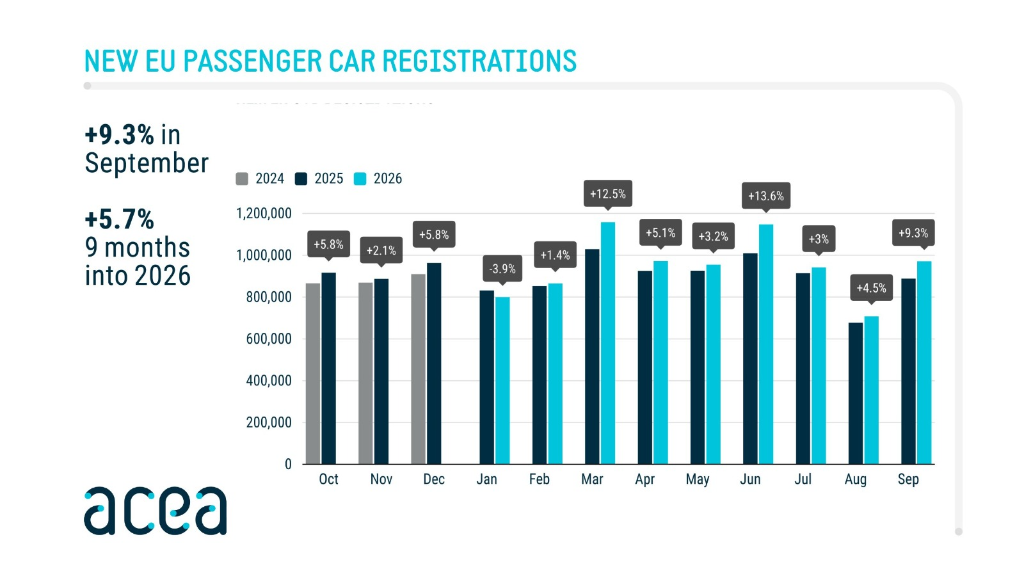
Official ACEA Data: EU passenger car registrations grew +9.3% in September 2026, bringing cumulative 9-month growth to +5.7%.
As shown in the official ACEA monthly trajectory, strong rebounds in March (+12.5%), June (+13.6%), and September (+9.3%) highlight consumer appetite shifting decidedly towards electrified powertrains as vehicle availability stabilizes.
2. Powertrain Breakdown: How PHEVs Broke the 10.1% Threshold
The official powertrain distribution published by ACEA demonstrates that the European automotive market has definitively tipped away from pure internal combustion engines towards electric propulsion.
The powertrain market shares for the first nine months of 2026 are summarized below:
| Powertrain Source | 2026 YTD Market Share | Registrations (Jan–Sep) | Annual Trend & Performance |
|---|---|---|---|
| HEV (Full/Mild Hybrid Electric) | 36.3% | ~3,090,000 units | #1 powertrain choice in the EU market |
| BEV (Battery Electric Vehicles) | 22.7% | 1,931,465 units | Substantial presence with ongoing adoption |
| Petrol (Pure Internal Combustion) | 21.2% | ~1,802,000 units | -19.1% steep decline, shrinking rapidly |
| PHEV (Plug-in Hybrid Electric) | 10.1% | 860,257 units | +18.6% surge, crosses double-digit barrier |
| Diesel (Pure Internal Combustion) | 7.1% | ~603,000 units | -19.5% decline, increasingly marginalized |
| Others (LPG, CNG, E85, Hydrogen) | 2.7% | ~230,000 units | Niche commercial and regional applications |
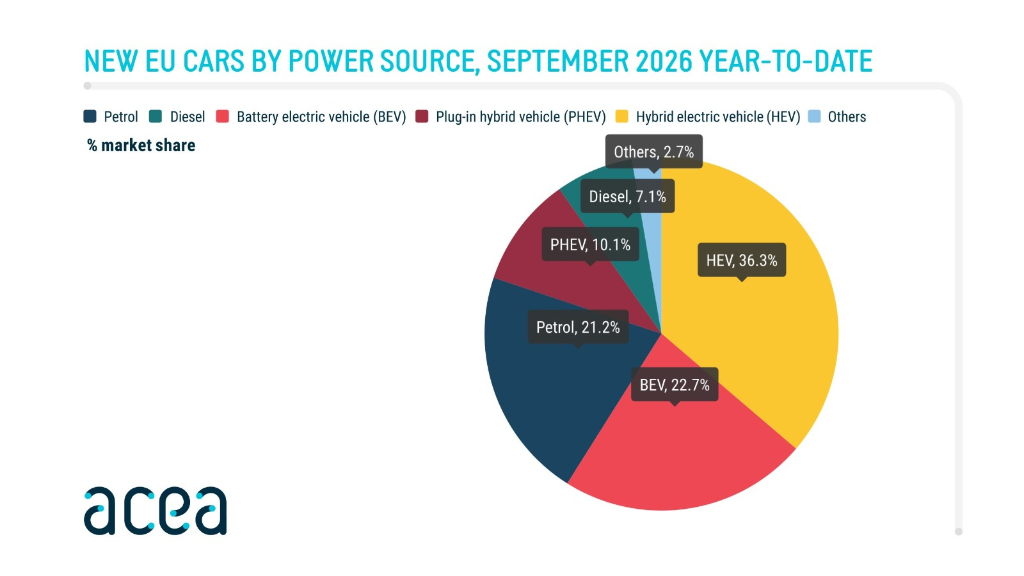
Official ACEA Chart: Power source distribution for new passenger car registrations across the EU (Jan–Sep 2026).
Two major macroeconomic conclusions emerge from this breakdown:
- Dominance of the Electrification Block: Electrified powertrains (HEV 36.3% + BEV 22.7% + PHEV 10.1%) now command 69.1% of all new car registrations in the European Union. Nearly 7 out of every 10 cars sold in Europe are now electrified.
- Pure ICE Below 30% for the First Time: Petrol (21.2%) and Diesel (7.1%) combined have plummeted to 28.3%, falling below the 30% barrier for the first time in European automotive history.
3. Key Country Drivers: Surges in Italy, Spain, and Germany
Behind the +18.6% annual jump in PHEV registrations (860,257 units), specific national markets experienced unprecedented demand. For September 2026 alone, EU-wide PHEV registrations rose +11.7% to 102,267 units.
Country-level highlights from the ACEA data:
- Italy (+72.4%): Italy registered the most dramatic PHEV expansion among major European economies. Stricter low-emission zones (ZTL) across major metropolitan areas such as Milan and Rome, restructured eco-incentives, and aggressive corporate fleet conversions drove this extraordinary spike.
- Spain (+34.7%): Spanish PHEV registrations increased by more than a third. The coveted blue "CERO Emisiones" environmental badge issued by the DGT—granting free parking, bus lane access, and toll reductions in Madrid and Barcelona—remains an irresistible incentive for private and corporate buyers.
- Germany (+13.7%): Europe’s largest automotive market recorded solid double-digit PHEV gains. The persistent 0.5% company car taxation advantage (Dienstwagenprivileg) for plug-in hybrids that meet minimum electric range criteria continues to anchor company car fleets to PHEV technology.
4. Why European Drivers Are Choosing Next-Generation PHEVs
Far from being a temporary transitional compromise, the resurgence of PHEVs in 2026 is rooted in decisive technological enhancements:
1) 100+ km Real-World Electric Range
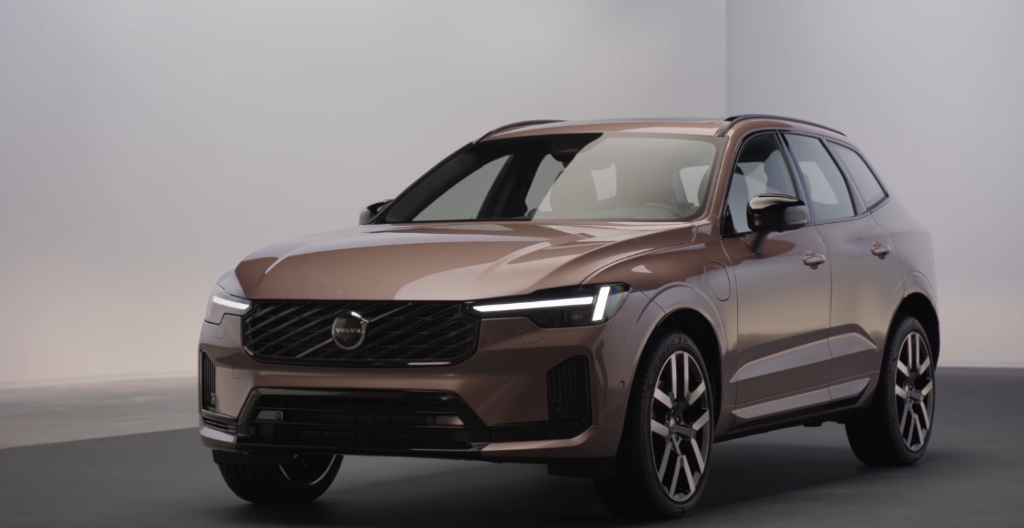
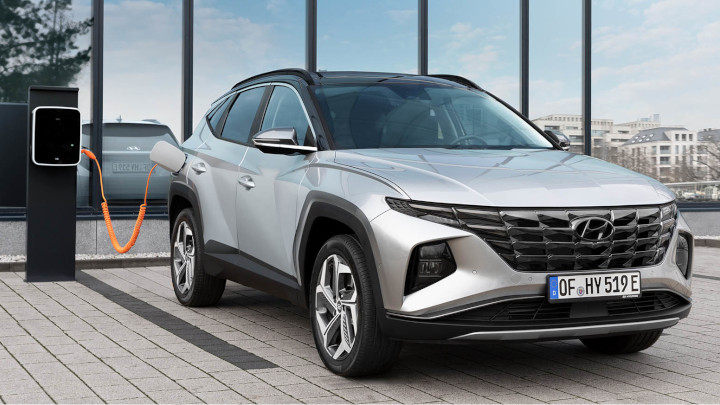
Early PHEVs equipped with 8–12 kWh batteries delivered modest 35–45 km real-world electric ranges. In contrast, 2025/2026 generation PHEVs (such as the Volkswagen Tiguan eHybrid, BYD Seal U DM-i, Hyundai Tucson PHEV, and Volvo XC60) pack 18 kWh to 41.2 kWh usable battery capacities, allowing daily commuters to complete 100% of their weekday travels purely on electricity.
2) Standardized DC Fast Charging (CCS)
Slow AC-only charging that took 4 hours is no longer acceptable. Modern PHEVs incorporate 30 kW to 50 kW DC fast-charging ports, enabling a 20% to 80% charge during a routine 25-minute grocery stop or motorway rest break.
3) Total Freedom from Charging Infrastructure Anxiety
Across Southern and Eastern Europe, where high-power highway charging plazas can still experience bottlenecks or coverage gaps, PHEVs eliminate travel anxiety. Drivers enjoy smooth, silent electric commuting in town while preserving the flexibility of a 5-minute fuel top-up on cross-continent road trips.
5. Comparative Evaluation: Leading PHEV SUV Contenders
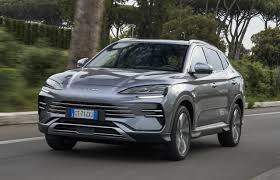
Explore how the top-tier PHEV family SUVs driving European sales compare in specifications, efficiency, and battery architecture:
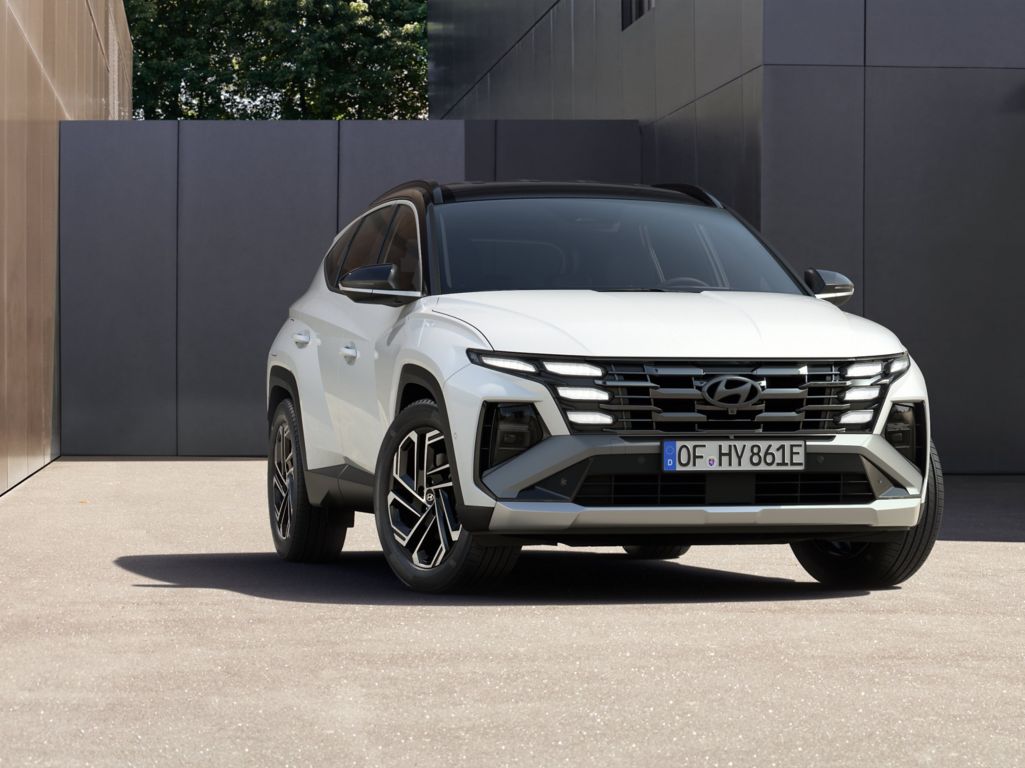 2026
Tucson 1.6 T-GDI PHEV (2026 Facelift)
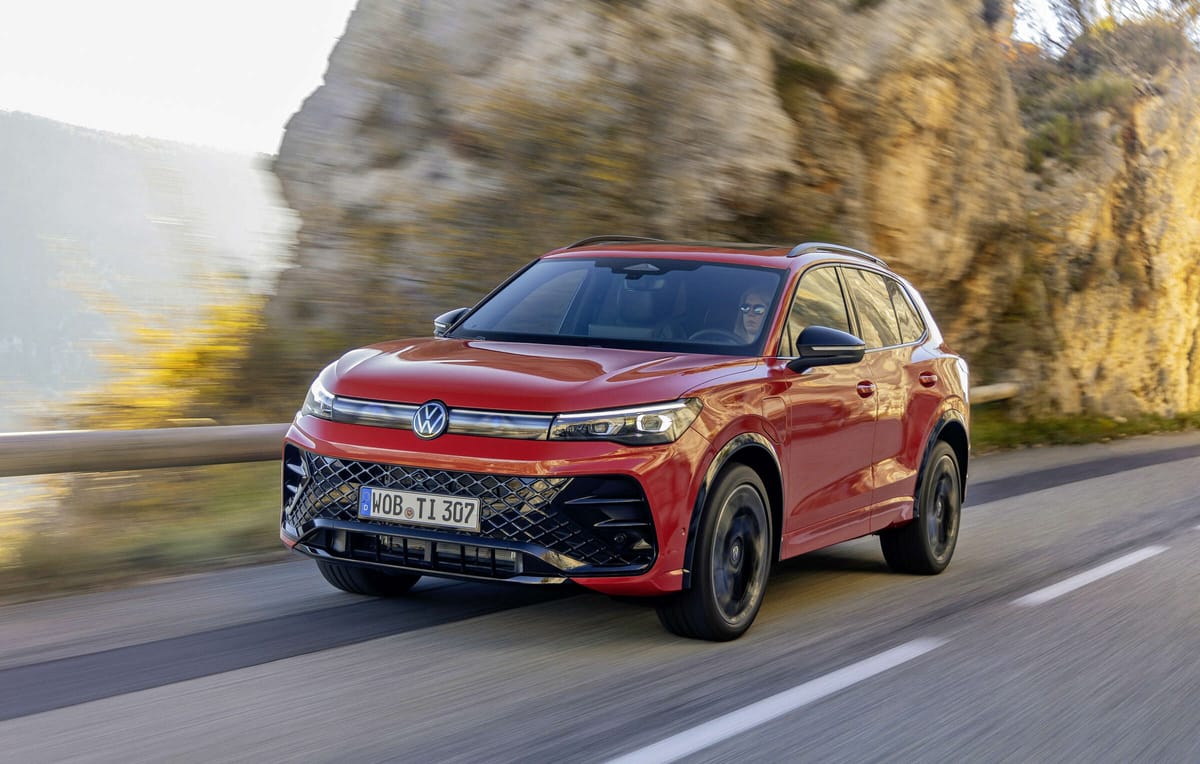 2025🏆 125 km EV
Tiguan eHybrid (2024+)
 2023
Seal U DM-i Boost
This comparison reflects the practical balance European motorists demand: 80 to 125 km of zero-emission urban driving, official CO2 ratings below 30 g/km, and 800+ km of seamless total combined travel range.
Conclusion: The Outlook for PHEVs Beyond 2026
ACEA's September 2026 registration data delivers unequivocal proof that European mobility transition is multifaceted and pragmatic.
With 860,257 units sold and a historic 10.1% market share, plug-in hybrids have cemented their status as an indispensable pillar of Europe's decarbonization journey. As pure combustion engines recede below 28% of sales, advanced PHEVs combining substantial electric range with long-haul independence will remain essential for millions of European drivers.
Sé el primero en conocer los nuevos PHEV y actualizaciones OTA
Recibe análisis técnicos rigurosos sobre nuevos híbridos enchufables en Europa, pruebas de autonomía en condiciones reales y actualizaciones remotas de software.
Modelos relacionados
Fichas técnicas y simulaciones de autonomía de los modelos analizados
65 km EVTucson 1.6 T-GDI PHEV (2026 Facelift)
125 km EVTiguan eHybrid (2024+)
80 km EV