Best 7-Seater PHEVs in Europe (2026/2027): Ultimate 3-Row Family Plug-in Hybrid Buyer's Guide, Real Boot Space & Third-Row Legroom
Comprehensive guide to Europe's top 7-seater PHEVs for large families: Verified third-row knee clearance, boot volume with seven seats upright, and multi-child seat safety.
Introduction: The 3-Row Hybrid Revolution for Large Families
For families with three or more children, extended households, or active lifestyles across Europe, choosing the right vehicle is always a delicate balance of engineering physics and fiscal realism. Traditional large combustion SUVs (ICE) face crushing environmental and registration tax penalties across European Union member states (such as Malus in France, BPM in the Netherlands, and NoVA in Austria) due to high CO2 emissions. Conversely, fully electric 7-seater vehicles often induce severe range anxiety and charging stop bottlenecks when traversing motorways fully laden on holiday road trips.
This is precisely where 3-Row Plug-in Hybrid (PHEV) SUVs have established themselves as the ultimate automotive compromise: offering zero-emission, pure-electric commuting for weekday school runs and grocery shopping, alongside unrestricted petrol range and rapid refuelling for cross-continental family holidays with seven passengers and heavy luggage.
At PHEVs.eu, our Family Vehicle Safety & Chief Engineering Desk has thoroughly evaluated the finest 7-seater Plug-in Hybrids available on the European market. Moving beyond glossy manufacturer brochures, we analyze real-world third-row knee and headroom measurements, usable cargo volume with all seven seats deployed, and multi-child seat compatibility.
To examine complete specifications, real-world electric ranges, and boot dimensions across all 3-row models, visit our central directory: Explore All 7-Seater Family PHEVs.
Third-Row Reality: Can Adults Survive Long Journeys? (Ergonomics & Knee Room)
Many models marketed by manufacturers as "7-Seaters" are, in reality, compromise "5+2" configurations. Determining whether the third row in a family SUV constitutes a viable adult passenger compartment or an emergency space restricted to young children relies on three key biomechanical metrics:
- Seat Cushion Height (H-Point Altitude): When the third-row seat base is mounted virtually flush with the vehicle floor, the passenger's knees are pushed upwards towards chest level (knee flexion angle < 80°). Under-thigh support drops to zero, transferring all body weight onto the pelvic ischium and coccyx. On journeys exceeding 30 minutes, this posture causes severe discomfort for adults.
- Second-Row Fore/Aft Sliding Travel: Authentic 7-passenger SUVs feature a second row that slides fore and aft by at least 18 to 25 cm. Passengers in the middle row can sacrifice 5 to 8 cm of surplus legroom to provide third-row adults with a viable 70 to 75 cm knee clearance envelope.
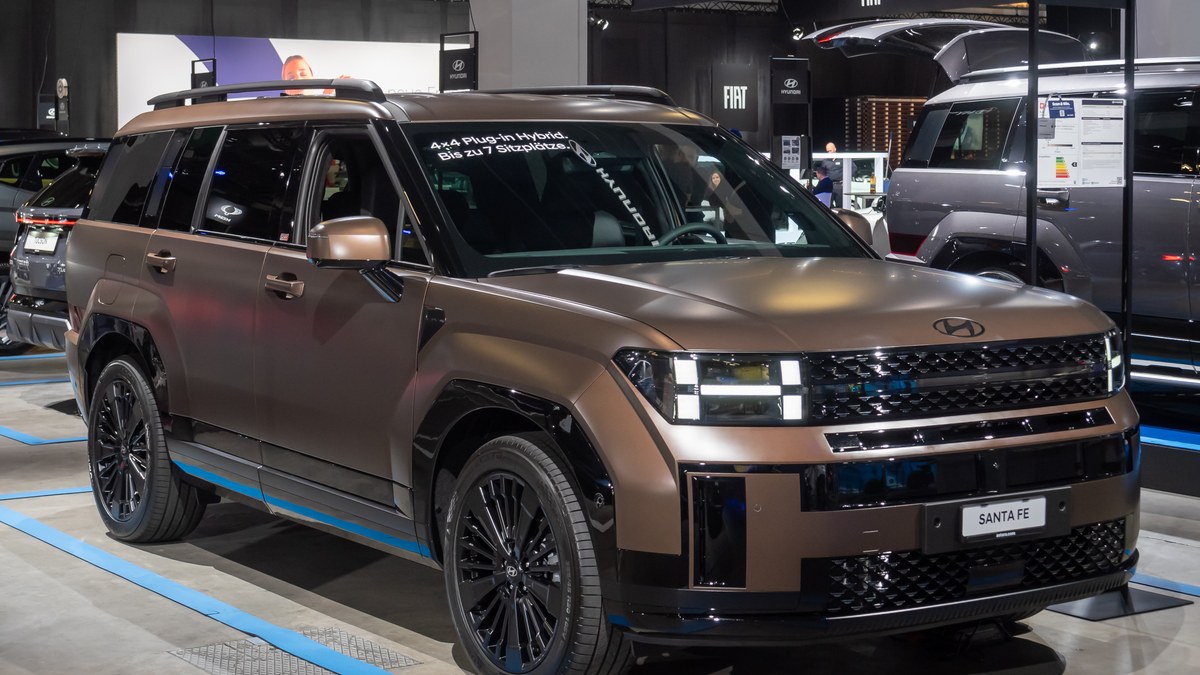
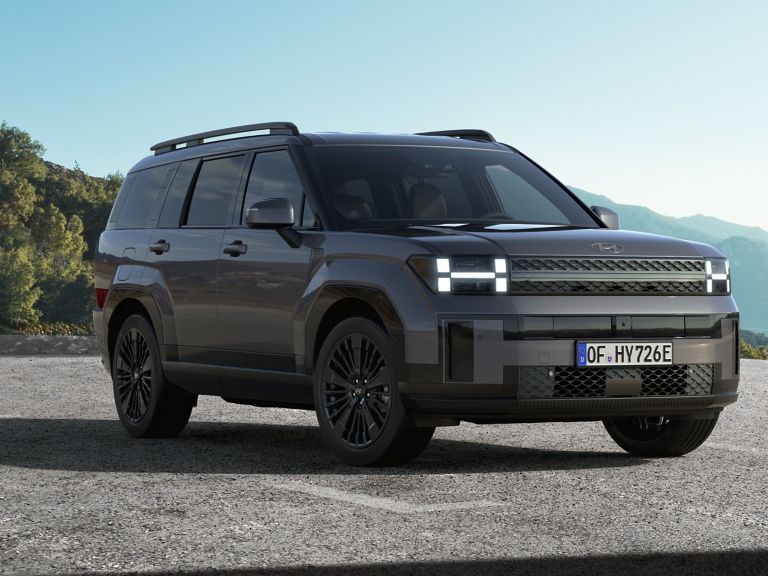
- Roofline Trajectory and Headroom: Sweeping, coupe-style rooflines drastically curtail headroom for occupants over 170 cm tall in row three. In contrast, upright "boxy" silhouettes—epitomised by the new Hyundai Santa Fe—deliver up to 95 cm of vertical headroom directly above the rearmost seats, ensuring class-leading airiness for adult passengers.
[!NOTE]
Adult Height Threshold:
Independent ergonomic evaluations confirm that the third rows of the Kia Sorento, Hyundai Santa Fe, and Mazda CX-80 accommodate adults up to 175 cm tall for medium-distance journeys lasting 2 to 3 hours with adequate comfort. For tall adults measuring 180 cm or more on extended motorway routes, the American-dimensioned Ford Explorer PHEV remains the solitary European market option offering genuine long-distance comfort.
Boot Space with 7 Seats Upright: Strollers, Luggage & The Roof-Box Question
A pervasive misconception among large families is that a 7-seater SUV can simultaneously carry seven occupants and all their holiday luggage. Deploying the sixth and seventh seats severely constricts cargo capacity:
- 160 – 200 Litre Category (Kia Sorento, Hyundai Santa Fe): With all seven seats upright, remaining volume averages approximately 180 to 200 litres. This space accommodates only two airline cabin-sized trolley bags, or an umbrella stroller paired with soft backpacks. For a seven-person family embarking on a week-long summer holiday, a roof cargo box (Thule box) is mandatory.
- 250 – 265 Litre Category (Volvo XC90, Mazda CX-80): A deep luggage well behind the third row allows three cabin bags to be stacked vertically, supplemented by soft duffel bags in the perimeter corners.
- 330 Litre Category (Ford Explorer PHEV): Even with row three upright, the Explorer delivers a substantial 330 litres of volume—matching the boot of a standard C-segment hatchback (e.g., VW Golf). Four medium suitcases and a compact buggy fit without requiring overhead storage.
[!WARNING]
Where Do Charging Cables Go?
Because high-voltage traction batteries are located beneath the vehicle floor in most PHEVs, underfloor storage wells are either minimal or absent. When seven seats are deployed, stowing bulky Type 2 AC charging leads and portable emergency cables under the floor becomes challenging. Carrying cables in a dedicated tailored trunk bag is strongly recommended to preserve vertical cargo space.
Child Safety, ISOFIX Anchor Locations & Euro NCAP Child Occupant Protection
For households with infants, toddlers, and young children, the number, accessibility, and positioning of child restraint anchorage points are paramount:
- Total ISOFIX Anchor Count: The majority of dedicated 3-row contenders (Volvo XC90, Kia Sorento, Hyundai Santa Fe) provide four independent ISOFIX and Top-Tether anchor pairs: two in the second row and two in the third row. This layout permits two infant carriers in row three and one child seat in row two, leaving a generous middle seat in the second row for an adult supervisor.
- Fitting Three Child Seats Across Row Two: Installing three Group 1/2 child seats side-by-side in the middle row demands an interior shoulder width of at least 145 cm. While the Volvo XC90 and Ford Explorer can accommodate three adjacent restraints, narrower SUVs frequently suffer from buckle obstruction and latch misalignment.
- Third-Row Curtain Airbag Coverage: Under modern Euro NCAP Child Occupant Safety protocols, a vital engineering benchmark is whether side curtain airbags extend fully to the D-pillars. The Volvo XC90 and Hyundai Santa Fe feature full-length curtain airbags engineered specifically to cushion third-row child passengers in severe lateral T-bone impacts, contributing to stellar 87%–89% Euro NCAP child safety ratings.
📊 Top 7-Seater PHEVs Comprehensive Comparison Table
The matrix below benchmarks verified boot dimensions, electric ranges, and family ergonomics across Europe's leading 7-seater Plug-in Hybrids:
| Model | System Output | Battery (Gross/Net) | Pure Electric Range (WLTP) | Boot (7 Seats) | Boot (5 Seats) | ISOFIX Anchors | Row 3 Adult Suitability |
|---|---|---|---|---|---|---|---|
| Hyundai Santa Fe PHEV (MX5) | 253 hp | 13.8 / 11.8 kWh | 54 km | 203 L | 640 L | 4 Points | Ideal up to 175 cm (Boxy Roof) |
| Kia Sorento PHEV (MQ4) | 252 hp | 13.8 / 11.8 kWh | 55 km | 179 L | 813 L | 4 Points | Fair up to 172 cm |
| Volvo XC90 T8 Recharge | 455 hp | 18.8 / 14.7 kWh | 71 km | 262 L | 640 L | 4 Points | Comfortable up to 175 cm (Theater) |
| Mazda CX-80 PHEV | 327 hp | 17.8 / 14.4 kWh | 60 km | 258 L | 687 L | 4 Points | Best for Children/Teens (<170 cm) |
| Ford Explorer PHEV 3.0 | 457 hp | 13.6 / 10.4 kWh | 42 km | 330 L | 1,137 L | 4 Points | Genuine Adult Comfort up to 185 cm |
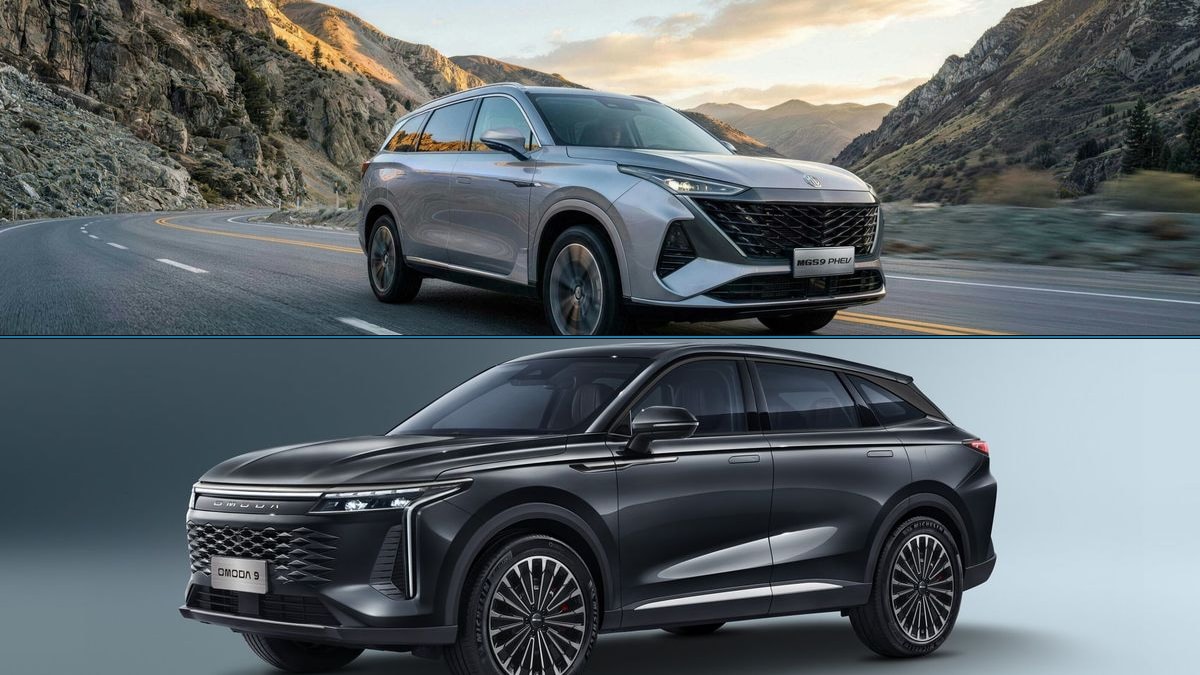
| Omoda 9 / Jaecoo 8 PHEV | 428 hp | 34.4 / 31.0 kWh | 160 km | 200 L | 717 L | 3 Points | Child-Centric (<170 cm) |
| MG S9 PHEV (2026) | 272 hp | 24.7 / 21.5 kWh | 105 km | 215 L | 650 L | 4 Points | Family-Friendly up to 174 cm |
In-Depth Model Breakdowns: Family Dynamics & Powertrain Engineering
1. Hyundai Santa Fe PHEV & Kia Sorento PHEV (The Korean Duopoly)
Sharing Hyundai Motor Group's N3 mid-size platform, these two Korean cousins dominate the European family segment. Their powertrain pairs a 1.6-litre Smartstream turbocharged petrol engine with a 91 hp permanent-magnet synchronous motor, developing a balanced 252–253 hp and 350 Nm of torque. Crucially, they employ a robust 6-speed torque-converter automatic transmission rather than a dual-clutch unit (DCT), ensuring butter-smooth low-speed towing and steep hill starts with seven passengers aboard.
- Santa Fe (MX5): The fifth-generation boxy silhouette delivers class-leading third-row vertical headspace and a cavernous, terrace-like tailgate opening ideal for outdoor family recreation.
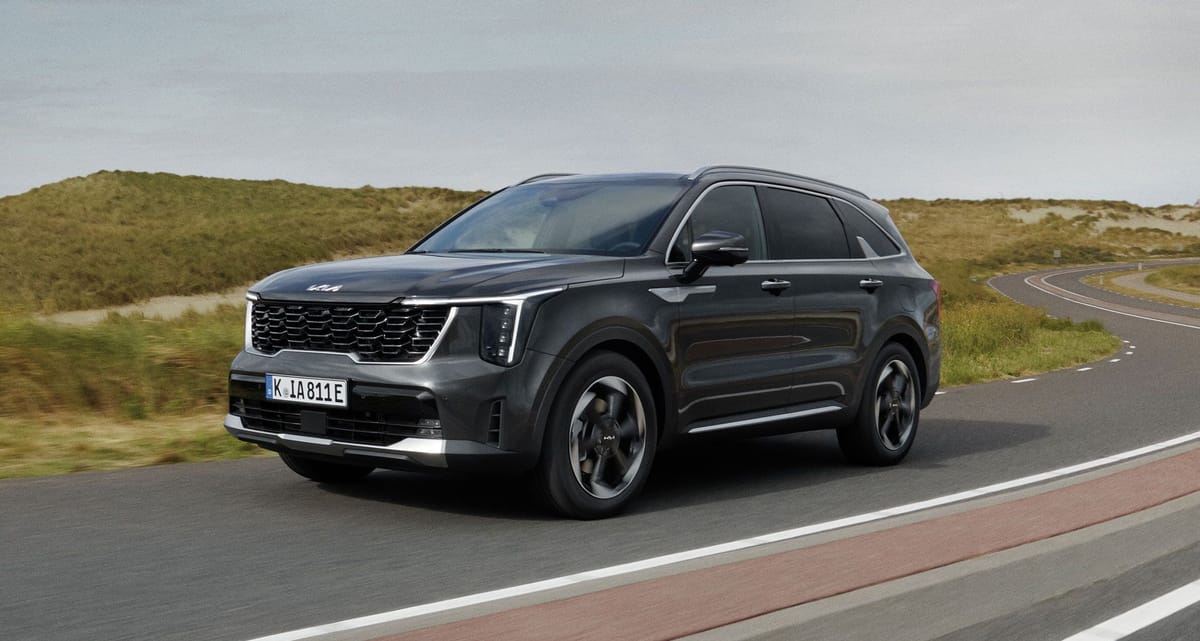
- Sorento (MQ4): Boasts an astonishing 813-litre boot in 5-seat mode and offers optional ventilated second-row seats, pairing executive refinement with pragmatic family utility.
2. Volvo XC90 T8 Recharge (Scandinavian Safety & Luxury Benchmark)
The Swedish flagship represents the gold standard in third-row passenger protection. Built on the SPA platform, Volvo engineers positioned the 18.8 kWh lithium-ion battery longitudinally along the central chassis tunnel rather than under the luggage bay. In severe rear-end collisions, the battery pack remains entirely isolated from structural crumple zones, preserving low floor levels. Furthermore, "theater seating" elevates each successive row slightly above the row ahead, granting children in row three a clear view out of the front windshield to mitigate motion sickness.
3. Mazda CX-80 PHEV (Rear-Wheel-Drive Japanese Architecture)
As the extended flagship of Mazda's Large Product Group, the CX-80 adds 25 cm of overall length and a 3,120 mm wheelbase compared to the CX-60. Its longitudinal powertrain unites a 2.5-litre naturally aspirated four-cylinder with an electric motor to generate 327 hp. Alongside the standard 7-seat configuration with a split bench, Mazda offers an executive 6-seat cabin featuring twin second-row "Captain's Chairs" separated by a centre console or a walk-through aisle.
4. Ford Explorer PHEV (The Authentic V6 Space Giant)
If your family regularly transports teenagers and adults standing 180 cm or taller in the third row, the Ford Explorer remains unmatched on European roads. Its 3.0-litre twin-turbo EcoBoost V6 engine works in concert with an electric motor to unleash 457 hp and 825 Nm of torque. With a heavy-duty 2,500 kg braked towing capacity and a generous 330-litre cargo hold behind row three, it delivers genuine full-size capability.
5. Omoda 9 / Jaecoo 8 Super Hybrid & MG S9 PHEV (Next-Gen Big-Battery Challengers)
While traditional European and Korean contenders feature 13 to 18 kWh batteries yielding 50 to 70 km of electric driving, Chinese challengers are upending market expectations. The Omoda 9 and Jaecoo 8 pack a massive 34.4 kWh LFP battery pack that achieves an extraordinary 160 km WLTP electric range. With high-speed DC rapid charging capability replenishing cells in 20 minutes, these models virtually eliminate petrol consumption during weekly suburban operation.
Head-to-Head Comparison: Santa Fe vs. Sorento Family Showdown
To explore the critical packaging, infotainment, and dimensional differences between these two platform siblings, examine our interactive comparison tool below:
 2025🏆 65 km EV
Santa Fe
As the telemetry demonstrates, while the Santa Fe leverages its radical rectilinear profile to maximise third-row headroom and outdoor leisure functionality, the Sorento champions outright cargo volume in 5-seat configuration (813 L) and superior aerodynamic efficiency at motorway cruising speeds.
Buyer's Guide & Verdict: Which 7-Seater PHEV Fits Your Family?
[!IMPORTANT]
🏁 PHEVs.eu Chief Engineering Verdict
- Best Overall Balance of Price, Cargo & Practicality: The Kia Sorento PHEV is the most rational choice for most families, delivering a massive 813 L 5-seat boot, four ISOFIX points, and Kia's industry-leading 7-year warranty.
- Best Third-Row Headroom & Adventure Styling: The Hyundai Santa Fe PHEV (MX5) stands unmatched for rearmost headroom thanks to its vertical tailgate and boxy roofline.
- Uncompromising Safety & Scandinavian Luxury: The Volvo XC90 T8 Recharge remains the benchmark for affluent families demanding central-tunnel battery safety, exceptional curtain airbag deployment, and refined 71 km electric range.
- True Adult Room & Heavy Caravan Towing: The Ford Explorer PHEV is the undisputed heavyweight champion, effortlessly housing 185 cm adults in row three while leaving 330 litres of usable luggage space.
To compare all 3-row hybrid models, run customized fuel consumption simulations, and review technical data sheets, explore our comprehensive hub: Explore All 7-Seater Family PHEVs.
Stay Ahead on Next-Gen PHEV Releases & OTA Updates
Get notified when new European plug-in hybrid models premiere, along with real-world range benchmarks, battery chemistry insights, and software update breakdowns.
Related Models
Technical specs and live range simulations for models featured in this report
65 km EVSanta Fe
 55 km EV