Best Plug-in Hybrid SUVs in 2026: The Definitive Ranking, Real-World Tests & Buyer's Guide
Our definitive 2026 ranking and real-world buyer's guide for the best Plug-in Hybrid (PHEV) SUVs. In-depth analysis of the VW Tiguan eHybrid, Toyota RAV4, MG HS II, Kia Sportage, Škoda Kodiaq, Mitsubishi Outlander, and BYD Seal U—covering 100+ km WLTP ranges, 50 kW DC fast charging, and depleted-battery fuel economy.
The 2026 Paradigm Shift: Why PHEV SUVs Have Replaced Pure ICE and Early Hybrids
The European and UK automotive landscape in late 2026 has crossed a decisive threshold. The era of early "compliance PHEVs"—characterized by tiny 10–13 kWh batteries, sluggish 3.6 kW onboard chargers, and real-world electric ranges of barely 40 kilometers—is officially over.
A new generation of third-generation Super PHEV SUVs has arrived, fundamentally rewriting the rules of electrified family motoring. Equipped with massive 21 to 26 kWh usable battery packs, liquid thermal management, up to 50 kW CCS2 DC rapid charging, and intelligent series-parallel powertrains, these new SUVs routinely deliver 100 to 125 km of pure electric range under official WLTP testing. For the average European commuter traveling 35–45 km daily, these vehicles function as 100% battery-electric vehicles (BEVs) Monday through Friday, while retaining the unlimited 800+ km long-distance cruising freedom of petrol on weekend getaways.
Search trends across Europe reflect this intense consumer pivot. High-intent queries such as "best phev suv 2026", "best phev suv uk", "phev kia sportage", and "phev mg hs" have seen exponential spikes on Google Trends. Car buyers are no longer asking if a plug-in hybrid makes sense, but which architecture best matches their driving routine, corporate tax thresholds, and family towing needs.
[!IMPORTANT]
⚡ What Defines a Benchmark PHEV SUV in Late 2026?
- Triple-Digit Electric Range (100+ km WLTP): Capable of handling both city driving and sub-zero winter commutes without triggering the internal combustion engine.
- DC Rapid Charging (50 kW CCS2): Enabling a 10% to 80% battery top-up in just 20 to 25 minutes at motorway service stations (Ionity, Fastned, Gridserve).
- Low-Tax Fleet Brackets: Qualifying for the ultra-low 2% to 5% UK Benefit-in-Kind (BiK) band and Germany's 0.5% Dienstwagenbesteuerung under stringent Euro 6e-bis regulations.
- Depleted-Battery Efficiency: Maintaining 5.0–5.5 L/100 km (50+ MPG) even when the high-voltage battery shows 0% state-of-charge (SoC).
Authoritative Rankings: The Best Plug-in Hybrid SUVs in 2026
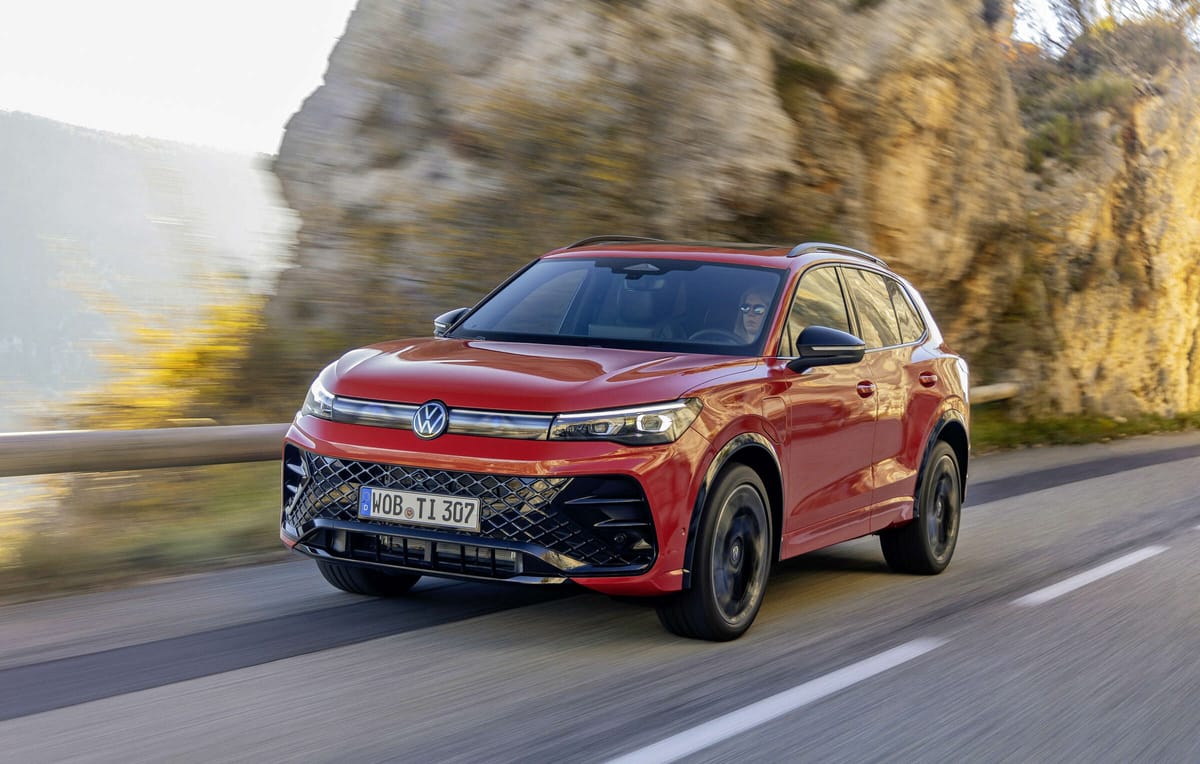
1. Volkswagen Tiguan eHybrid (2025/2026) – The Electric Range & Tech Benchmark
Category: Best Overall Family SUV & Longest Electric Range
The third-generation Volkswagen Tiguan eHybrid built upon the MQB evo platform represents the most comprehensive engineering overhaul in the model's history. It directly answers the surging European demand for maximum zero-emission range.
- Powertrain Architecture: 1.5 TSI evo2 variable-geometry turbocharged four-cylinder (EA211 evo) paired with an 85 kW (115 hp) permanently excited synchronous motor and a 6-speed DQ400e evo dual-clutch e-transaxle.
- Combined System Output: 204 hp (150 kW) / 350 Nm in standard trim, or 272 hp (200 kW) / 400 Nm in the flagship R-Line specification. 0–100 km/h in 7.2 seconds.
- Battery Pack & Usable Capacity: 25.7 kWh gross / 19.7 kWh net usable nickel-cobalt-manganese (NCM) battery pack with dedicated liquid refrigerant circuit.
- WLTP Electric Range: 125 km (78 miles) combined; urban cycle exceeds 140 km.
- Real-World Highway Range: 95–105 km at a sustained 120 km/h (75 mph).
- Charging Infrastructure: Standard 11 kW AC 3-phase onboard charger (0–100% in 2h 15m) plus 50 kW CCS2 DC Fast Charging (10% to 80% in 23 minutes).
- Trunk & Practicality: 490 liters of boot space with rear seats upright, expanding to 1,486 liters folded flat.
- European Starting Price: ~€41,900 / £42,500.
Why It Wins: The Tiguan eHybrid eliminates the single biggest historical compromise of PHEV ownership: slow AC charging. Being able to plug into any high-speed motorway charger while grabbing a coffee and adding 80 km of pure electric range in 20 minutes transforms long-distance usability. Combined with DCC Pro dual-valve adaptive dampers, the Tiguan delivers executive-class acoustic refinement.
[!NOTE]
Downsides: Front-wheel drive only (Volkswagen does not offer 4MOTION mechanical AWD on the eHybrid variant). Boot capacity is reduced from the standard ICE Tiguan's 652 liters to 490 liters to accommodate the floor-mounted battery pack.
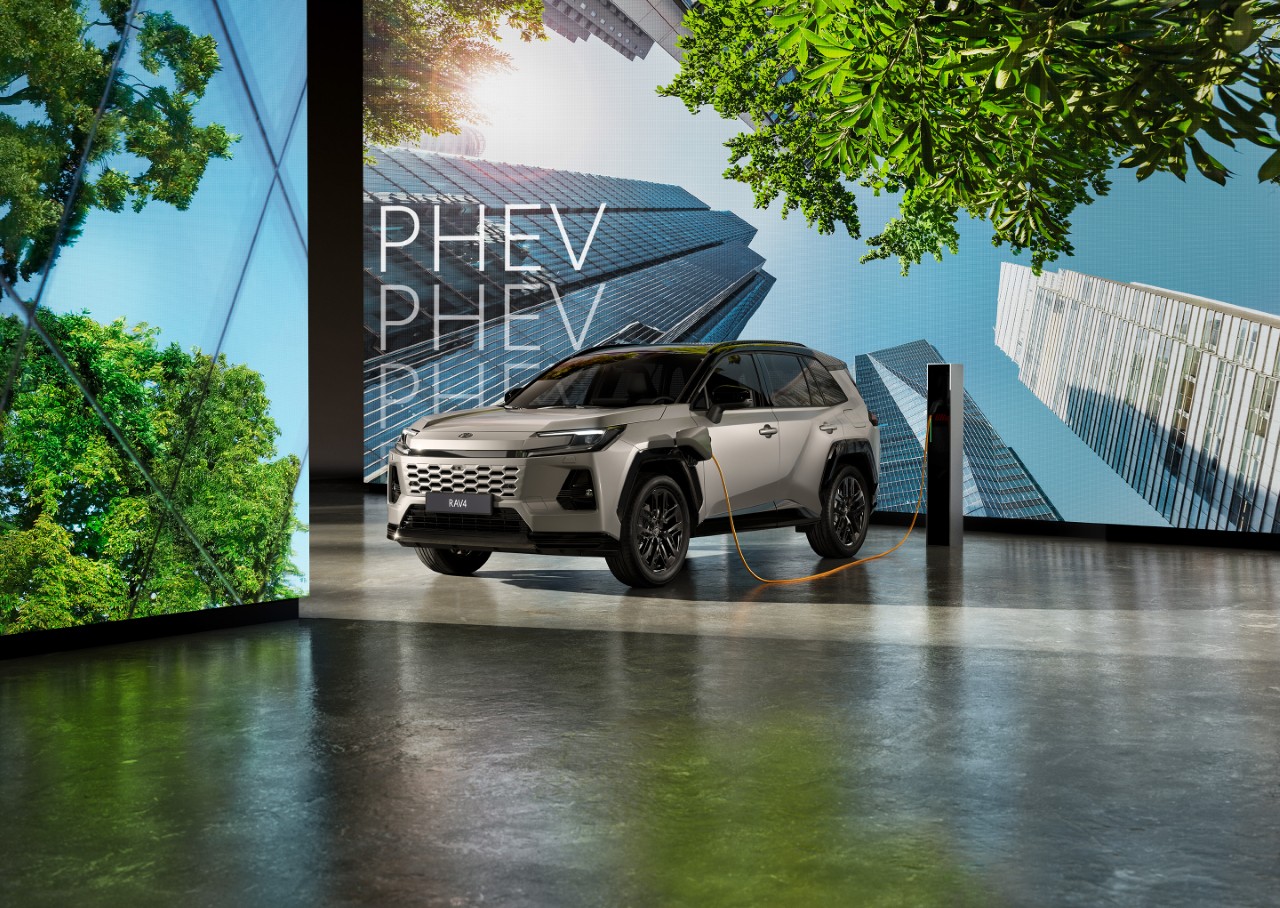
2. Toyota RAV4 Plug-in Hybrid (2026) – The Undisputed King of Reliability & Resale Value
Category: Best Dual-Motor e-AWD & Depleted-Battery Efficiency
While newer European rivals boast larger battery capacities on paper, the Toyota RAV4 Plug-in Hybrid remains the global benchmark for mechanical longevity, real-world reliability, and high-efficiency hybrid operation.
- Powertrain Architecture: 2.5-liter Dynamic Force Atkinson-cycle four-cylinder (A25A-FXS) working in tandem with two electric motors (134 kW front, 40 kW rear) to create Toyota's intelligent AWD-i (Intelligent All-Wheel Drive) system.
- Combined System Output: 306 hp (225 kW). 0–100 km/h in an impressive 6.0 seconds, making it one of the quickest mid-size SUVs in its price bracket.
- Battery Pack & Range: 18.1 kWh (22.7 kWh on updated 2026 model revisions), providing 75 to 102 km WLTP range (up to 120 km in city stop-and-go conditions).
- Depleted-Battery Fuel Economy: 4.8 – 5.2 L/100 km (54–58 MPG UK). When the high-voltage battery is completely drained, Toyota's legendary planetary e-CVT seamlessly transitions into a standard full-hybrid (HEV), outperforming every European and Chinese competitor by 1.5 to 2.5 L/100 km on the motorway.
- Charging: 6.6 kW AC onboard charger (0–100% in 2h 45m on a standard wallbox). No DC charging support.
- Trunk & Utility: 520 liters of luggage space; 1,500 kg braked towing capacity with electronic Trail Mode.
- European Starting Price: ~€47,500 / £44,150.
Why It Wins: Total peace of mind. Supported by Toyota's Relax warranty (up to 10 years / 160,000 km with annual servicing), the RAV4 PHEV exhibits the lowest 5-year depreciation rates in the entire electrified SUV segment. Its electric rear axle provides instantaneous four-wheel traction on wet roads and packed snow without any physical driveshaft friction losses.
[!NOTE]
Downsides: Lack of DC rapid charging means long motorway journeys rely primarily on petrol after the initial 80 km. The e-CVT engine flare during aggressive overtaking remains an acquired taste for drivers transitioning from traditional geared automatics.
3. MG HS II PHEV (2025/2026) – The Unbeatable Value & Budget Champion
Category: Best Price-to-Specification Ratio & UK Fleet Favorite
The second-generation MG HS II 1.5T PHEV has taken the European market by storm, capturing unprecedented search volume in the UK, Spain, and Turkey. It delivers premium-tier range and performance at a family-accessible price point thousands below legacy German competitors.
- Powertrain Architecture: 1.5-liter turbocharged petrol engine (142 hp / 105 kW) paired with a high-torque 135 kW (184 hp) electric traction motor and a 2-speed electric transaxle.
- Combined System Output: 299 hp (220 kW) combined, with peak sprint power reaching up to 339 hp. 0–100 km/h in 6.8 seconds.
- Battery Pack & Usable Capacity: 21.4 kWh (23.2 kWh gross / 19.5 kWh usable), delivering 103 to 120 km WLTP pure electric range.
- Real-World Range: 80–90 km in mixed urban and suburban driving; 70 km on the open motorway.
- Charging: 7 kW AC single-phase onboard charger (0–100% in approximately 3 hours).
- Standard Luxury Equipment: Dual 12.3-inch high-definition floating displays, 360-degree HD parking cameras, wireless Apple CarPlay/Android Auto, full ADAS Level 2 suite, and Vehicle-to-Load (V2L) capability.
- Manufacturer Warranty: 7 years / 150,000 km transferable warranty.
- European Starting Price: ~£32,995 (UK) / €34,990 (Continental Europe).
Why It Wins: Value that cannot be ignored. In the UK, qualifying for the ultra-low 5% BiK company car tax band while undercutting a similarly equipped Tiguan or RAV4 by £10,000 to £12,000 makes the MG HS an undeniable financial masterstroke for both private families and fleet managers.
[!NOTE]
Downsides: Front-wheel drive only; lacks DC rapid charging. Under sudden wide-open throttle acceleration when the battery is low, the 1.5T engine revs noticeably as the 2-speed gearbox shifts under load.
4. Kia Sportage PHEV & Kia Sorento PHEV – The All-Weather Mechanical 4x4 Champions
Category: Best Compact All-Rounder & 7-Seater Family Cruiser
Kia continues to dominate Google Trends across Germany ("phev kia sportage", "phev kia sorento") and Central Europe. Unlike competitors who rely on secondary electric motors or front-wheel-drive setups, Kia equips its PHEV line with an authentic mechanical all-wheel-drive system.
- Powertrain Architecture: 1.6-liter T-GDi Smartstream turbocharged four-cylinder (180 hp) mated to a 66.9 kW (91 hp) electric motor integrated directly inside a 6-speed torque-converter automatic transmission. Total output: 252 hp (185 kW) or 265 hp (195 kW) / 350 Nm torque.
- Mechanical AWD Distinction: A physical driveshaft connects the front and rear axles through an electro-hydraulic multi-plate center clutch. When slippery conditions are detected, mechanical torque is physically transferred to the rear differential. This delivers superior sustained traction in deep winter snow, gravel inclines, and off-road tracks compared to software-governed rear electric motors.
- Kia Sportage PHEV:
- Battery: 13.8 kWh lithium-ion polymer (11.6 kWh usable).
- WLTP Electric Range: 68–70 km (approx. 50–55 km real-world).
- Boot Capacity: 540 liters.
- Price: ~€43,900 / £41,200.
- Kia Sorento PHEV:
- Practicality: Full 7-seater D-SUV layout with three rows of seating.
- WLTP Electric Range: 55–57 km.
- Boot Capacity: 175 L (all 7 seats in place), expanding to 809 L (5 seats) and 1,988 L.
- Towing Capacity: 1,500 kg braked.
- Charging: 7.2 kW AC onboard charger (0–100% in 1h 45m).
- Warranty: Kia's signature 7 years / 150,000 km bumper-to-bumper warranty.
Why They Win: Exceptional build quality, intuitive ergonomics, dual curved panoramic screens, and physical mechanical AWD capability that gives drivers genuine winter confidence across the Alps and Nordic roads.
[!NOTE]
Downsides: The 13.8 kWh battery capacity is smaller than late-2026 rivals offering 20–25 kWh packs. Once the battery is depleted, motorway fuel consumption rises to 6.8–7.6 L/100 km (37–41 MPG).
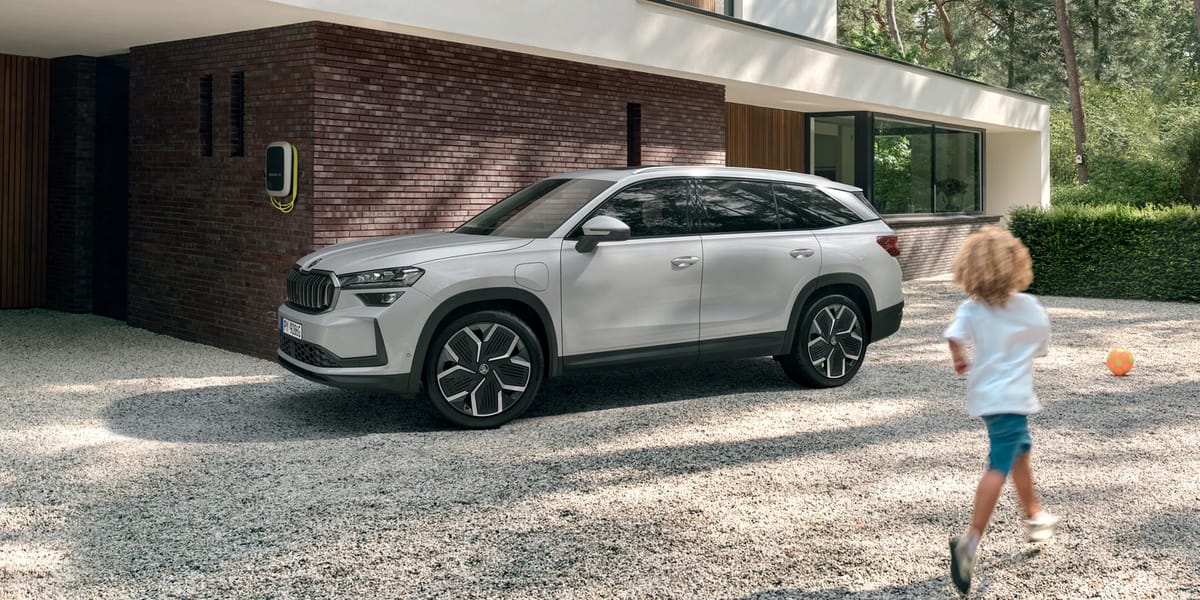
5. Škoda Kodiaq iV (2025/2026) – The Undisputed Space & Long-Distance King
Category: Best Practicality, Boot Volume & Family Touring
For families requiring colossal interior space without sacrificing triple-digit electric range, the Škoda Kodiaq iV shares the cutting-edge MQB evo plug-in powertrain with the Tiguan, but wraps it in a significantly more spacious, versatile shell.
- Powertrain & Battery: 1.5 TSI evo2 + 85 kW motor producing 204 hp (150 kW) / 350 Nm. Coupled with the identical 25.7 kWh gross / 19.7 kWh net usable battery.
- WLTP Electric Range: 123 km (76 miles). Real-world range easily surpasses 100 km in temperate conditions.
- Charging Capabilities: 11 kW AC 3-phase charging plus 50 kW DC CCS2 fast charging (10% to 80% in 25 minutes).
- Luggage Capacity: A cavernous 630 to 745 liters with rear seats upright, expanding to an astonishing 2,065 liters when folded.
- Total Combined Cruising Range: Over 900 km (560 miles) on a single tank and charge.
Why It Wins: Škoda's "Simply Clever" ergonomics (integrated door umbrellas, phone storage pockets, roll-up sunblinds), paired with 50 kW rapid charging and over 120 km of electric range, make the Kodiaq iV the ultimate long-distance family road-tripper.
[!NOTE]
Downsides: Due to battery placement beneath the luggage floor, the PHEV version is offered exclusively as a 5-seater (the 7-seat configuration is restricted to pure ICE and mild-hybrid Kodiaqs).
6. Mitsubishi Outlander PHEV (2025/2026) – The Dual-Motor Off-Road Specialist
Category: Best Dedicated 4x4 Technology & Twin-Motor Response
The pioneer of the plug-in hybrid SUV genre has returned to Europe with its fourth-generation Mitsubishi Outlander PHEV, targeting drivers who demand serious four-wheel-drive capability and active chassis dynamics.
- Powertrain Architecture: 2.4-liter MIVEC Atkinson-cycle petrol engine (136 hp) acting in concert with two dedicated high-output electric motors: an 85 kW (116 hp) front axle motor and a 100 kW (136 hp) rear axle motor.
- Combined System Output: 306 hp (225 kW).
- Super All Wheel Control (S-AWC): Integrated Active Yaw Control (AYC) selectively brakes inside wheels while vectoring electric motor torque front-to-rear and side-to-side across 7 selectable drive modes (Normal, Tarmac, Gravel, Snow, Mud, Power, Eco).
- Battery Pack & Range: 22.7 kWh lithium-ion battery delivering 86 km WLTP electric range.
- Charging: AC Type 2 plus DC fast charging capability (CHAdeMO / CCS depending on market).
- Strengths: Silky smooth electric traction without the hesitation of a conventional transmission; outstanding stability in heavy rain, mud, and frozen mountain passes.
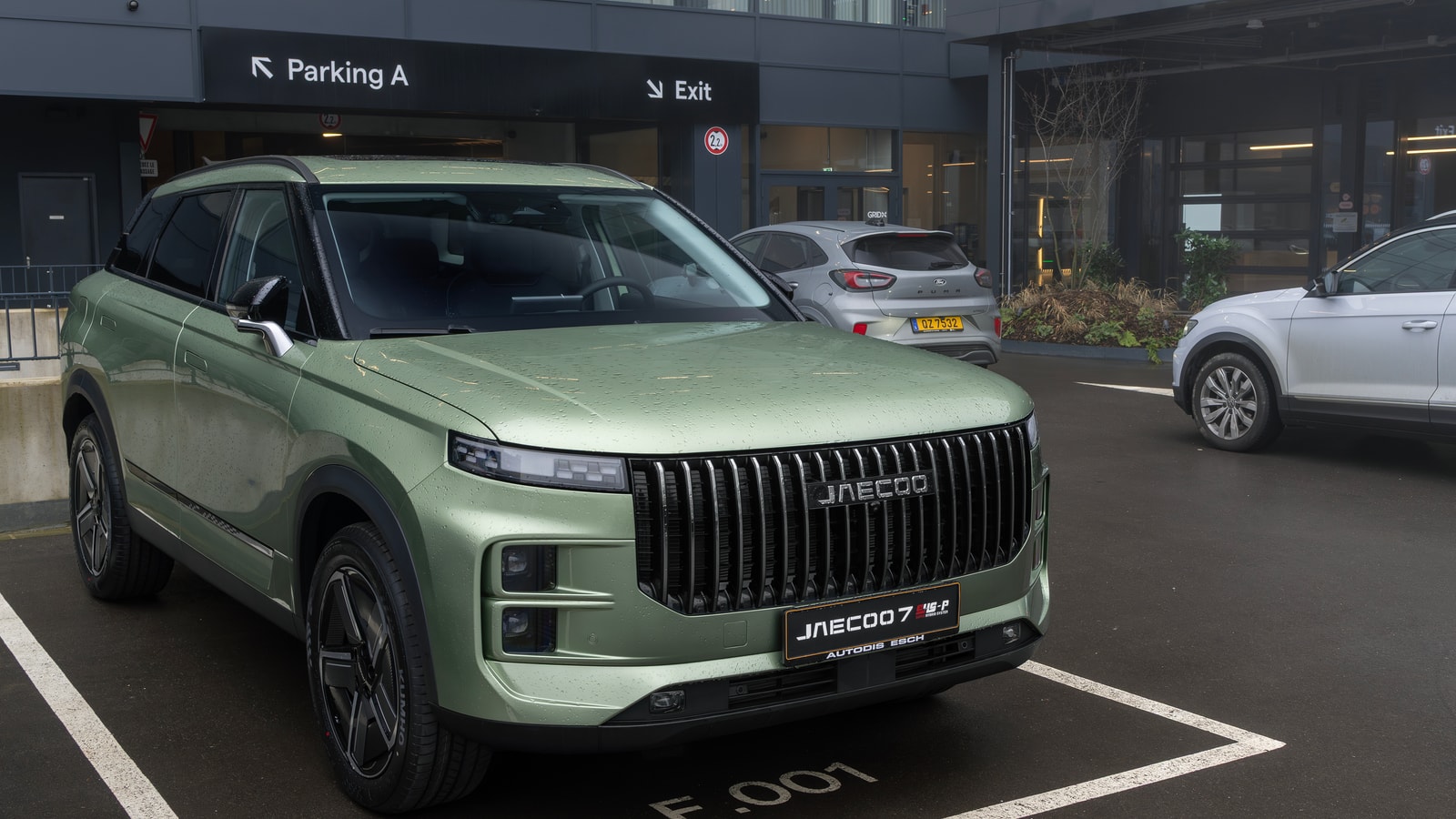
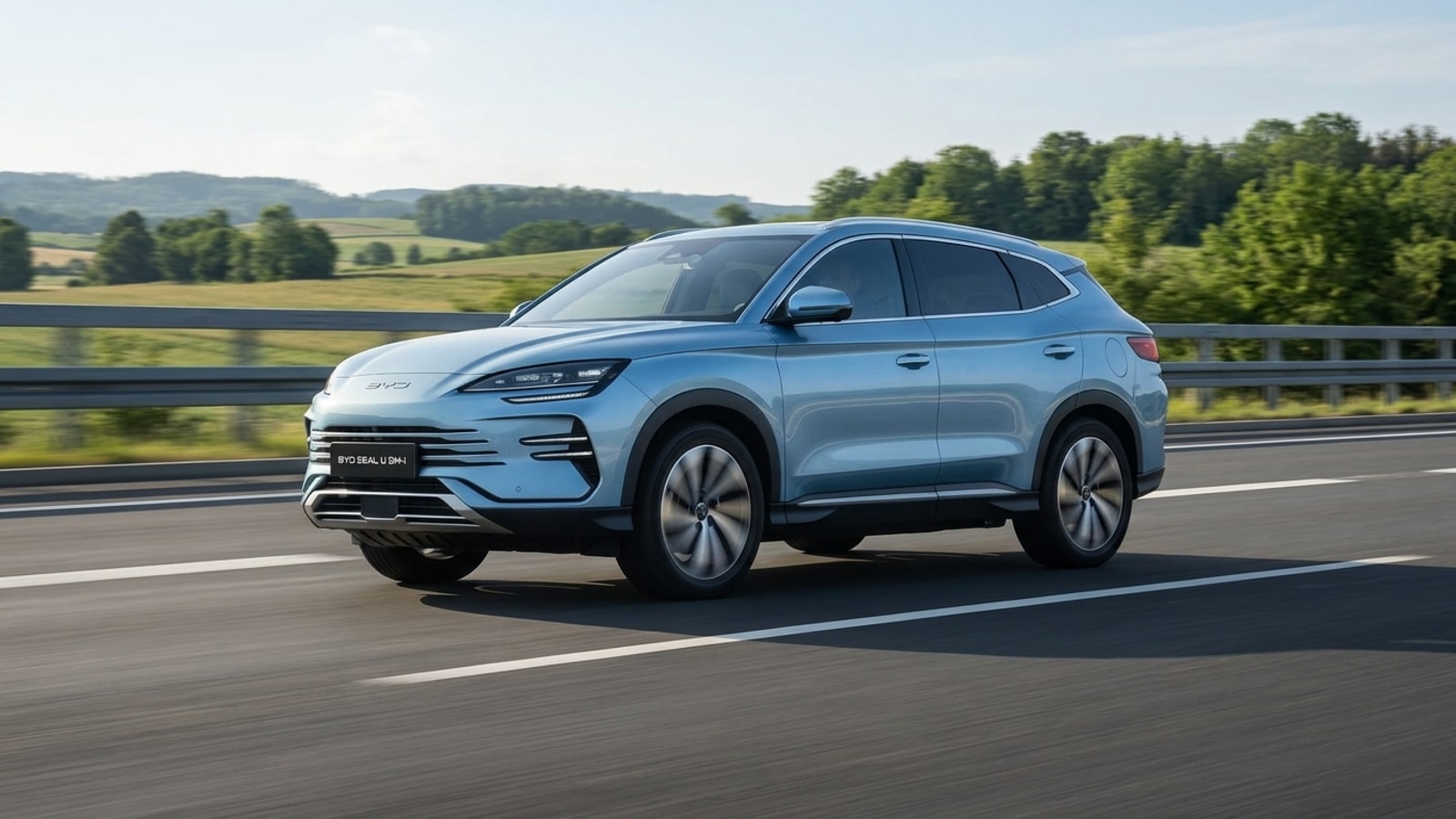
7. BYD Seal U DM-i (2025/2026) – The Blade Battery & Series Hybrid Innovator
Category: Best EV-First Driving Dynamics & Thermal Safety
The BYD Seal U DM-i brings China's market-leading Super DM (Dual Mode) architecture to Europe, using the internal combustion engine predominantly as an onboard electrical generator.
- Powertrain Architecture: Dedicated series-parallel hybrid. In Boost specification, a 1.5-liter Xiaoyun engine (98 hp) pairs with a 145 kW (197 hp) front electric motor for 218 hp total output. The Design specification adds a rear motor for 324 hp AWD.
- Blade Battery Chemistry: Cobalt-free Lithium Iron Phosphate (LFP) Blade Battery (18.3 kWh Boost / 26.6 kWh Design). Inherently resistant to thermal runaway, passing severe nail-penetration testing with zero fire risk.
- WLTP Range: 80 km (Boost) to 125 km (Design).
- Key Features: Whisper-quiet series electric drive feel, 3.3 kW Vehicle-to-Load (V2L) exterior power outlet, and a 15.6-inch rotatable infotainment touchscreen.
What is the Real-World Range of the Volkswagen Tiguan eHybrid (2024+)?
Official WLTP ratings are measured in a controlled 23°C laboratory. Test how winter sub-zero temperatures (-10°C), sustained 130 km/h highway speeds, and terrain elevation impact actual battery range on your specific commute.
Technical Comparison Matrix: 2026 Benchmark PHEV SUVs
| Model | Battery (Gross / Usable) | WLTP EV Range | Real-World Range | DC Fast Charge | Drivetrain & AWD | Total Power | 0–100 km/h | Starting Price (EUR / GBP) |
|---|---|---|---|---|---|---|---|---|
| VW Tiguan eHybrid | 25.7 / 19.7 kWh | 125 km | 95–105 km | 50 kW CCS2 | FWD (DQ400e) | 204–272 hp | 7.2 s | ~€41,900 / £42,500 |
| Toyota RAV4 PHEV | 22.7 / 21.2 kWh | 102 km | 80–90 km | None (6.6 kW AC) | Dual-Motor AWD-i | 306 hp | 6.0 s | ~€47,500 / £44,150 |
| MG HS II PHEV | 23.2 / 19.5 kWh | 120 km | 85–95 km | None (7 kW AC) | FWD (2-spd DHT) | 299 hp | 6.8 s | ~€34,990 / £32,995 |
| Kia Sportage PHEV | 13.8 / 11.6 kWh | 70 km | 50–55 km | None (7.2 kW AC) | Mechanical AWD | 252 hp | 8.2 s | ~€43,900 / £41,200 |
| Škoda Kodiaq iV | 25.7 / 19.7 kWh | 123 km | 95–105 km | 50 kW CCS2 | FWD (DQ400e) | 204 hp | 8.4 s | ~€44,500 / £43,200 |
| Mitsubishi Outlander | 22.7 / 20.0 kWh | 86 km | 65–75 km | 22 kW DC | Twin-Motor S-AWC | 306 hp | 7.9 s | ~€49,900 / £46,500 |
| BYD Seal U DM-i | 18.3 / 16.0 kWh | 80 km | 65–70 km | 18 kW DC | FWD / Dual AWD | 218–324 hp | 8.9 / 5.9 s | ~€38,900 / £35,500 |
Country-by-Country Buyer's Guide & Tax Realities
🇬🇧 United Kingdom: The Benefit-in-Kind (BiK) Goldmine
In the UK corporate car sector, electric range dictates financial viability. HMRC tax bands reward PHEVs capable of covering more than 70 and 130 miles:
- Vehicles with more than 130 miles (209 km) pay 2% BiK.
- Vehicles with 70 to 129 miles (112–207 km)—such as the VW Tiguan eHybrid (125 km) and MG HS II (120 km)—qualify for the 5% BiK band.
- By contrast, older PHEVs with sub-40 mile ranges (e.g., 60 km) are penalized at 8% to 12% BiK.
- Financial Impact: A 40% higher-rate taxpayer choosing a Tiguan eHybrid or MG HS II pays roughly £70–£100 per month in company car tax, saving £2,000 to £3,500 annually compared to an equivalent mild-hybrid or petrol SUV.
🇩🇪 Germany: 0.5% Dienstwagenbesteuerung Under Euro 6e-bis
German company car tax law allows drivers of qualifying electrified vehicles to be taxed on only 0.5% of the gross list price (Bruttolistenpreis) each month, rather than the 1.0% applied to ICE vehicles.
- Strict Eligibility: Under updated federal guidelines, the vehicle must emit less than 50 g/km of CO2 or demonstrate a minimum WLTP electric range of at least 80 km.
- Models like the Tiguan eHybrid (125 km), Kodiaq iV (123 km), and RAV4 PHEV (102 km) easily qualify.
- Shorter-range PHEVs falling below 80 km risk losing 0.5% status under upcoming 2027 fiscal revisions.
🇫🇷 France: Navigating Malus au Poids & Crit'Air 1
France imposes severe weight penalties (malus au poids) on heavy SUVs.
- Plug-in hybrids with a pure electric range exceeding 50 km in urban cycles benefit from a 100 kg to 200 kg weight abatement, sparing models like the Tiguan and MG HS from thousands of euros in punitive registration taxes.
- All modern PHEVs earn the coveted Crit'Air 1 purple sticker, granting unrestricted entry into Paris, Lyon, and Marseille Low Emission Zones (ZFE-m).
🇵🇱 Poland & Eastern Europe: Cold-Weather Resilience & Real TCO
In Poland and the Baltic states, sub-zero winters put battery chemistries to the test:
- NCM Batteries (Tiguan, Kodiaq, RAV4): Maintain superior discharge rates and regenerate efficiently at -10°C without aggressive preheating penalties.
- LFP Blade Battery (BYD Seal U): Exceptional longevity and safety, but requires active battery thermal pre-conditioning via the mobile app during winter mornings to preserve range.
- Rapid expansion of DC charging hubs along the A1, A2, and A4 motorways means 50 kW DC charging (Tiguan/Kodiaq) can turn a 15-minute rest stop into 70 km of clean electric driving.
Pitfalls to Avoid: When Does a PHEV Make Zero Sense?
- No Access to Home or Workplace Charging: If you cannot charge overnight at home (on cheap off-peak domestic tariffs) or during the day at work, a PHEV will quickly become an expensive mistake. You will carry around 250–350 kg of dead battery weight while burning petrol at higher consumption rates.
- Ignoring Depleted-Battery Fuel Burn: If your lifestyle consists of 80% long-distance high-speed motorway driving, test how the car behaves with a depleted battery. While the Toyota RAV4 PHEV achieves 5.0 L/100 km on pure petrol, heavier turbocharged rivals consume 7.5 to 8.5 L/100 km once their batteries are drained.
- Buying Obsolete 1st-Gen Used PHEVs: Search queries for "suv hybride rechargeable occasion" are climbing fast. Beware of early 2018–2021 PHEVs with degraded 10 kWh packs that struggle to achieve 25 km of real electric range today. Modern 2024–2026 vehicles with liquid thermal management offer vastly superior battery health retention.
Final Verdict: Which 2026 PHEV SUV Should You Buy?
- The Best Overall Daily Driver & Electric Commuter: Volkswagen Tiguan eHybrid (125 km range + 50 kW DC fast charging).
- The Long-Term Ownership, Resale & e-AWD Benchmark: Toyota RAV4 Plug-in Hybrid (306 hp, 5.0 L/100 km empty battery economy, 10-year warranty).
- The Best Value-for-Money & Low-BiK Champion: MG HS II PHEV (Sub-£33k starting price, 120 km range, 7-year warranty).
- The True All-Weather 4x4 with Mechanical Grip: Kia Sportage PHEV (Mechanical propshaft AWD, refined 6-speed auto, 7-year warranty).
- The Ultimate Big-Family Road Tripper: Škoda Kodiaq iV (745L luggage capacity, 50 kW DC charging, 900+ km cruising endurance).
- The Dedicated Series Hybrid & Battery Safety Pick: BYD Seal U DM-i (Indestructible LFP Blade Battery, EV-smooth cruising, rotating screen).
Stay Ahead on Next-Gen PHEV Releases & OTA Updates
Get notified when new European plug-in hybrid models premiere, along with real-world range benchmarks, battery chemistry insights, and software update breakdowns.
Related Models
Technical specs and live range simulations for models featured in this report
125 km EVTiguan eHybrid (2024+)
 102 km EV
RAV4 Plug-in Hybrid (2026)
 123 km EV