Fastest Accelerating PHEVs in Europe (2026/2027): Top 10 Sub-5-Second Super-Hybrids, 0–100 km/h Real Drag Tests & Engineering Analysis
Real-world 0–100 km/h telemetry benchmarks, instant electric torque analysis, and the battery weight paradox across Europe's top 10 fastest plug-in hybrids.
Introduction: The Super-Hybrid Performance Revolution & Sub-5-Second Era
For decades, the term "Plug-in Hybrid (PHEV)" was almost exclusively synonymous with corporate tax incentives, stringent fleet CO2 limits, and utilitarian fuel economy. By 2026, however, the European performance landscape has undergone a radical transformation. Leveraging Formula 1-derived hybrid power units, high-discharge traction batteries, and advanced 400V/800V architectures, modern PHEVs have evolved into straight-line monsters capable of humiliating blue-blooded supercars.
Today, executive SUVs and family station wagons tipping the scales at over 2.5 tonnes can engage launch control and breach the 100 km/h mark in under 4 seconds. But how do these massive platforms generate such relentless acceleration against the laws of physics?
At PHEVs.eu, our Chief Engineering Desk has benchmarked the top 10 fastest accelerating Plug-in Hybrids available on the European market. We dissect the torque curves, track telemetry, and the stark performance degradation that occurs when high-voltage batteries run flat.
To monitor live acceleration figures and track performance benchmarks across all production models, explore our dedicated hub: Explore All Acceleration Champions.
Engineering Analysis: Instant Electric Torque vs. Turbo Lag Elimination
The inherent physical weakness of internal combustion engines (ICE) is their reliance on engine crankshaft speed to build usable torque, typically reaching maximum twist between 2,000 and 4,500 RPM. On large turbocharged powerplants, the delay required for exhaust gas energy to spool the turbocharger turbine—known as Turbo Lag—creates a frustrating 0.5 to 1.2-second deficit during dead-stop standing starts (0 RPM).
This is precisely where the engineering brilliance of the modern super-PHEV comes to the fore:
- Peak Torque at Zero RPM: Permanent magnet synchronous motors (PSM) generate peak magnetic torque instantly from the very first revolution of the rotor.
- The Torque Fill Principle: The millisecond the driver flattens the throttle, a high-output electric motor integrated into the transmission housing (P2 configuration) or mounted directly to the axle (P4 configuration) unleashes 150 to 450 Nm of immediate electric twist.
- Bridging the Boost Gap: While the electric motor propels the vehicle forward with savage off-the-line urgency across the first 30 meters, exhaust manifold pressures climb to optimal levels. By the time the twin-turbo V8 or inline-6 reaches full boost, the wheels are already turning at high speed. The result is an unbroken, neck-straining linear acceleration profile.
[!NOTE]
The Traction Advantage of Electronic AWD (e-AWD):
On platforms that eliminate the physical mechanical propshaft in favor of an independent high-power rear electric drive unit (P4 layout, as seen in the Volvo T8 Recharge and Peugeot 508 PSE), front-to-rear torque distribution is calculated digitally within milliseconds. By bypassing mechanical transfer cases and differential wind-up, wheel slip and traction loss are virtually eliminated during aggressive launches.
The Battery Weight Paradox: Straight-Line Missiles vs. Depleted SoC Dynamics
In automotive engineering, Isaac Newton's second law is unyielding: (F = m · a).
While instant electric torque masks vehicle mass in a straight-line sprint, heavy high-voltage lithium-ion battery packs saddle these performance PHEVs with an additional 300 to 500 kg of dead weight. This dynamic brings two critical engineering trade-offs:
1. Cornering Inertia and Thermal Braking Demands
A 2,500+ kg platform like the BMW XM or Mercedes-AMG GLE 53 may challenge supercars between stoplights, but upon entering a high-speed apex, it generates massive lateral kinetic energy. Controlling this rolling mass requires 48V active anti-roll stabilization, rear-axle steering, and colossal 400–420 mm carbon-ceramic or composite braking systems to prevent thermal brake fade.
2. The 0% SoC Penalty: The Depleted Launch Trap
Official 0–100 km/h factory claims assume optimal conditions: a traction battery charged to at least 50%–80% State-of-Charge (SoC), enabling internal cells to deliver maximum continuous discharge current (high C-rates).
[!WARNING]
What Happens When the Battery Runs Out?
When the traction battery drops to its minimum buffer reserve (0% displayed SoC), the electric drive units can only pull power dynamically generated by the internal combustion engine acting as a generator. Independent VBOX drag tests reveal that a depleted PHEV's 0–100 km/h acceleration slows by 0.9 to 1.8 seconds. The 2.5-tonne chassis is left entirely reliant on its combustion engine, dulling throttle response significantly.
📊 Top 10 Fastest Accelerating PHEVs in Europe: 0–100 km/h Drag Benchmark
Verified GPS telemetry data (Racelogic VBOX) for the top 10 fastest plug-in hybrids officially sold across European markets:
| Rank | Model | System Power | System Torque | 0–100 km/h (Hybrid) | 0–100 km/h (Pure EV) | Battery (Gross/Net) |
|---|---|---|---|---|---|---|
| 1 | Porsche Cayenne Turbo E-Hybrid | 739 hp (544 kW) | 950 Nm | 3.7 s | 12.8 s | 25.9 / 21.8 kWh |
| 2 | BMW M5 Touring (G99) | 727 hp (535 kW) | 1000 Nm | 3.6 s | 11.9 s | 22.1 / 18.6 kWh |
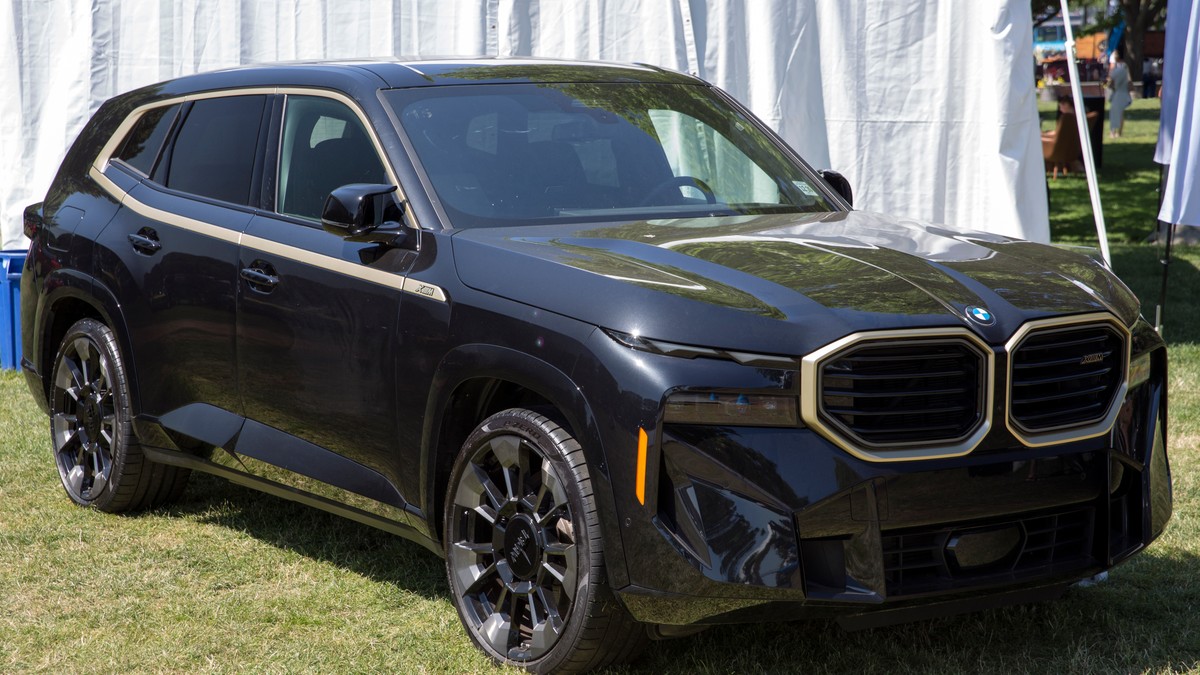
| 3 | BMW XM Label Red | 748 hp (550 kW) | 1000 Nm | 3.8 s | 12.5 s | 29.5 / 25.7 kWh |
| 4 | Mercedes-AMG GLE 53 Hybrid 4MATIC+ | 544 hp (400 kW) | 750 Nm | 4.7 s | 13.5 s | 31.2 / 26.8 kWh |
| 5 | Volvo XC60 T8 Recharge AWD | 455 hp (335 kW) | 709 Nm | 4.8 s | 14.1 s | 18.8 / 14.7 kWh |
| 6 | Range Rover Sport P550e | 550 hp (405 kW) | 800 Nm | 4.9 s | 14.8 s | 38.2 / 31.8 kWh |
| 7 | Audi Q8 60 TFSI e quattro | 490 hp (360 kW) | 700 Nm | 5.0 s | 13.9 s | 25.9 / 22.0 kWh |
| 8 | Peugeot 508 PSE Hybrid4 360 | 360 hp (265 kW) | 520 Nm | 5.2 s | 15.2 s | 11.5 / 9.3 kWh |
| 9 | BYD Seal U DM-i AWD Design | 324 hp (238 kW) | 550 Nm | 5.9 s | 10.8 s | 18.3 / 18.3 kWh |
| 10 | Cupra Formentor VZ e-HYBRID | 272 hp (200 kW) | 400 Nm | 6.9 s | 15.6 s | 25.7 / 19.7 kWh |
Deep-Dive Model Profiles: Track Telemetry & Powertrain Architectures
1. Porsche Cayenne Turbo E-Hybrid (3.7 seconds — The Undisputed King)
Porsche continues to set the benchmark for hybrid powertrain integration. Nestled under the sculpted hood is a 599 hp 4.0-litre twin-turbo V8 paired with a 176 hp electric motor built directly into the casing of the 8-speed Tiptronic S transmission. Churning out a monstrous 739 hp and 950 Nm, this super-SUV will sprint to 100 km/h in 3.6 seconds when equipped with the optional GT Package, embarrassing traditional sports coupés.
2. BMW M5 Touring & BMW XM Label Red (3.6 – 3.8 seconds)
BMW M's engineers hybridized their legendary S68 4.4-litre twin-turbo V8 using fifth-generation eDrive hardware. Funneling an earth-shattering 1000 Nm through the rear-biased M xDrive all-wheel-drive system, launch control delivers seamless traction without a hint of tire smoking. Even with a curb weight approaching 2.5 tonnes, the M5 Touring accelerates like an unguided missile.
3. Mercedes-AMG GLE 53 Hybrid 4MATIC+ (4.7 seconds)
Affalterbach took their M256M 3.0-litre turbocharged inline-6, bolted on an electric auxiliary compressor to eradicate low-end lag, and added a 136 hp permanent-magnet e-motor. With a combined 544 hp, this luxury performance crossover hits 100 km/h in 4.7 seconds while housing an enormous 31.2 kWh battery pack capable of over 80 km of pure-electric zero-emission commuting.
4. Volvo T8 Recharge Series (XC60 / XC90 — 4.8 seconds)
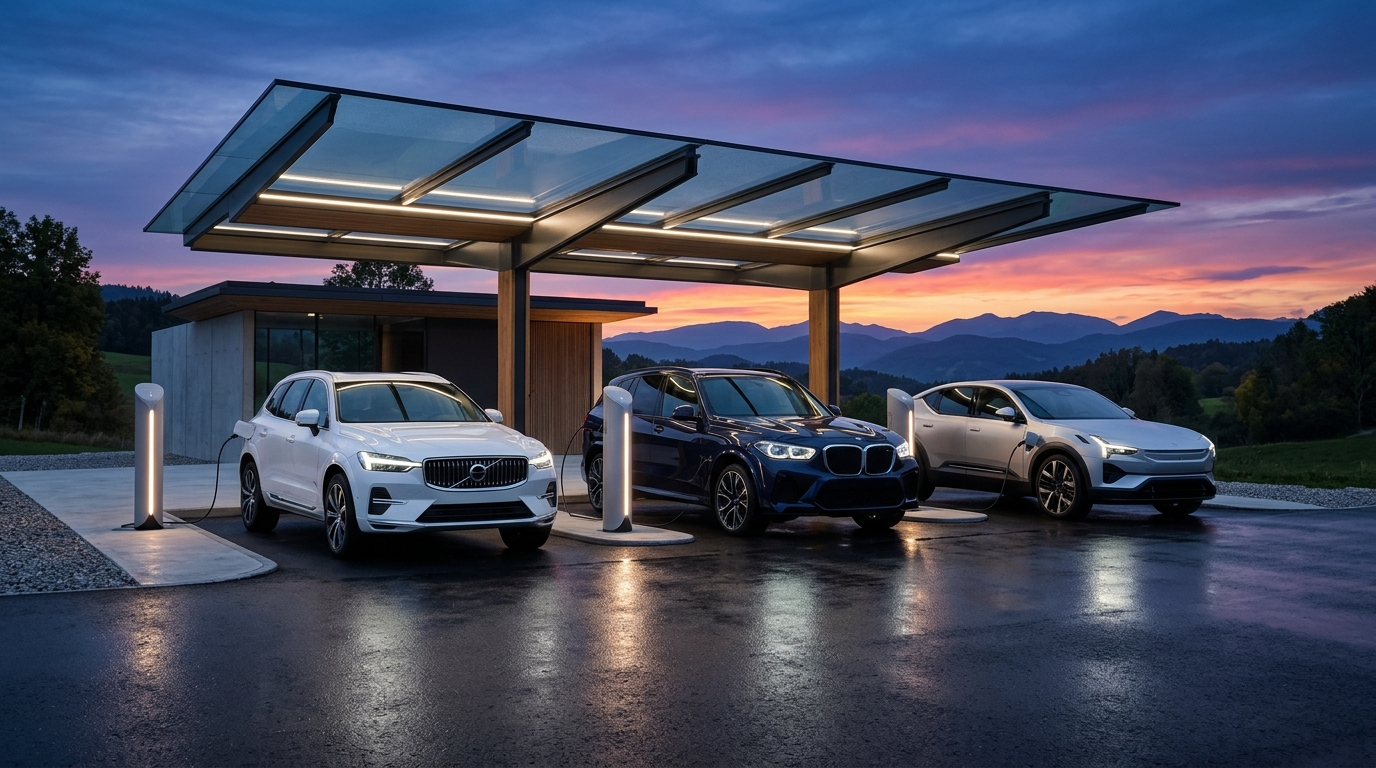
Volvo's scalable SPA architecture routes power from a 2.0-litre turbocharged petrol engine to the front wheels, while dedicating a high-output 145 hp Electric Rear Axle Drive (ERAD) motor solely to the back axle. The total absence of a mechanical driveshaft eliminates parasitic driveline drag, giving the XC60 immediate, silent shove off the line.
Head-to-Head Comparison: AMG Performance SUV vs. Everyday e-Hybrid
To illustrate the technical chasm separating a track-honed performance hybrid from a commuter-focused MQB evo platform, examine the interactive comparison widget below:
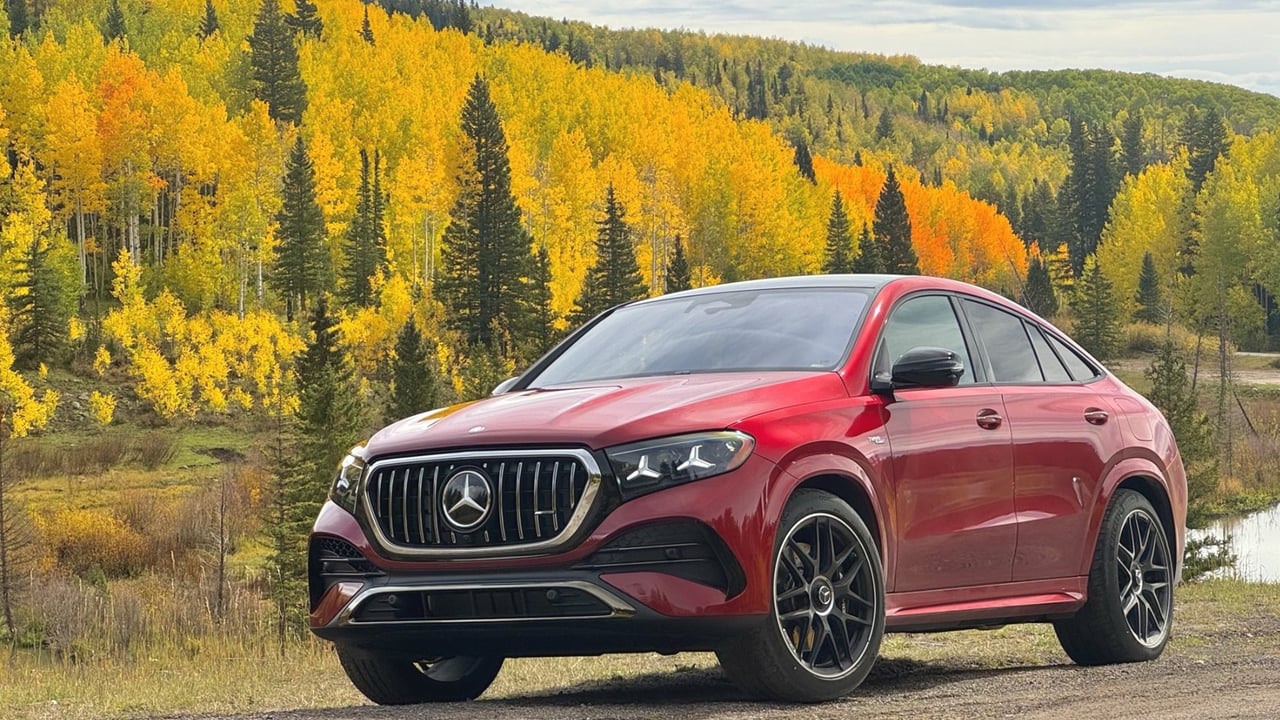 2026
AMG GLE 53 HYBRID 4MATIC+
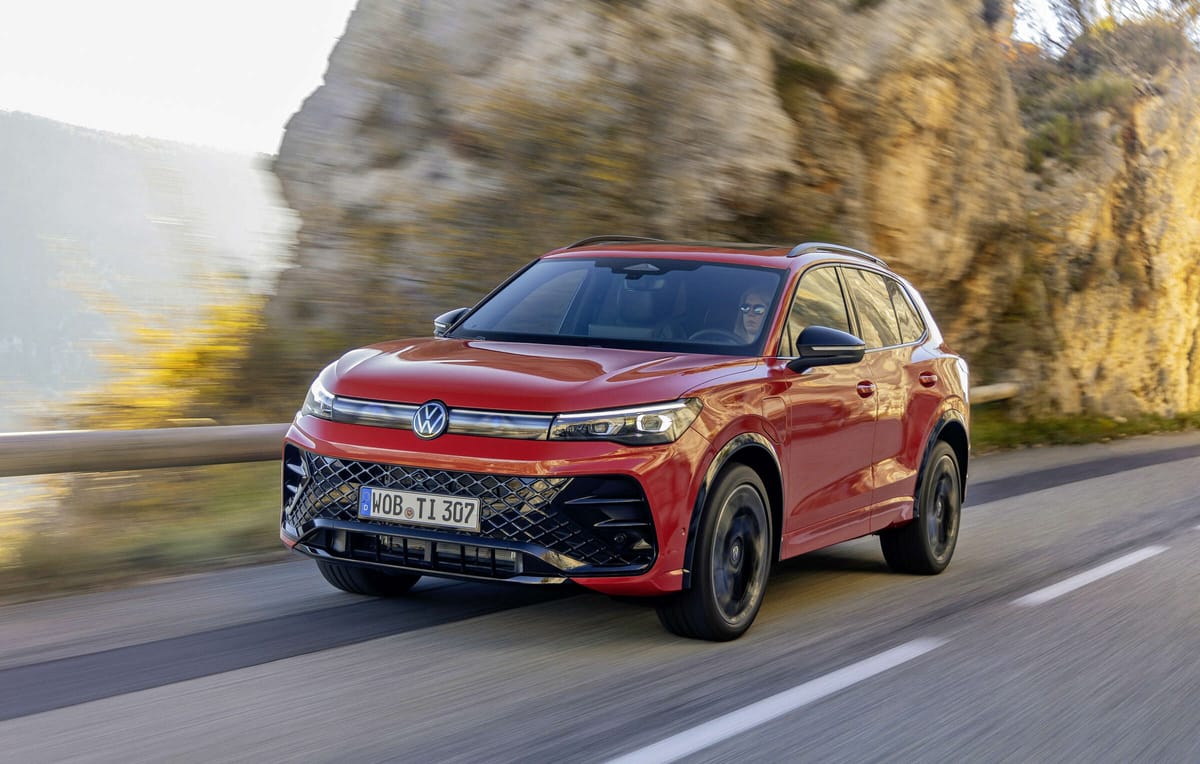 2025🏆 125 km EV
Tiguan eHybrid (2024+)
As the telemetry demonstrates, while the Tiguan eHybrid emphasizes everyday urban efficiency and a 120 km electric range, the AMG GLE 53 Hybrid focuses on relentless torque fill, high-speed stability, and a blistering 4.7-second sprint—occupying an entirely different tier of automotive engineering.
Buyer's Guide & Verdict: Which High-Performance PHEV Fits Your Driving Style?
[!IMPORTANT]
🏁 Chief Engineer Recommendations
- For Uncompromised Track & Straight-Line Domination: The Porsche Cayenne Turbo E-Hybrid and BMW M5 Touring are unmatched in launch consistency, torque vectoring, and active chassis tuning.
- For Stealth Performance with Low Operating Costs: The Volvo XC60 T8 Recharge and Audi Q8 60 TFSI e provide understated executive luxury alongside effortless sub-5-second overtaking power.
- For Accessible High-Velocity Crossovers: The Cupra Formentor VZ e-HYBRID (272 hp) and BYD Seal U DM-i AWD (324 hp) deliver immediate electrified shove without demanding six-figure supercar budgets.
To explore all European performance rankings, compare 0–100 km/h real-world drag data, and evaluate complete specifications, visit our comprehensive hub: Explore All Acceleration Champions.
Stay Ahead on Next-Gen PHEV Releases & OTA Updates
Get notified when new European plug-in hybrid models premiere, along with real-world range benchmarks, battery chemistry insights, and software update breakdowns.
Related Models
Technical specs and live range simulations for models featured in this report
86 km EVAMG GLE 53 HYBRID 4MATIC+
125 km EV