Vehicle Comparison

Comparing 2 vehicles

Summary

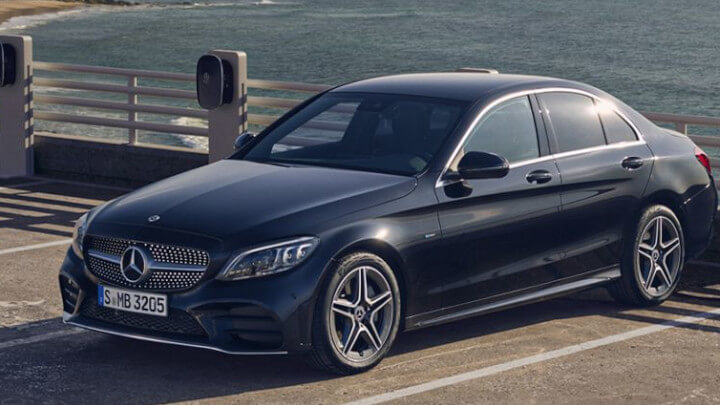
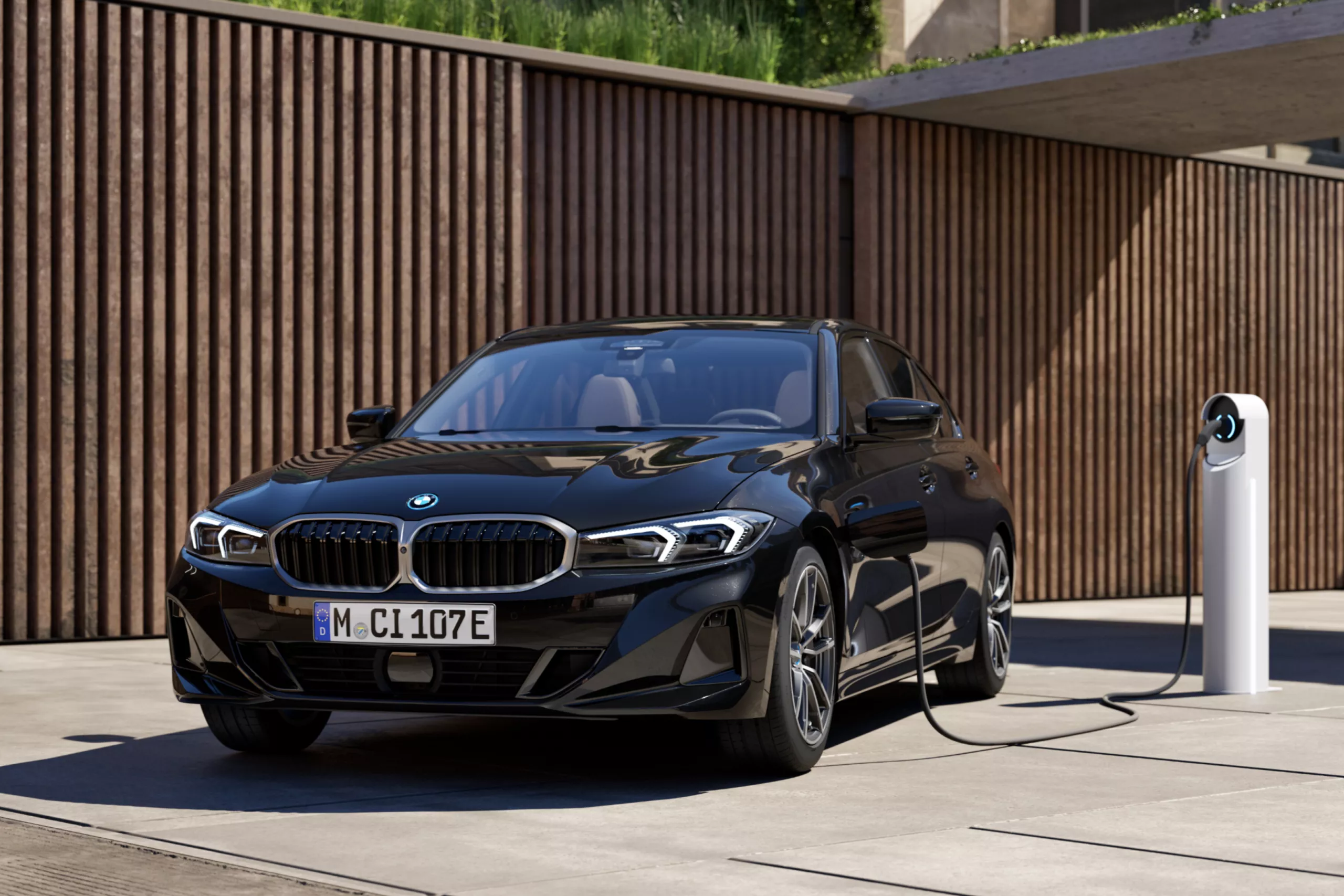
The classic German executive sports saloon duel: BMW 330e vs Mercedes-Benz C 300 e.

Verdict

The Mercedes C 300 e dominates on electric range with its huge 25.4 kWh battery (116 km WLTP) and optional 55 kW DC charging. The BMW 330e offers sharper handling and rear-wheel-drive dynamics, but has a smaller 12 kWh battery with ~60 km range.
BMW 3 Series Sedan

BMW 3 Series Sedan

2025 • Sedan

Adult Occupant
97%
Child Occupant
87%
Pedestrian
87%
Safety Assist
76%
5/5
Euro NCAP
2019
Mercedes-Benz C-Class

Mercedes-Benz C-Class

2025 • Sedan

Adult Occupant
96%
Child Occupant
91%
Pedestrian
92%
Safety Assist
75%
5/5
Euro NCAP
2021

Detailed Comparison

Electric Range

BMW 3 Series Sedan
101 km
Mercedes-Benz C-Class
102 km
Best Value

Fuel Consumption

BMW 3 Series Sedan
1.7 L/100km
Mercedes-Benz C-Class
0.75 L/100km
Best Value

Battery Capacity

BMW 3 Series Sedan
22.3 kWh
Mercedes-Benz C-Class
25.4 kWh
Best Value

Power

BMW 3 Series Sedan
292 HP
Mercedes-Benz C-Class
381 HP
Best Value

Engine Displacement

BMW 3 Series Sedan
2 L
Mercedes-Benz C-Class
2 L

CO₂ Emissions

BMW 3 Series Sedan
38 g/km
Mercedes-Benz C-Class
17 g/km
Best Value

AC Charge Time

BMW 3 Series Sedan
3.5h
Best Value
Mercedes-Benz C-Class
4.5h

DC Charge Time

BMW 3 Series Sedan
—
Mercedes-Benz C-Class
20 min
Best Value

Trunk Volume

BMW 3 Series Sedan
410 L
Best Value
Mercedes-Benz C-Class
315 L

Seats

BMW 3 Series Sedan
5
Mercedes-Benz C-Class
5

Warranty

BMW 3 Series Sedan
3 years
Best Value
Mercedes-Benz C-Class
3 years
Best Value

Euro NCAP Rating

BMW 3 Series Sedan
5/5
Best Value
Mercedes-Benz C-Class
5/5
🗺️EUROPEAN REAL-WORLD ROUTE BENCHMARKS

Germany 🇩🇪 & France 🇫🇷 Popular Routes Comparison

Visual side-by-side simulation across flat highway corridors and hilly Alpine passes—showing exact ICE transition kilometer, downhill regenerative recovery, and total trip energy cost.

Select Benchmark Route (Flat & Hilly):
🇩🇪

Munich → Garmisch-Partenkirchen

A95 / B2 • Bavyera Alpleri

Classic Bavarian Alps benchmark climbing from Munich (520m) over the 885m Eschenlohe crest before descending into Garmisch (708m). Tests uphill battery load, weight penalty, and downhill regen recovery.

Distance
90 km
Highway Pace
110 km/h
Ascent / Descent
+500m / -312m
Local Tariffs (DE)
⚡0.36€ • ⛽1.78€
BMW 330e Sedan (2024+)
⚡ #1

BMW 3 Series Sedan

🔋 19.5 kWh net (101 km WLTP)NMC🔥 PTC Heater
Open in Simulator💶 -0.53 € lower trip cost
Route Drive Mode Split (EV vs HEV)⚡→⛽ Petrol Engine Start:Km 58.4(Alt: 748m)
69% EV
31% HEV
Pure Electric (EV):61.7 km
Hybrid / Petrol (HEV):28.3 km
Electricity Used
15.6 kWh
25.3 kWh/100km
♻️Downhill Regen Bonus
+0.1 kWh
~+0.5 km EV bonus
Petrol Consumed
1.1 L
1.3 L/100km
💶Total Trip Energy Cost
7.58 €
⚡5.62€ + ⛽1.96€
Mercedes-Benz C-Class
🟣 #2

Mercedes-Benz C-Class

🔋 19.5 kWh net (102 km WLTP)NMC🔥 PTC Heater
Route Drive Mode Split (EV vs HEV)⚡→⛽ Petrol Engine Start:Km 58.1(Alt: 746m)
68% EV
32% HEV
Pure Electric (EV):61.5 km
Hybrid / Petrol (HEV):28.5 km
Electricity Used
15.6 kWh
25.4 kWh/100km
♻️Downhill Regen Bonus
+0.1 kWh
~+0.5 km EV bonus
Petrol Consumed
1.4 L
1.5 L/100km
💶Total Trip Energy Cost
8.11 €
⚡5.62€ + ⛽2.49€

⛰️Route Elevation Profile & Terrain Slope Telemetry

Altitude gains/descents, gravity potential energy, and regenerative battery recovery along the journey.

🎯BMW 3 Series SedanEV: 0–58.4 km (%20)HEV: 58.4–71.3 km♻️⚡Regen EV: Km 71.3+ (+3.3 km)Descent (Regenerative Charging)Climb (High Power Draw)
Total Ascent
+500 m
Max Incline: %4.2
Total Descent
-312 m
End Elevation: 708 m
🏔️Peak Elevation
885 m
@ Km 68
Regenerated Energy
+0.1 kWh⚡ Max +1.7 kW
~+0.5 km EV bonus⚡ Full Regen
Terrain Net Impact
+2 kWh
Ekstra yerçekimi tüketimi
🌦️
Dynamic Route Weather & Microclimate CorridorΔT 2.4°C

HVAC draw, air density (ρ), and BMS cold regen limits adapt dynamically to altitude and microclimate at every kilometer.

Munich🌡️ 16°C⛰️ 520m
→
Summit (Km 68)🌡️ 13.6°C⛰️ 885m
→
Garmisch-Partenkirchen🌡️ 14.8°C⛰️ 708m
👁️1-Click Show / Hide:
500m550m600m650m700m750m800m850m900m0 km23 km45 km68 km90 km▲ 885m • 13.6°C⚡ BMW 3 Series S…: Km 58.4748m • %20 Buffer♻️→⚡ Km 71.3+3.3 km Regen EV🟣 Mercedes-Benz …: Km 58.1
Open Route in Full Interactive Map Simulator

Explore live map polylines, custom speeds, and full telemetry

Strengths

Specs & verified owner feedback

BMW 3 Series Sedan4 highlights
Specification Strengths: AC Charge Time, Trunk Volume, Warranty, Euro NCAP Rating
Mercedes-Benz C-Class7 highlights
Specification Strengths: Electric Range, Fuel Consumption, Battery Capacity, Power, CO₂ Emissions, DC Charge Time, Warranty

Weaknesses

Trade-offs & chronic forum issues

BMW 3 Series Sedan6 drawbacks
Specification Drawbacks: Electric Range, Fuel Consumption, Battery Capacity, Power, CO₂ Emissions, DC Charge Time
Mercedes-Benz C-Class3 drawbacks
Specification Drawbacks: AC Charge Time, Trunk Volume, Euro NCAP Rating
PHEV Intelligence Verdict

Community & Road Test Verdict: Which One Should You Buy?

Real-world buying guidance based on owner forum telemetry, long-term feedback, and ownership costs.

Motorway Composure & Trusted Heritage

BMW 3 Series Sedan

Ideal Use Case: Frequent motorway road trips, composed chassis dynamics, and proven secondary market resale.
  • ✓Maximized electric-only daily driving with generous usable battery capacity.
  • ✓Decades of European parts logistics, immediate repair turnaround, and strong residual value.
Motorway Composure & Trusted Heritage

Mercedes-Benz C-Class

Ideal Use Case: Frequent motorway road trips, composed chassis dynamics, and proven secondary market resale.
  • ✓Maximized electric-only daily driving with generous usable battery capacity.
  • ✓Rapid DC charging support for practical top-ups on road trips.
  • ✓Decades of European parts logistics, immediate repair turnaround, and strong residual value.
⚡
Bottom Line: If your priority is urban commuting with zero fuel burn and maximum luxury toys, the newer high-capacity PHEV excels; for frequent cross-country motorway tours and worry-free secondary market resale, established European chassis maturity takes the win.
Best Value

Highlighted cells indicate the best value in each category. Lower values are better for consumption and emissions. Higher values are better for range, power, and capacity.