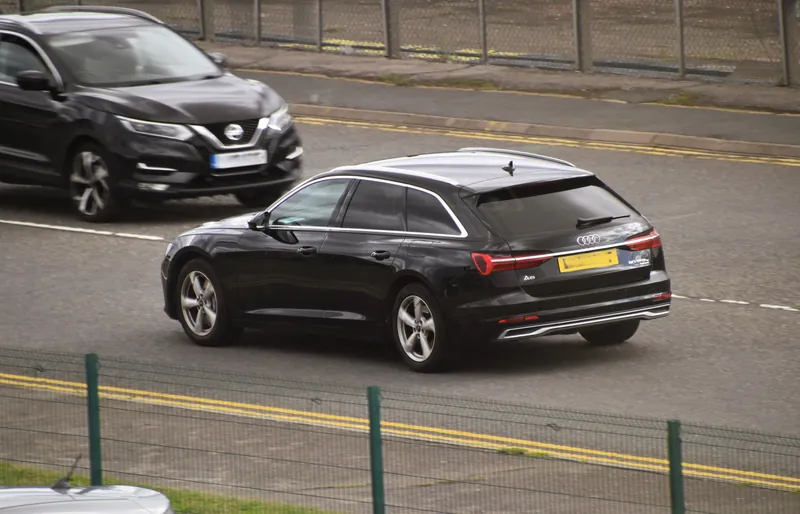
Audi A6 Avant e-hybrid
2026 • Station/Estate
~84–120 km Real-World
25.9 kWh Gross • NMC
Domestic & Wallbox AC Charger
Real-World Range Estimates (EV-Database Benchmark)
Physical range calculations based on seasonal ambient temperatures, cabin HVAC load, and highway cruising aerodynamics.
Freezing cell electrolyte drag & cabin heating HVAC load
Optimal cell chemistry temperature & max city regeneration
High-speed aerodynamic drag & continuous inverter draw
Interactive simulator with live elevation, highway cruising speeds, ambient temperature & cabin HVAC
Euro 6e-bis & Tax Simulator
Calculate Benefit-in-Kind (BiK), Germany 0.5% Dienstwagen tax, France Malus, and 2026/2027 fleet savings.
Safety Rating
Tested year 2026: Adult (87%), Child (88%).
Audi A6 Avant e-hybrid (2026): Powertrain & Real-World Utility
The Audi A6 Avant e-hybrid (2026) is engineered with a 25.9 kWh gross (20.7 kWh usable) traction battery, delivering an official homologated WLTP electric range of 106 km. In real-world European driving conditions, drivers should anticipate approximately ~98 km in mild urban commuting, tapering down to around ~68 km during sub-zero motorway driving (130 km/h) due to cabin HVAC heating and aerodynamic drag. Replenishing the battery takes approximately ~2.1 hours via an 11 kW AC Wallbox (or ~11 hours from a standard 2.3 kW domestic socket).
Test This Vehicle on a Real Route
Calculate how ambient winter temperature, 130 km/h highway speeds, terrain elevation, and cabin heating impact the Audi A6 Avant e-hybrid's battery in real time.
Battery Pack vs Market
25.9 kWh gross
Equipped with a large 25.9 kWh pack (20.7 kWh net usable), the A6 Avant e-hybrid sits in the upper percentile of European plug-in hybrids, offering true zero-emission range that rivals dedicated urban EVs.
Real-World Range Expectation
While official WLTP laboratory figures state 106 km, drivers should anticipate approximately ~98 km in temperate urban commutes, and around ~68 km during sub-zero motorway trips with cabin heating.
Charging Infrastructure
11 kW AC Onboard
A standard 11/22 kW home wallbox will replenish the pack in approximately ~2.1 hours. Fast DC charging is not equipped on this model, meaning charging is best suited for overnight domestic wallboxes or workplace destination chargers.
| Specification | Official Homologated Value | European Segment Context |
|---|---|---|
| WLTP Electric Range | 106 km | Exceptional (100+ km) |
| Battery Capacity | 25.9 kWh gross (20.7 kWh net) | Ultra High-Capacity PHEV |
| Total System Power | 299 HP | Balanced Daily Performance |
| Charging Capabilities | 11 kW AC (AC Only) | Domestic / Workplace AC |
| CO₂ Emissions & Fuel Consumption | 48 g/km • 2.1 L/100km | Euro 6e-bis Compliant |
Daily Commute & Efficiency Verdict: For European motorists with typical round-trip daily commutes of ~30–40 km, the Audi A6 Avant e-hybrid's 106 km electric range can comfortably cover ~3.1 days of routine driving on pure electricity before triggering the combustion engine.
Euro 6e-bis & Corporate Fleet Impact: With an official rating of 48 g/km CO₂ and 2.1 L/100km fuel consumption, this vehicle benefits from competitive tax brackets across major European markets. Under revised 2026/2027 Euro 6e-bis Utility Factor calculations, high electric range models like this retain substantially lower Benefit-in-Kind (BiK) and company car tax liabilities compared to older generation PHEVs.
Euro 6e-bis & Company Car (BiK) Tax Impact
With 106 km electric range and 48 g/km CO₂, this model qualifies for an estimated UK BiK rate of 5% (Low). Its high electric range cushions against upcoming EU Utility Factor calculation increases.
✓ Data verified from official manufacturer WLTP test sheets, European regulatory filings, and Euro NCAP crash databases.
Updated: October 2026 • Verified by PHEVs.eu Technical TeamAudi A6 Avant e-hybrid: Home Charging Times & Battery Warranty Guide
Factual charging durations (domestic socket & Wallbox), European high-voltage battery warranty terms, and degradation expectations.
With its 25.9 kWh gross (20.7 kWh usable) battery, charging the Audi A6 Avant e-hybrid from a standard domestic socket (2.3 kW / 10A Schuko or 3-pin) takes approximately 10.4 hours. Installing a dedicated 11 kW home AC Wallbox reduces this to roughly 1.9 hours. The vehicle uses AC charging exclusively, which is ideal for cost-effective overnight domestic recharging. Charging overnight on off-peak electricity tariffs yields up to 70% running cost savings compared to petrol.