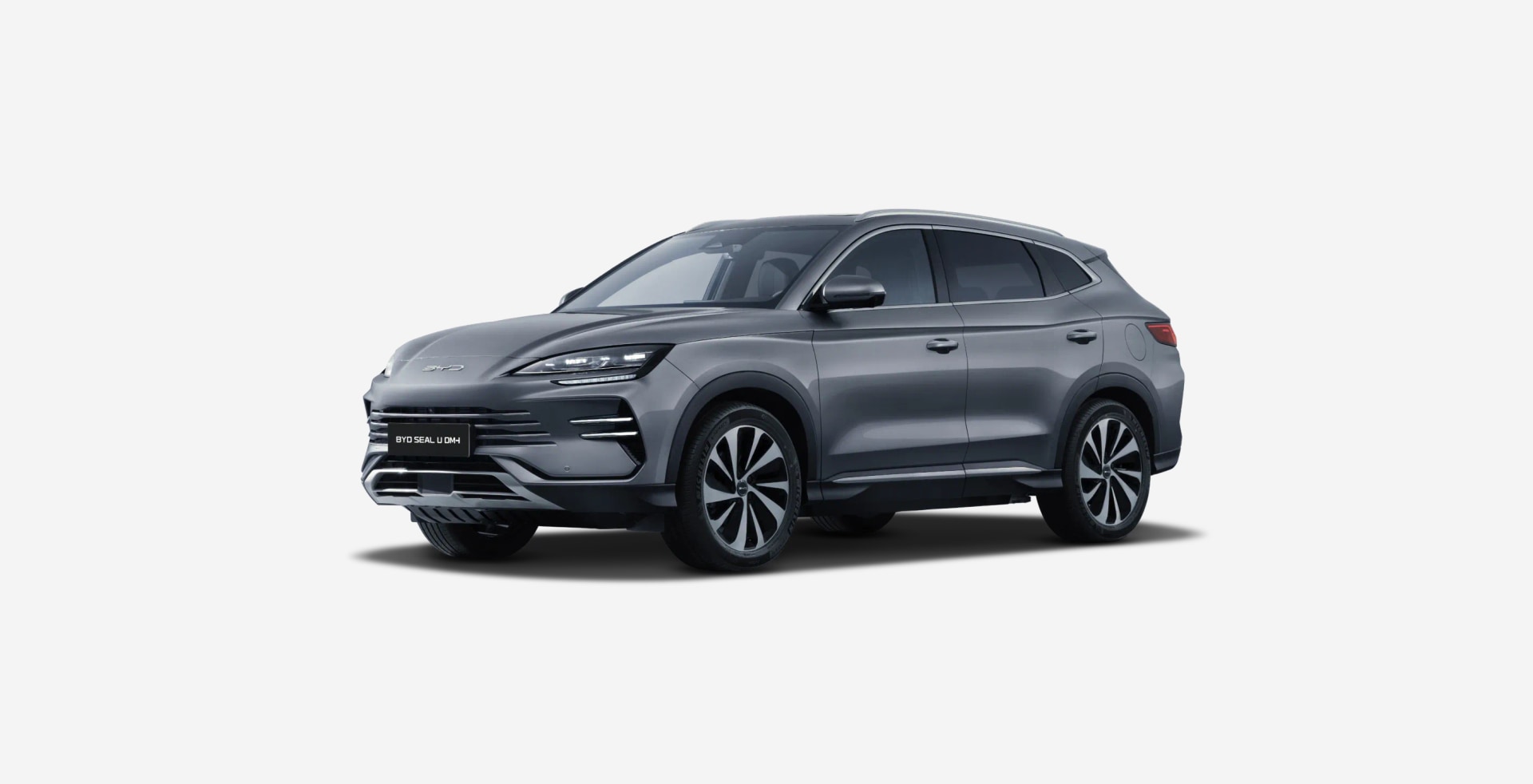
BYD Seal U DM-i Comfort (26.6 kWh)

2024 • SUV • Plug-in Hybrid (PHEV)

2024 BYD Seal U DM-i Comfort (26.6 kWh) Plug-in Hybrid — Exterior Design, Charging Port & Battery Specs
Pure EV Range
125WLTP km

~93–141 km Real-World

Usable Battery
23.5kWh Net

26.6 kWh Gross • LFP (Blade)

Max Charging Speed
11kW AC

⚡ DC 18 kW (~45 min 30–80%)

EV-Database StandardWLTP Combined Base: 125 km

Real-World Range Estimates (EV-Database Benchmark)

Physical range calculations based on seasonal ambient temperatures, cabin HVAC load, and highway cruising aerodynamics.

❄️Winter (0°C, Heating ON)0°C
93km
Real Consumption: 25.3 kWh/100km

Freezing cell electrolyte drag & cabin heating HVAC load

🔥 Standard Heat Pump (COP ~2.5 - 3.0)
☀️Mild / City (20°C, Optimal)20°C
141km
Real Consumption: 16.7 kWh/100km

Optimal cell chemistry temperature & max city regeneration

Peak City Regenerative Efficiency
🛣️Highway Cruising (120 km/h)120 km/h
84km
Real Consumption: 28 kWh/100km

High-speed aerodynamic drag & continuous inverter draw

Cruising EV Limit: 135 km/h
⚡ Test On Your Own Route & Weather ➔

Interactive simulator with live elevation, highway cruising speeds, ambient temperature & cabin HVAC

Fiscal ModuleEuro 6e Protected

Euro 6e-bis & Tax Simulator

Calculate Benefit-in-Kind (BiK), Germany 0.5% Dienstwagen tax, France Malus, and 2026/2027 fleet savings.

🇬🇧 BiK 5%🇩🇪 0.5% Privileg🇫🇷 -200kg Malus
⭐
Crash Safety

Safety Rating

Adult Occupant
90%
Child Occupant
86%
Pedestrian
83%
Safety Assist
77%
5/5
Euro NCAP
2023

Tested year 2023: Adult (90%), Child (86%).

Source: Euro NCAP
Automated Technical Verdict & Data Analysis

BYD Seal U DM-i Comfort (26.6 kWh) (2024): Powertrain & Real-World Utility

Ultra High-Capacity PHEV
EV-DATABASE BENCHMARK ANALYSIS

The BYD Seal U DM-i Comfort (26.6 kWh) (2024) is engineered with a 26.6 kWh gross (23.5 kWh usable) traction battery, delivering an official homologated WLTP electric range of 125 km. In real-world European driving conditions, drivers should anticipate approximately ~115 km in mild urban commuting, tapering down to around ~80 km during sub-zero motorway driving (130 km/h) due to cabin HVAC heating and aerodynamic drag. Replenishing the battery takes around ~45 minutes (10–80%) at 18 kW DC fast chargers, or ~2.2 hours via an 11 kW AC Wallbox.

LIVE ROUTE & WEATHER SIMULATION

Test This Vehicle on a Real Route

Calculate how ambient winter temperature, 130 km/h highway speeds, terrain elevation, and cabin heating impact the BYD Seal U DM-i Comfort (26.6 kWh)'s battery in real time.

Battery Pack vs Market

26.6 kWh gross

Equipped with a large 26.6 kWh pack (23.5 kWh net usable), the Seal U DM-i Comfort (26.6 kWh) sits in the upper percentile of European plug-in hybrids, offering true zero-emission range that rivals dedicated urban EVs.

Real-World Range Expectation

~80–115km realistic

While official WLTP laboratory figures state 125 km, drivers should anticipate approximately ~115 km in temperate urban commutes, and around ~80 km during sub-zero motorway trips with cabin heating.

Charging Infrastructure

11 kW AC Onboard

A standard 11/22 kW home wallbox will replenish the pack in approximately ~2.2 hours. Thanks to 18 kW DC fast charging support, quick roadside boosts from 10% to 80% can be completed in approximately ~45 minutes.

BYD Seal U DM-i Comfort (26.6 kWh) Technical Specifications Summary
SpecificationOfficial Homologated ValueEuropean Segment Context
WLTP Electric Range125 kmExceptional (100+ km)
Battery Capacity26.6 kWh gross (23.5 kWh net)Ultra High-Capacity PHEV
Total System Power218 HPBalanced Daily Performance
Charging Capabilities11 kW AC + 18 kW DC RapidMotorway Fast-Charge Ready
CO₂ Emissions & Fuel Consumption21 g/km • 0.9 L/100kmEuro 6e-bis Compliant

Daily Commute & Efficiency Verdict: For European motorists with typical round-trip daily commutes of ~30–40 km, the BYD Seal U DM-i Comfort (26.6 kWh)'s 125 km electric range can comfortably cover ~3.7 days of routine driving on pure electricity before triggering the combustion engine.

Euro 6e-bis & Corporate Fleet Impact: With an official rating of 21 g/km CO₂ and 0.9 L/100km fuel consumption, this vehicle benefits from competitive tax brackets across major European markets. Under revised 2026/2027 Euro 6e-bis Utility Factor calculations, high electric range models like this retain substantially lower Benefit-in-Kind (BiK) and company car tax liabilities compared to older generation PHEVs.

EU 2026 / 2027 RegulationEuro 6e-bis Protected

Euro 6e-bis & Company Car (BiK) Tax Impact

With 125 km electric range and 21 g/km CO₂, this model qualifies for an estimated UK BiK rate of 5% (Low). Its high electric range cushions against upcoming EU Utility Factor calculation increases.

✓ Data verified from official manufacturer WLTP test sheets, European regulatory filings, and Euro NCAP crash databases.

Updated: October 2026 • Verified by PHEVs.eu Technical Team
Media Reviews • Road Tests1 Video

Real-World Tests & Video Reviews

Curated video test drives, highway electric range tests, and real-world efficiency analysis for the BYD Seal U DM-i Comfort (26.6 kWh).

Explore All Video Reviews
In-Depth Reviewcarwow14 Oct 2026en

BYD Seal U: Why is everyone buying this car?!

Meet the BYD Seal U! It’s a family-friendly SUV from China, and it comes with a starting price of just £33,315! The question is, does it offer enough to steer you away from more established, well-known brands like Nissan and the ever-popular Qashqai? Let’s take a closer look… Starting with the design, there’s no denying that the Seal U looks pretty smart on the outside. The front end is well designed, with the DRLs positioned under the main headlights, while a large slatted grille gives the car a good presence. Along the side, there’s a bold crease running along the width of the car, while there’s also lots of chrome trim around the windows and the door sills. There’s only one choice of alloy wheel design available, but it looks pretty smart. Around the back, there’s a full-length light bar, and there are lots of layers from the top down to the bottom. All-in, it looks relatively smart. The interior of the Seal U is generally well-made. It comes with lots of soft-touch materials throughout, and the seats are covered in leatherette and are both heated and cooled! There’s a huge infotainment screen in the middle of the dash (which can rotate!), and the system is super-responsive and easy to use. It also comes with Apple CarPlay and Android Auto as standard. There’s a large digital dial screen as well as a heads-up display, and there’s a good amount of storage throughout the cabin. In terms of engines, every version of the Seal U is a plug-in hybrid. The entry-level car has a 1.5-litre petrol engine coupled with an electric motor, as well as an 18.3kWh battery, and it can produce 218hp. The next car up has the same engine and single motor, but a bigger 26.6kWh battery to allow for further driving on electric power alone. This version also delivers 218hp. The range-topping Seal U adds a turbocharger to the 1.5-litre engine, and it also adds an additional motor for all-wheel drive. The motors and engine combine to produce 324hp. So while the entry-level Seal U costs £33,315, the price rises to £40,015 for the range-topper. So is it worth it? You’ll need to stick with Mat to see for yourself!

Looking for more test drives? Browse Europe’s largest PHEV video comparison hub. Explore All Video Reviews

Mini FAQ • Real-World Ownership

BYD Seal U DM-i Comfort (26.6 kWh): Home Charging Times & Battery Warranty Guide

Factual charging durations (domestic socket & Wallbox), European high-voltage battery warranty terms, and degradation expectations.

With its 26.6 kWh gross (23.5 kWh usable) battery, charging the BYD Seal U DM-i Comfort (26.6 kWh) from a standard domestic socket (2.3 kW / 10A Schuko or 3-pin) takes approximately 11.8 hours. Installing a dedicated 11 kW home AC Wallbox reduces this to roughly 2.1 hours. For long motorway journeys, the BYD Seal U DM-i Comfort (26.6 kWh) supports DC CCS2 fast charging at up to 18 kW, reaching 10% to 80% in about 45 minutes at motorway service stations. Charging overnight on off-peak electricity tariffs yields up to 70% running cost savings compared to petrol.

Need customized real-world range or tax figures?