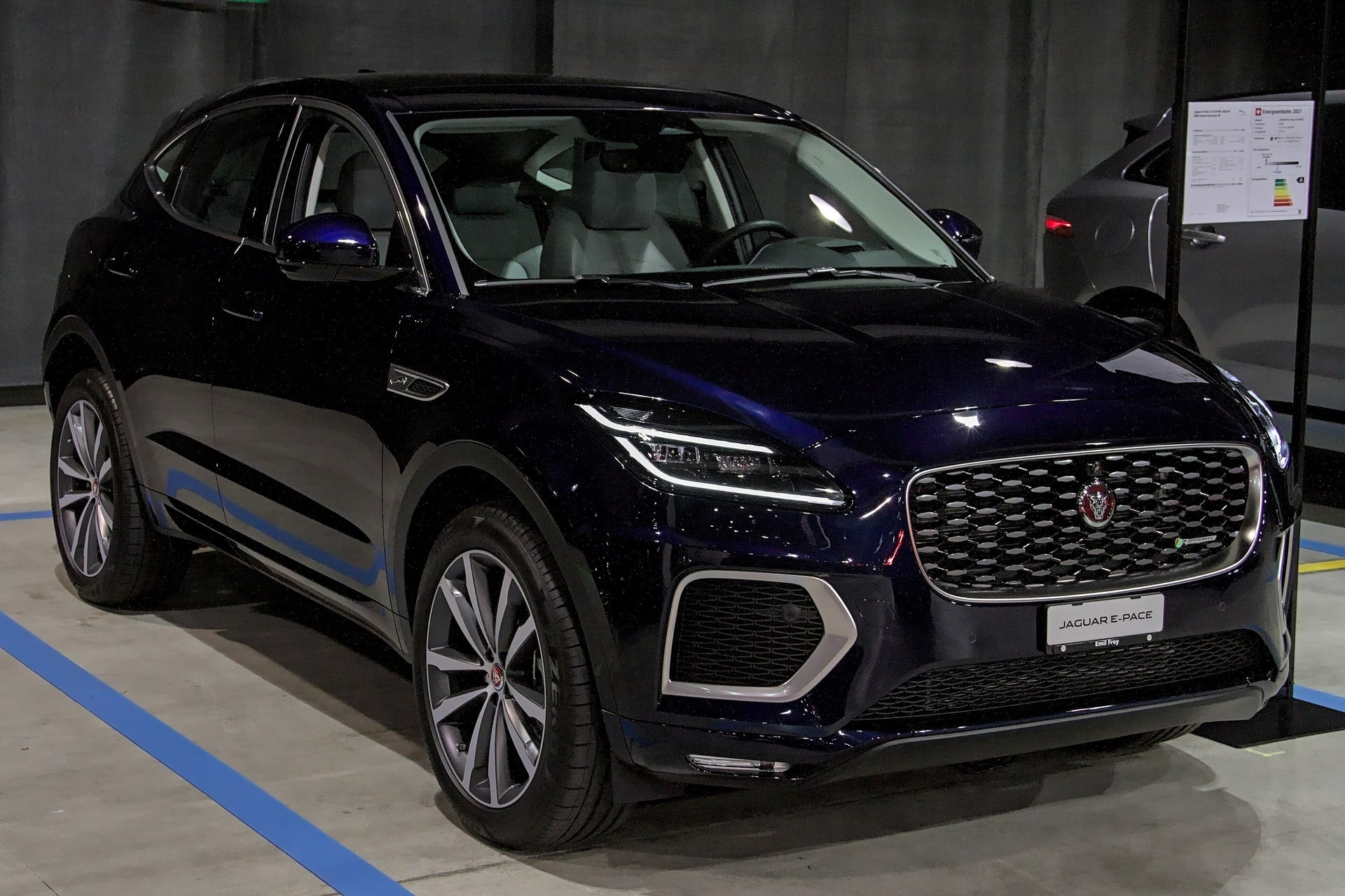
Jaguar E-Pace P300e
2024 • SUV • Plug-in Hybrid (PHEV)
~45–69 km Real-World
15 kWh Gross • NMC
⚡ DC 32 kW (~30 min 30–80%)
Real-World Range Estimates (EV-Database Benchmark)
Physical range calculations based on seasonal ambient temperatures, cabin HVAC load, and highway cruising aerodynamics.
Freezing cell electrolyte drag & cabin heating HVAC load
Optimal cell chemistry temperature & max city regeneration
High-speed aerodynamic drag & continuous inverter draw
Interactive simulator with live elevation, highway cruising speeds, ambient temperature & cabin HVAC
Euro 6e-bis & Tax Simulator
Calculate Benefit-in-Kind (BiK), Germany 0.5% Dienstwagen tax, France Malus, and 2026/2027 fleet savings.
Safety Rating
Tested year 2017: Adult (86%), Child (87%).
Jaguar E-Pace P300e (2024): Powertrain & Real-World Utility
The Jaguar E-Pace P300e (2024) is engineered with a 15 kWh gross (12.2 kWh usable) traction battery, delivering an official homologated WLTP electric range of 61 km. In real-world European driving conditions, drivers should anticipate approximately ~56 km in mild urban commuting, tapering down to around ~39 km during sub-zero motorway driving (130 km/h) due to cabin HVAC heating and aerodynamic drag. Replenishing the battery takes around ~30 minutes (10–80%) at 32 kW DC fast chargers, or ~1.9 hours via an 11 kW AC Wallbox.
Test This Vehicle on a Real Route
Calculate how ambient winter temperature, 130 km/h highway speeds, terrain elevation, and cabin heating impact the Jaguar E-Pace P300e's battery in real time.
Battery Pack vs Market
15 kWh gross
With 15 kWh storage (12.2 kWh net), the battery packaging is optimized to balance electric range with reduced vehicle curb weight, preserving luggage space and internal agility.
Real-World Range Expectation
While official WLTP laboratory figures state 61 km, drivers should anticipate approximately ~56 km in temperate urban commutes, and around ~39 km during sub-zero motorway trips with cabin heating.
Charging Infrastructure
7 kW AC Onboard
A standard 11/22 kW home wallbox will replenish the pack in approximately ~1.9 hours. Thanks to 32 kW DC fast charging support, quick roadside boosts from 10% to 80% can be completed in approximately ~30 minutes.
| Specification | Official Homologated Value | European Segment Context |
|---|---|---|
| WLTP Electric Range | 61 km | Standard Commuter |
| Battery Capacity | 15 kWh gross (12.2 kWh net) | Segment Standard |
| Total System Power | 309 HP | High Performance |
| Charging Capabilities | 7 kW AC + 32 kW DC Rapid | Motorway Fast-Charge Ready |
| CO₂ Emissions & Fuel Consumption | 32 g/km • 1.4 L/100km | Euro 6e-bis Compliant |
Daily Commute & Efficiency Verdict: For European motorists with typical round-trip daily commutes of ~30–40 km, the Jaguar E-Pace P300e's 61 km electric range can comfortably cover ~1.8 days of routine driving on pure electricity before triggering the combustion engine.
Euro 6e-bis & Corporate Fleet Impact: With an official rating of 32 g/km CO₂ and 1.4 L/100km fuel consumption, this vehicle benefits from competitive tax brackets across major European markets. Under revised 2026/2027 Euro 6e-bis Utility Factor calculations, high electric range models like this retain substantially lower Benefit-in-Kind (BiK) and company car tax liabilities compared to older generation PHEVs.
Euro 6e-bis & Company Car (BiK) Tax Impact
With 61 km electric range and 32 g/km CO₂, this model qualifies for an estimated UK BiK rate of 8% (Standard). Shorter range PHEVs face stricter testing utility factors under 2026/2027 fleet rules.
✓ Data verified from official manufacturer WLTP test sheets, European regulatory filings, and Euro NCAP crash databases.
Updated: October 2026 • Verified by PHEVs.eu Technical TeamJaguar E-Pace P300e: Home Charging Times & Battery Warranty Guide
Factual charging durations (domestic socket & Wallbox), European high-voltage battery warranty terms, and degradation expectations.
With its 15 kWh gross (12.2 kWh usable) battery, charging the Jaguar E-Pace P300e from a standard domestic socket (2.3 kW / 10A Schuko or 3-pin) takes approximately 6.1 hours. Installing a dedicated 7 kW home AC Wallbox reduces this to roughly 1.7 hours. For long motorway journeys, the Jaguar E-Pace P300e supports DC CCS2 fast charging at up to 32 kW, reaching 10% to 80% in about 30 minutes at motorway service stations. Charging overnight on off-peak electricity tariffs yields up to 70% running cost savings compared to petrol.