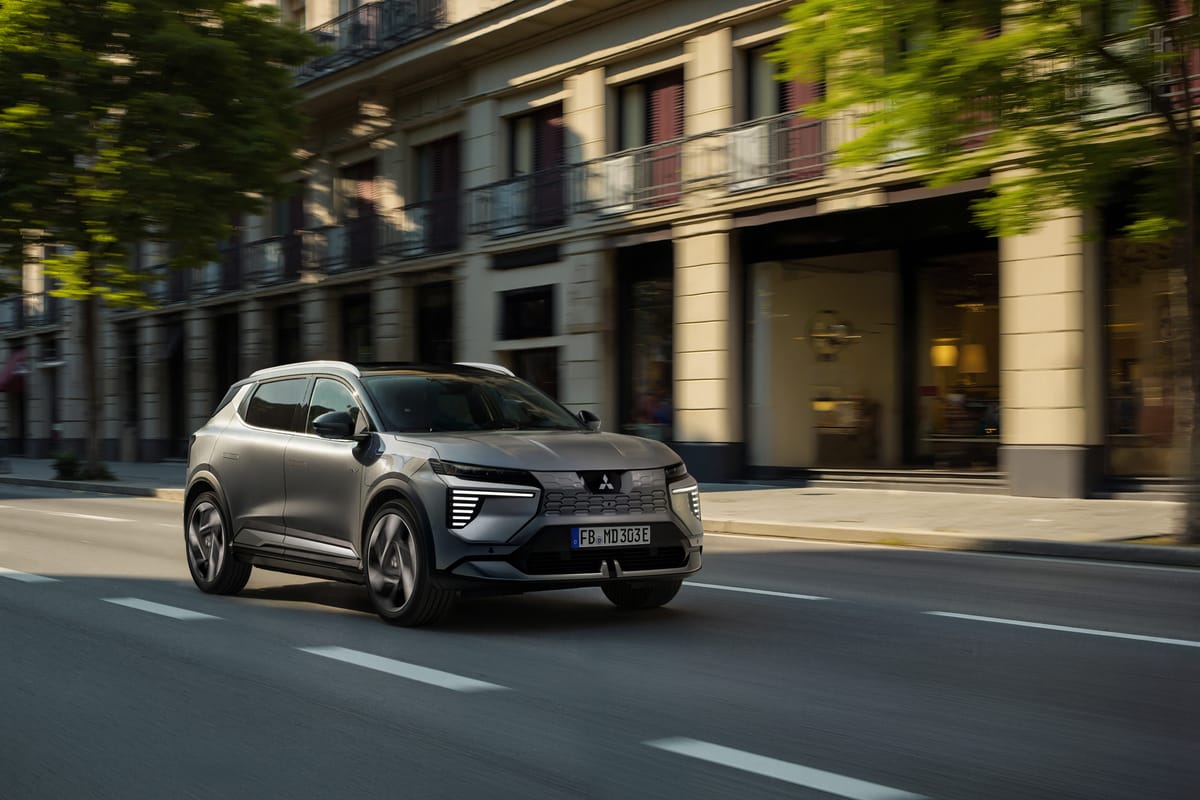
Mitsubishi Eclipse Cross PHEV
2021 • SUV
Electric Range
45
WLTP kmBattery Capacity
13.8
kWh (11.6 net)Power Output
188
HPTrunk Volume
359
Liters (1108L max)Seats & DC
5 Seats
⚡ DC 22 kWReal-World Range Estimates (EV-Database Benchmark)
Physical range calculations based on seasonal ambient temperatures, cabin HVAC load, and highway cruising aerodynamics.
Freezing cell electrolyte drag & cabin heating HVAC load
Optimal cell chemistry temperature & max city regeneration
High-speed aerodynamic drag & continuous inverter draw
Range Simulator
Test real-world electric range across seasonal temperatures, climate control, and highway share.
Euro 6e-bis & Tax Simulator
Calculate Benefit-in-Kind (BiK), Germany 0.5% Dienstwagen tax, France Malus, and 2026/2027 fleet savings.
Safety Rating
Tested year 2022: Adult (92%), Child (83%).
Mitsubishi Eclipse Cross PHEV (2021): Powertrain & Real-World Utility
The Mitsubishi Eclipse Cross PHEV (2021) is engineered with a 13.8 kWh gross (11.6 kWh usable) traction battery, delivering an official homologated WLTP electric range of 45 km. In real-world European driving conditions, drivers should anticipate approximately ~41 km in mild urban commuting, tapering down to around ~29 km during sub-zero motorway driving (130 km/h) due to cabin HVAC heating and aerodynamic drag. Replenishing the battery takes around ~25 minutes (10–80%) at 22 kW DC fast chargers, or ~3.4 hours via an 11 kW AC Wallbox.
Test This Vehicle on a Real Route
Calculate how ambient winter temperature, 130 km/h highway speeds, terrain elevation, and cabin heating impact the Mitsubishi Eclipse Cross PHEV's battery in real time.
Battery Pack vs Market
13.8 kWh gross
With 13.8 kWh storage (11.6 kWh net), the battery packaging is optimized to balance electric range with reduced vehicle curb weight, preserving luggage space and internal agility.
Real-World Range Expectation
While official WLTP laboratory figures state 45 km, drivers should anticipate approximately ~41 km in temperate urban commutes, and around ~29 km during sub-zero motorway trips with cabin heating.
Charging Infrastructure
3.7 kW AC Onboard
A standard 11/22 kW home wallbox will replenish the pack in approximately ~3.4 hours. Thanks to 22 kW DC fast charging support, quick roadside boosts from 10% to 80% can be completed in approximately ~25 minutes.
| Specification | Official Homologated Value | European Segment Context |
|---|---|---|
| WLTP Electric Range | 45 km | Standard Commuter |
| Battery Capacity | 13.8 kWh gross (11.6 kWh net) | Segment Standard |
| Total System Power | 188 HP | Balanced Daily Performance |
| Charging Capabilities | 3.7 kW AC + 22 kW DC Rapid | Motorway Fast-Charge Ready |
| CO₂ Emissions & Fuel Consumption | 34 g/km • 1.9 L/100km | Euro 6e-bis Compliant |
Daily Commute & Efficiency Verdict: For European motorists with typical round-trip daily commutes of ~30–40 km, the Mitsubishi Eclipse Cross PHEV's 45 km electric range can comfortably cover ~1.3 days of routine driving on pure electricity before triggering the combustion engine.
Euro 6e-bis & Corporate Fleet Impact: With an official rating of 34 g/km CO₂ and 1.9 L/100km fuel consumption, this vehicle benefits from competitive tax brackets across major European markets. Under revised 2026/2027 Euro 6e-bis Utility Factor calculations, high electric range models like this retain substantially lower Benefit-in-Kind (BiK) and company car tax liabilities compared to older generation PHEVs.
Euro 6e-bis & Company Car (BiK) Tax Impact
With 45 km electric range and 34 g/km CO₂, this model qualifies for an estimated UK BiK rate of 8% (Standard). Shorter range PHEVs face stricter testing utility factors under 2026/2027 fleet rules.
✓ Data verified from official manufacturer WLTP test sheets, European regulatory filings, and Euro NCAP crash databases.
Updated: October 2026 • Verified by PHEVs.eu Technical TeamCharging Architecture & Electrical Ports
AC home wallbox charging curves and public DC rapid charging capabilities.
On-Board Charger (AC)
DC Rapid Charging (CCS)
BATTERY
Hybrid Powertrain & Battery Engineering
Transmission integration, pure-EV speed boundaries, and cell thermal management.
Multi-Mode Twin-Motor (Series/Parallel DHT)
Above this speed, the petrol ICE starts automatically to assist propulsion even with 100% SoC.
NMC (Nickel Manganese Cobalt)
modular
High energy density & sub-zero discharge stability. Keeping daily charges between 20% and 80% maximizes long-term pack life.
Cuts winter cabin HVAC draw by ~60%, preserving sub-zero electric driving range.
General
Electric Performance
Engine & Performance
Comfort & Space
Key Technical Specifications — Mitsubishi Eclipse Cross PHEV (2021)
Official manufacturer and WLTP homologated technical data sheet for Mitsubishi Eclipse Cross PHEV plug-in hybrid.
| Specification Parameter | Official Value |
|---|---|
| Vehicle Model | Mitsubishi Eclipse Cross PHEV |
| WLTP Electric Range | 45 km |
| Battery Capacity | 13.8 kWh (Net: 11.6 kWh) |
| WLTP Fuel Consumption | 1.9 L / 100 km |
| CO₂ Emissions | 34 g / km |
| System Power Output | 188 HP (140 kW) |
| Combustion Engine | 2.4 L |
| Electric Motor Output | 177 HP (132 kW) |
| Hybrid Powertrain Architecture | Multi-Mode Twin-Motor (Series/Parallel DHT) |
| Pure EV Speed Ceiling | 130 km/h |
| AC Charging | 3.7 kW (1-Phase, ~3.5 h) |
| DC Fast Charging | Yes (22 kW, 30–80% in ~25 min) |
| Vehicle-to-Load (V2L) | Not supported |
| Thermal Management | Heat Pump Standard (COP ~2.5 - 3.0) |
| Seating Capacity | 5 Seats |
| Luggage / Boot Capacity | 359 L (Max: 1108 L) |
| Dimensions (L × W × H) | 4405 × 1805 × 1685 mm |
| Curb Weight | 1800 kg |
| Euro NCAP Safety | ★★★★★ (5 Stars) |
| Manufacturer Warranty | 5 Years |
Launch Real-World Route Simulator with
Pre-configured with battery capacity, hybrid reserve threshold, and powertrain drag aerodynamics.