KBA October 2026 Germany Report: Pure Petrol Plummets to 15% as BYD and Leapmotor Surge
Official KBA data shows German pure petrol registrations fell 40.5% in October 2026 to just 15.1% market share. Rechargeable vehicles hit 48.2% as BYD captured 2.0% of all sales.
The German Federal Motor Transport Authority (KBA - Kraftfahrt-Bundesamt) published its official monthly registration report on 4 November 2026 (Pressemitteilung Nr. 44/2026), marking one of the most significant structural turning points in European automotive history. The October 2026 figures reveal a decisive shift in Europe's largest automotive market and traditional stronghold of internal combustion: registrations of pure petrol passenger cars plummeted by 40.5% year-on-year, tumbling to an unprecedented market share of just 15.1%.
Simultaneously, rechargeable electrified powertrains (combining Battery Electric Vehicles and Plug-in Hybrids) captured 122,585 units, representing 48.2% of all new car registrations in Germany. Nearly one out of every two new vehicles entering German roads now charges from the grid. This structural transformation was propelled by next-generation European PHEVs packing 25.7 kWh battery packs with 50 kW DC fast charging, alongside an aggressive market surge from Chinese original equipment manufacturers (OEMs).
KBA October 2026 Registration Breakdown: Germany by the Numbers
According to official KBA statistics, a total of 254,492 new passenger cars were registered in Germany during October 2026. This reflects a 9.8% overall expansion compared to October 2025. However, this growth was driven entirely by electrified corporate fleets and hybrid powertrains, while traditional combustion engines faced unprecedented contractions.
| Fuel / Powertrain Type | October 2026 Registrations | YoY Change (%) | Market Share (%) |
|---|---|---|---|
| Battery Electric Vehicles (BEV) | 94,086 | +79.5% | 37.0% |
| Total Hybrids (HEV + PHEV) | 95,856 | +15.6% | 37.7% |
| ↳ Plug-in Hybrids (PHEV) | 28,499 | -7.9% | 11.2% |
| ↳ Full / Mild Hybrids (HEV/MHEV) | 67,357 | +29.2% | 26.5% |
| Petrol (Pure Internal Combustion) | 38,381 | -40.5% | 15.1% |
| Diesel (Pure Internal Combustion) | 33,313 | -21.6% | 13.1% |
| Liquefied Petroleum Gas (LPG) | 854 | +18.3% | 0.3% |
| Natural Gas (CNG) | 2 | -71.4% | <0.01% |
| Total New Registrations | 254,492 | +9.8% | 100.0% |
Official Data Source: Kraftfahrt-Bundesamt (KBA), Pressemitteilung Nr. 44/2026.
Underpinned by this electric acceleration, average fleet CO₂ emissions of newly registered German passenger cars dropped to 79.4 g/km, representing an extraordinary 30.4% year-on-year reduction. This dramatic drop highlights intense manufacturer positioning to meet mandatory EU CAFE fleet decarbonization targets.
Historic Collapse of Pure Petrol & Diesel: The 15% Market Share Reality
For decades, pure petrol engines held between 40% and 50% of German passenger car sales. In October 2026, pure petrol volume fell to 38,381 units, cementing a record-low 15.1% market share. Diesel variants, despite sustained demand in heavy commercial transport, declined 21.6% to capture only 13.1% of the market.
Combined, pure internal combustion engine (ICE) vehicles accounted for barely 28.2% of German new car deliveries. This contraction is driven by clear regulatory and engineering pressures:
- Euro 6e-bis & OBFCM Scrutiny: Stringent real-world On-Board Fuel Consumption Monitoring (OBFCM) rules and tightening pollutant thresholds have eliminated the manufacturing cost advantage of pure petrol engines over mild and full hybrid architectures.
- Corporate Fleet Carbon Liability: German enterprise fleets are subject to stringent ESG mandates and carbon reporting frameworks, rendering un-electrified petrol and diesel vehicles economically disadvantageous for corporate lease procurement.
- Escalating Carbon Taxation: Under Germany's national emissions trading scheme (nEHS), rising carbon surcharges per litre of pump fuel have shifted total cost of ownership (TCO) firmly in favour of plug-in hybrid and battery electric alternatives.
To evaluate potential fuel savings across real-world driving conditions, explore our interactive PHEV Range Calculator.
Plug-in Hybrid (PHEV) Dynamics: 25.7 kWh Batteries & 50 kW DC Fast Charging Impact
German drivers registered 28,499 Plug-in Hybrids in October 2026, securing an 11.2% market share. While year-on-year volume saw a minor 7.9% adjustment, this reflects model changeovers across key German premium platforms rather than diminished buyer interest.
Second-generation PHEV architectures have fundamentally resolved the historical compromises of plug-in technology:
- Long-Range High-Voltage Packs: Modern models utilizing the Volkswagen Group MQB evo architecture—such as the Volkswagen Tiguan eHybrid and Passat Variant eHybrid—employ 25.7 kWh gross (19.7 kWh usable) lithium-ion packs, delivering over 120 km of real-world WLTP electric range.
- 50 kW CCS2 DC Fast Charging: Replacing legacy 3.6 kW or 7.4 kW single-phase AC onboard chargers, modern PHEVs now support 50 kW DC fast charging, enabling a 10% to 80% recharge in approximately 25 minutes at motorway charging hubs. Explore vehicles offering rapid recharging in our DC Fast Charging PHEVs directory.
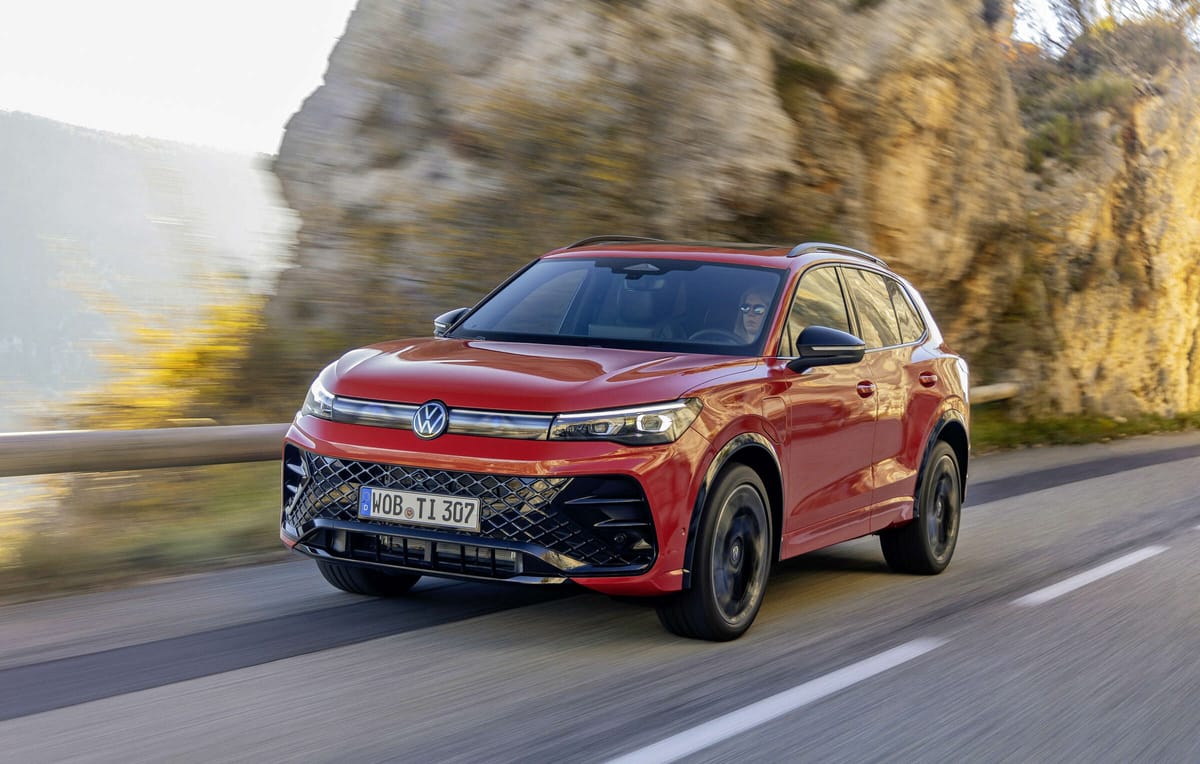 2025🏆 125 km EV
Tiguan eHybrid (2024+)
 2023
Seal U DM-i Boost
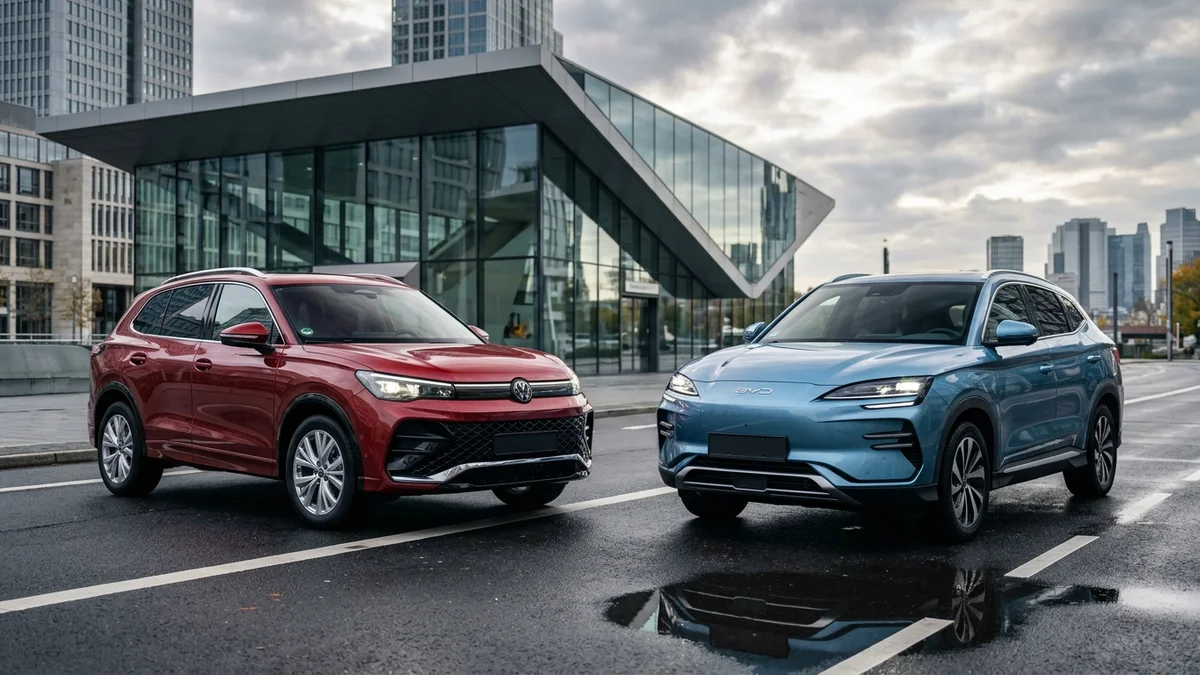
As demonstrated in the comparison above, technical rivalry between Europe's benchmark Tiguan eHybrid and China's BYD Seal U DM-i is redefining German midsize SUV buyer preferences.
The Chinese Automaker Breakthrough: BYD Breaks 2.0% Share as MG and Leapmotor Surge
The most notable revelation from the KBA October 2026 release is the sustained momentum of Chinese automakers within Germany. Despite finalized European Union countervailing tariffs, Chinese OEMs leveraged competitive local dealer agreements and high-specification plug-in architectures to achieve record penetration:
- BYD (Build Your Dreams): Reached 5,173 registrations in October, soaring +54.3% year-on-year. BYD captured 2.0% of the entire German passenger car market in a single month, surpassing established legacy competitors including Tesla (1,607 units, down 58.8%). Models like the BYD Seal U DM-i—utilizing an 18.3 kWh Blade LFP battery and comprehensive ADAS suite—have struck a chord with value-conscious German buyers.
- MG (SAIC Motor): Secured 4,140 registrations (+48.5% YoY), representing a 1.6% German market share, powered by aggressive pricing on the MG HS II PHEV.
- Leapmotor: Benefiting directly from the Stellantis European distribution and service network, Leapmotor recorded 3,661 registrations, achieving an explosive +288.6% year-on-year surge (1.4% market share).
To research full technical specifications across international lineups, consult our PHEV Database & Search or review side-by-side metrics via our Compare PHEVs Tool.
What is the Real-World Range of the Volkswagen Tiguan eHybrid (2024+)?
Official WLTP ratings are measured in a controlled 23°C laboratory. Test how winter sub-zero temperatures (-10°C), sustained 130 km/h highway speeds, and terrain elevation impact actual battery range on your specific commute.
Commercial Fleet Decarbonization & Company Car Tax Drivers
The driving force behind Germany's rapid electric transition is corporate fleet procurement. KBA data indicates that 69.4% of total passenger car registrations in October were commercial, representing a 14.0% year-on-year expansion in business purchases. Private individual buyers represented only 30.5% of the total market.
Germany's preferential 0.5% Company Car Tax Rule (Dienstwagenbesteuerung) directly fuels this structural shift:
- Standard petrol and diesel vehicles incur a monthly taxable benefit-in-kind rate of 1.0% of the vehicle's gross list price.
- Plug-in Hybrids that achieve a minimum pure-electric range of 80 km or emit less than 50 g/km of CO₂ qualify for the reduced 0.5% taxation rate, cutting employee benefit taxation in half.
- Full electric vehicles (BEVs) priced below qualifying thresholds enjoy even lower 0.25% taxable brackets.
With company car drivers saving thousands of euros annually in net income taxes, commercial fleet purchasing managers have systematically phased out non-electrified petrol options.
Market Outlook & Buyer's Guide: Residual Values, Infrastructure & Powertrain Choice
The KBA October 2026 registration data confirms that Germany's automotive landscape has crossed an irreversible threshold. With pure petrol market share reduced to 15%, long-term residual value risk for un-electrified combustion vehicles is rapidly intensifying over a 3 to 5-year ownership horizon.
Key recommendations for private buyers and fleet operators:
- Home or Workplace AC Charging: If you have reliable overnight or workplace AC charging access, modern PHEVs equipped with 20+ kWh batteries allow daily commuting in 100% electric mode while retaining unrestricted cross-continental flexibility.
- Prioritize DC Fast Charging Capability: Choosing a PHEV equipped with 50 kW CCS2 DC capability provides vital futureproofing and protects downstream residual value as public charging infrastructure expands.
- Established Chinese Alternatives: The substantial market share gains of BYD and Leapmotor demonstrate that Chinese OEMs are no longer fringe contenders, but permanent fixtures in the European automotive market.
Continue utilizing our real-world simulators and technical comparison databases to make data-backed automotive decisions.
Stay Ahead on Next-Gen PHEV Releases & OTA Updates
Get notified when new European plug-in hybrid models premiere, along with real-world range benchmarks, battery chemistry insights, and software update breakdowns.
Related Models
Technical specs and live range simulations for models featured in this report
125 km EVTiguan eHybrid (2024+)
80 km EVSeal U DM-i Boost
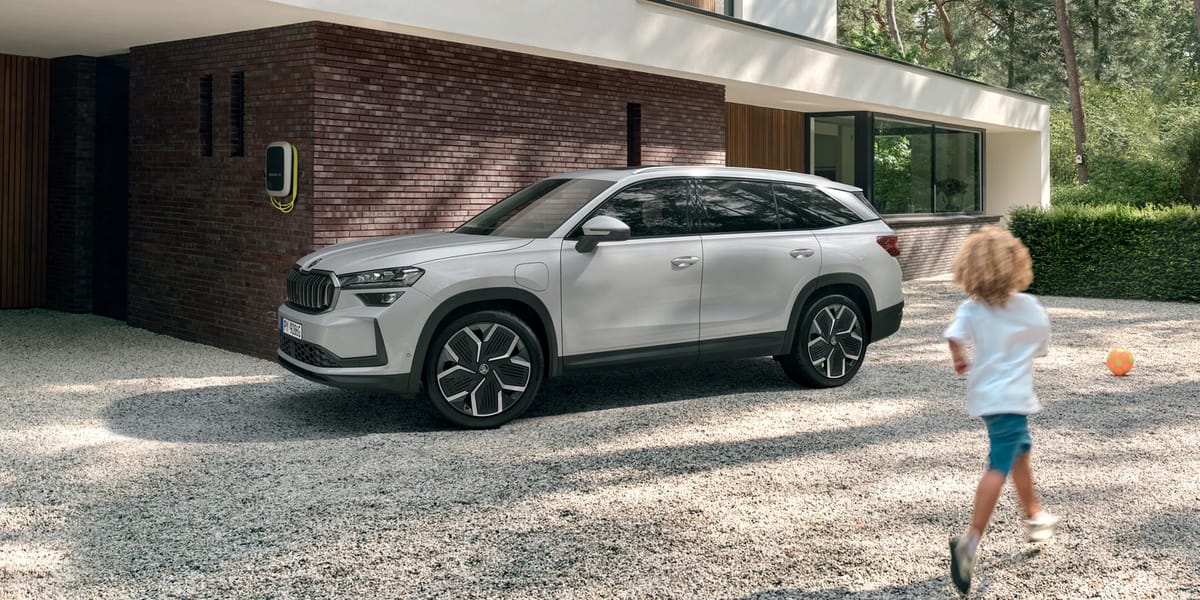 123 km EV