Official EU Safety Gate Recall for Mercedes-Benz S-Class PHEV (4391103 / KBA 17121R): Front Axle Brake Hose Failure
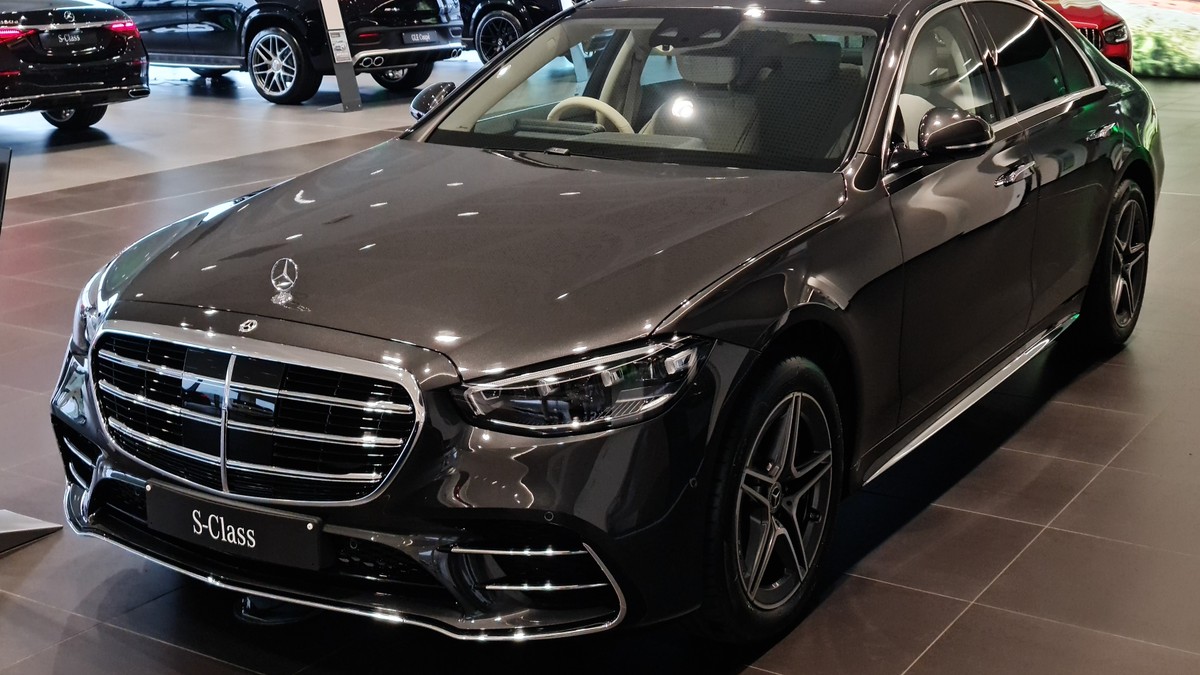
EU Safety Gate bulletin SR/03179/26 issues a critical recall for Mercedes-Benz S-Class W223/V223 plug-in hybrids (S 580 e, S 450 e, AMG S 63 E) due to front axle brake hose rupture. Full technical analysis and dealer remedy protocol.
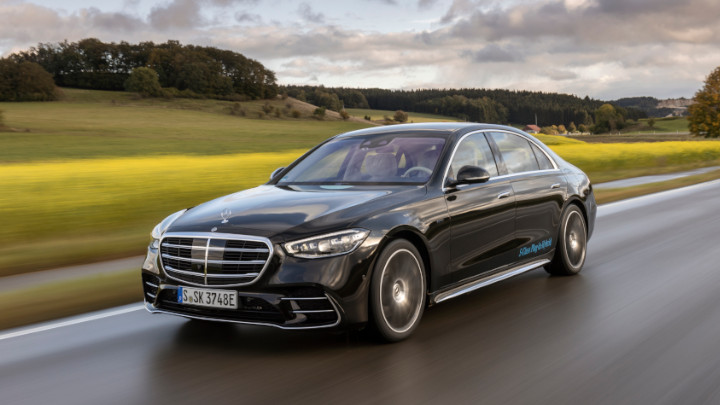
The European Commission's rapid alert system for dangerous non-food consumer products (EU Safety Gate / RAPEX) has issued a critical automotive safety recall covering the flagship Mercedes-Benz S-Class (W223 / V223) luxury sedan generation. Registered under Safety Gate reference SR/03179/26 and Alert ID 10119557, this campaign carries significant implications for high-voltage electrified variants, specifically the Plug-in Hybrid (S 580 e, S 450 e, and Mercedes-AMG S 63 E PERFORMANCE) model lines.
Monitored by the German Federal Motor Transport Authority (KBA) under reference 17121R and internally tracked by Mercedes-Benz as manufacturer campaign 4391103, the recall addresses a defect where the flexible brake hoses on the front axle can experience premature friction wear, potentially causing a sudden loss of brake fluid pressure.
In this technical briefing, we dissect the mechanical and hydraulic failure modes behind this bulletin, assess the heightened braking risks on 2.5-tonne PHEV executive sedans, and guide vehicle owners through the official VIN verification and free dealership remedy procedure.
Official EU Safety Gate Bulletin & Campaign Identifiers
The European Safety Gate network has categorized this defect under "Serious Risk" (Injuries & Crash Hazard). According to manufacturer submissions, the scope encompasses both standard-wheelbase (W223) and extended-wheelbase (V223) sedans manufactured across a five-year production window.
The table below compiles the verified regulatory and technical campaign identifiers:
| Parameter | Official Regulatory Record |
|---|---|
| Make & Model Line | Mercedes-Benz S-Class (W223 / V223 Saloon) |
| PHEV Model Variants | S 580 e, S 580 e 4MATIC, S 450 e, AMG S 63 E PERFORMANCE |
| EU Safety Gate Code | SR/03179/26 (Alert ID: 10119557) |
| Manufacturer Campaign Code | 4391103 |
| German KBA Reference | 17121R |
| Type Approval (WVTA) | e1*2007/46*2115*00-*15 (Model Type: R2S) |
| Affected Production Window | 5 June 2019 – 28 November 2024 |
| Defect & Hazard Type | Front axle brake hose rupture / Fluid loss / Serious Injury Risk |
| Authorized Workshop Remedy | Mandatory inspection and complimentary replacement of front axle brake hoses |
European PHEV drivers can monitor all current manufacturer field campaigns and service actions directly in our PHEV Software Updates & Recall Tracker.
Technical Diagnosis: AIRMATIC Suspension Dynamics & Brake Hose Rupture
To achieve benchmark ride refinement and body composure, the Mercedes-Benz S-Class (W223) features sophisticated AIRMATIC air suspension paired with continuously adaptive damping (ADS+) and active wheel guidance as standard or optional equipment. The air suspension struts constantly alter ride height, chamber pressure, and wheel articulation based on driving speed, road surface topology, and lateral G-forces.
Comprehensive factory investigations discovered that during maximum steering deflection combined with suspension compression/rebound cycles, the factory-installed front flexible brake hoses may experience mechanical chafing or excessive tension against neighboring chassis brackets:
- Microscopic Chafing and Material Fatigue: Repeated contact between the flexible outer rubber casing and adjacent suspension components causes progressive structural wear and surface micro-cracking.
- Hydraulic Pressure Rupture: When the driver applies urgent or high-pressure braking—demanding hydraulic line pressures exceeding 100 bar—the weakened inner reinforcement braids can fail, resulting in brake fluid escaping into the wheel well.
- Deceleration Degradation: The sudden loss of hydraulic fluid on the front axle circuit drastically diminishes the clamping force delivered to the multi-piston front calipers, severely elongating stopping distances without preliminary cockpit warning.
- Trailing Vehicle Hazard: Escaped synthetic brake fluid (DOT 4 Plus) discharged onto the road surface creates an extremely slick film on asphalt, posing an acute skid danger to following motorists and two-wheelers.
What is the Real-World Range of the Mercedes-Benz S-Class?
Official WLTP ratings are measured in a controlled 23°C laboratory. Test how winter sub-zero temperatures (-10°C), sustained 130 km/h highway speeds, and terrain elevation impact actual battery range on your specific commute.
PHEV Heavy Mass & Electro-Hydraulic Blended Braking Dynamics (S 580 e & AMG S 63 E)
While front brake line integrity is paramount on any passenger vehicle, the physics of Plug-in Hybrid powertrains escalate this risk by orders of magnitude:
- Curb Weight Surpassing 2.5 Tonnes: A Mercedes-Benz S 580 e long-wheelbase carries a sizable 28.6 kWh gross (22.5 kWh usable) lithium-ion battery pack mounted above the rear axle, integrated AC/DC onboard chargers, and high-torque electric drive units, lifting total curb weight to roughly 2,575 kg. Compared to non-hybrid six-cylinder ICE S-Class models, this represents a 400–500 kg mass penalty. Under hard deceleration, dynamic forward weight transfer loads the front axle with tremendous kinetic energy. For full technical specifications and battery architecture details, explore our Mercedes-Benz S-Class PHEV Guide.
- Electro-Hydraulic Blended Braking (Brake-by-Wire): Modern Mercedes-Benz hybrid models manage deceleration via an intelligent Brake-by-Wire system. Initial brake pedal stroke initiates electric motor recuperation (generating up to 100 kW of regenerative braking force) to recharge the high-voltage battery. As deceleration requirements increase or battery state-of-charge approaches capacity, the hydraulic friction brakes seamlessly blend in.
- Control Unit Desynchronization: If hydraulic line pressure collapses on the front axle, the vehicle's electronic stability program (ESP) and hybrid braking master control unit face an uncontrollable hydraulic deficit. S drivers may experience sudden pedal drop, irregular brake pedal feel, and directional instability under emergency braking maneuvers.
Drivers wishing to calculate electric efficiency, charging curves, and consumption profiles for the S-Class PHEV can run scenario simulations on our PHEV Range Calculator.
Affected Model Breakdown and Production Timeline
Regulatory filings lodged with the KBA and European Safety Gate confirm that the recall spans a substantial five-year manufacturing timeframe, encompassing vehicles assembled between 5 June 2019 and 28 November 2024.
The primary S-Class variants included within the scope are:
- Mercedes-Benz S 580 e / S 580 e 4MATIC: 3.0-litre turbocharged inline-6 paired with a 150 hp permanently excited synchronous motor (combined 510 hp / 375 kW, 28.6 kWh traction battery).
- Mercedes-Benz S 450 e: 3.0-litre inline-6 plug-in hybrid producing a system output of 408 hp (300 kW).
- Mercedes-AMG S 63 E PERFORMANCE: 4.0-litre V8 Biturbo combined with an AMG-exclusive high-output rear-axle electric drive unit and HPB battery (802 hp / 590 kW system power and 1,430 Nm peak torque).
- Conventional Combustion W223 Sedans: Mild-hybrid petrol and diesel models (including the S 350 d, S 400 d, S 450, and S 580) built within the designated timeframe are also subject to inspection, as they share the AIRMATIC front axle architecture.
To cross-compare battery sizes, real-world electric ranges, and charging speeds against rival luxury plug-in hybrid saloons, visit the comprehensive PHEV Model Database.
Step-by-Step VIN Verification & Authorized Workshop Remedy
Owners of affected Mercedes-Benz S-Class vehicles are urged to follow these official procedural steps to confirm recall eligibility and secure a complimentary repair appointment:
- Locate Your 17-Digit VIN: Retrieve your vehicle identification number (VIN) from the vehicle registration documentation or the lower corner of the driver's side windscreen.
- Consult the Mercedes-Benz Online Recall Portal: Access the official Mercedes-Benz digital recall lookup tool corresponding to your country of residence and enter your VIN to check for open safety campaigns.
- Reference Manufacturer Campaign 4391103: When scheduling your workshop visit, explicitly quote campaign code "4391103" alongside German KBA reference "17121R" to your authorized service advisor.
- Front Axle Brake Hose Replacement: Certified Mercedes-Benz technicians will inspect the front brake line assemblies and fit newly engineered, reinforced flexible brake hoses with modified routing and robust abrasion sleeves. The hydraulic circuit is then flushed, refilled with fresh DOT 4 Plus fluid, and pressure-bled.
- Cost and Completion Time: The entire recall procedure is performed entirely free of charge under statutory manufacturer safety warranties. Workshop installation and hydraulic bleeding typically require between 90 and 120 minutes.
Additional Notice: Mercedes-Benz CLA-Class Seat Belt Alert (SR/03169/26)
[!NOTE]
Advisory for Mercedes-Benz CLA-Class Owners:Simultaneously registered on the EU Safety Gate portal, alert SR/03169/26 addresses an inspection notice regarding the front seat belt buckle anchor bolts on Mercedes-Benz CLA-Class (C118 / X118) vehicles.
It is important to emphasize that this specific alert is strictly limited to an extremely narrow pilot production batch manufactured between 12 June 2026 and 16 June 2026. Existing owners of regular Mercedes-Benz CLA 250 e Plug-in Hybrid models on European roads are not subject to a widespread defect and have no cause for alarm. Nonetheless, owners may request a quick VIN verification during their next scheduled service visit as a routine precaution.
Stay Ahead on Next-Gen PHEV Releases & OTA Updates
Get notified when new European plug-in hybrid models premiere, along with real-world range benchmarks, battery chemistry insights, and software update breakdowns.
Related Models
Technical specs and live range simulations for models featured in this report
 77 km EV