PHEV-Batteriemanagement, Verbrennungsmotor-Schutzprotokolle und Wartungsregime: Offizielle Analyse europäischer und chinesischer Hersteller
Können Plug-in-Hybride dauerhaft rein elektrisch gefahren werden? Technische Analyse von NMC vs. LFP, Kraftstoffeintrag im Motoröl (Fuel Dilution), Volvo Aged Fuel, Stellantis FORM und BYD-Wartungsregeln.
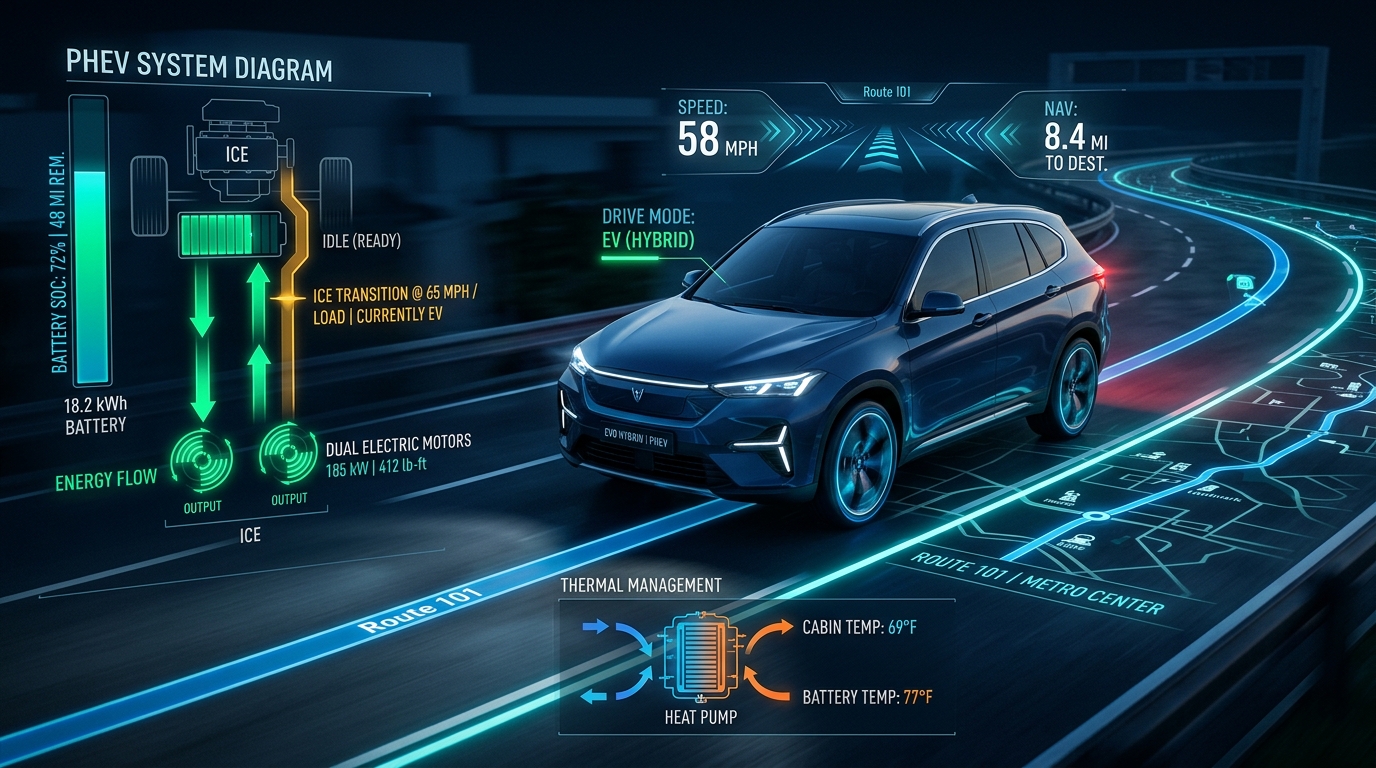
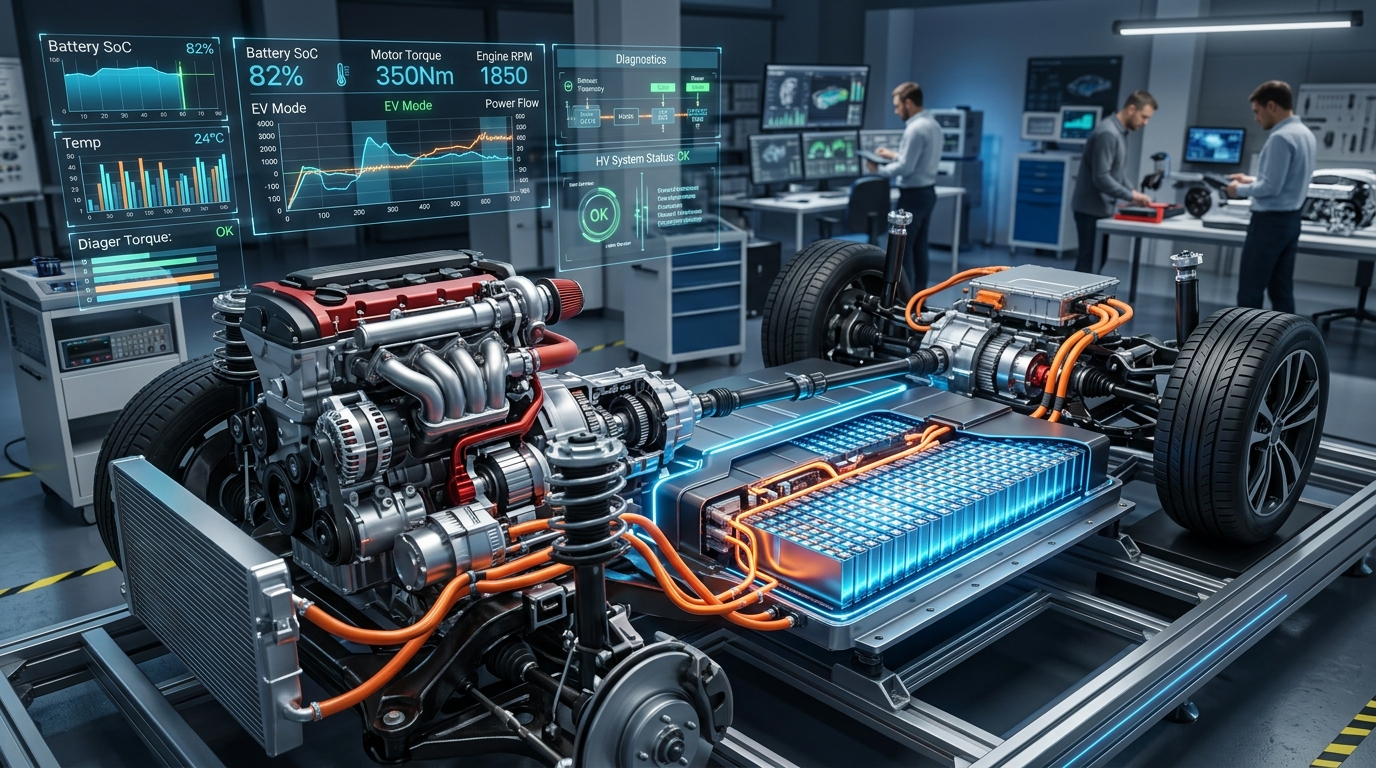
Plug-in Hybrid Electric Vehicles (PHEVs) represent one of the most sophisticated dual-powertrain engineering architectures in modern automotive history. By integrating a high-voltage traction battery, high-torque electric motor-generator units, and an independent internal combustion engine (ICE) under a single supervisory electronic control unit, PHEVs promise zero-emission daily commuting alongside zero-range-anxiety long-distance capabilities.
However, among everyday vehicle owners, a widespread behavioral misconception persists: the belief that a PHEV can be operated indefinitely as a pure electric vehicle (BEV) without ever engaging or maintaining the combustion engine.
A comprehensive examination of official manufacturer technical service manuals, workshop repair guidelines, engineering service bulletins, and warranty documentation reveals a drastically different reality. European legacy automakers (Volkswagen Group, BMW Group, Mercedes-Benz, Stellantis, Volvo) and Chinese new-energy pioneers (BYD, SAIC/MG, Chery/Jaecoo) implement strict, legally binding operational protocols governing battery electrochemistry, crankcase lubrication preservation, break-in regimes, and fuel staleness prevention.
1. Traction Battery Chemistry & Charging Management Protocols
The functional lifespan and State of Health (SoH) degradation curve of a high-voltage PHEV traction battery depend directly on cathode crystalline structure, operating voltage window, and Battery Management System (BMS) State of Charge (SoC) estimation algorithms. Divergences in manufacturer guidance directly stem from the thermodynamic properties of their chosen cell chemistries.
Cathode Chemistry Dynamics: NMC vs. LFP
European Automakers (Nickel Manganese Cobalt - NMC):
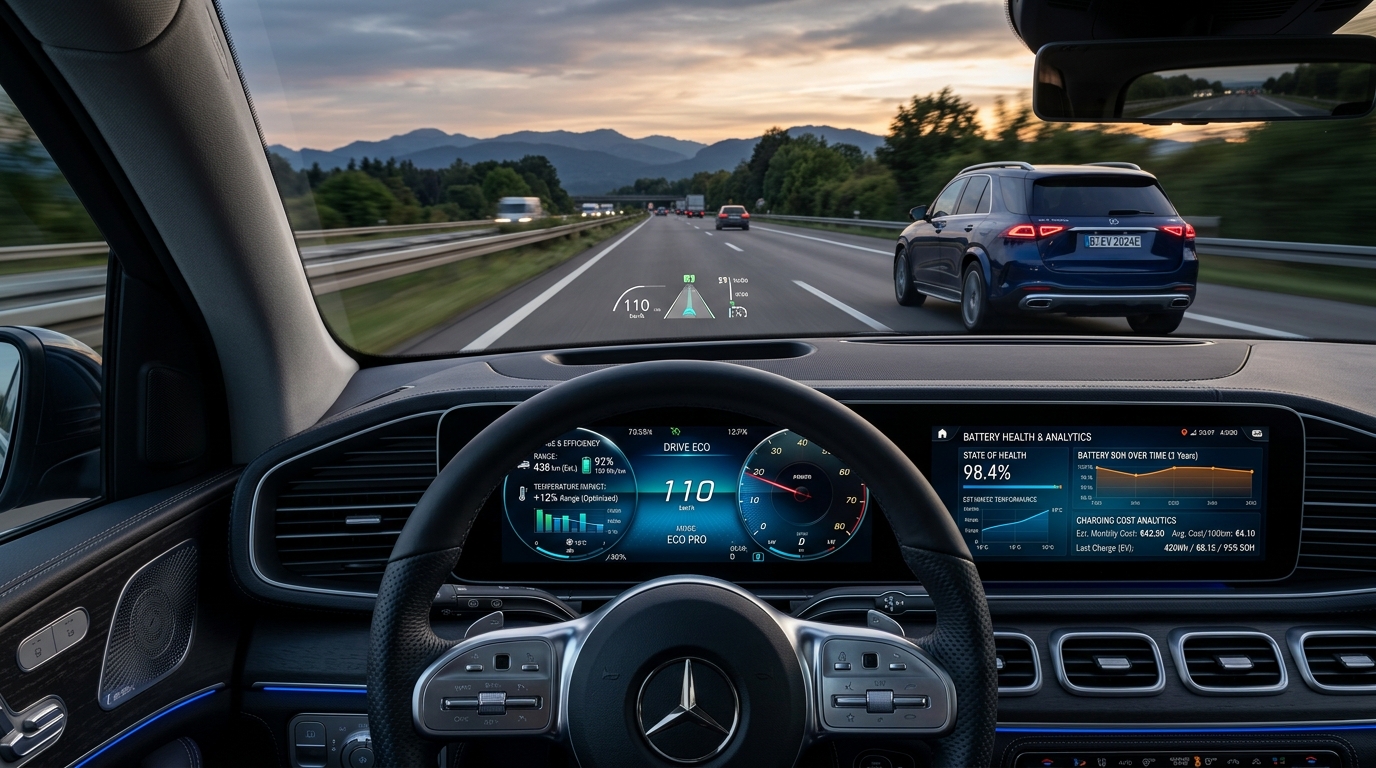
European premium manufacturers predominantly utilize NMC lithium-ion pouch or prismatic cells to maximize gravimetric and volumetric energy density within constrained chassis packaging. Under elevated cell potential (approaching 4.2V - 4.3V per cell, or 100% nominal SoC) and elevated ambient temperatures, NMC cathodes suffer accelerated transitional metal dissolution, cathode cracking, and electrolyte oxidation.Consequently, official workshop manuals for Volkswagen Group (eHybrid/GTE), BMW (e-drive), and Mercedes-Benz explicitly instruct owners against sustained 100% SoC resting states during daily operation. The recommended operating envelope for daily non-long-distance commuting is restricted to 20% to 80% SoC. While manufacturers calibrate hardware buffers at the upper and lower voltage limits, software charging profiles emphasize departing immediately upon full charge completion to mitigate calendar aging.
Chinese Automakers (Lithium Iron Phosphate - LFP / BYD Blade Battery):
Conversely, BYD has standardized its proprietary LFP Blade Battery architecture across its DM-i and DM-p PHEV lineups. LFP cells exhibit exceptional thermal runaway resistance and crystal lattice stability across elevated temperatures.However, LFP chemistry presents a fundamental electro-diagnostic challenge: an exceptionally flat Open Circuit Voltage (OCV) plateau between 15% and 85% SoC. Within this window, cell voltage varies by only millivolts regardless of remaining capacity, rendering voltage-based capacity calculation mathematically unfeasible. The BMS must rely entirely on current integration (Coulomb counting). Over prolonged usage cycles without a 100% charge event, micro-current drift accumulates substantial calculation errors, creating severe discrepancies between displayed instrument cluster range and actual physical cell energy.
Due to this electrochemical behavior, BYD technical manuals explicitly mandate regular 100% AC slow-charging. Achieving upper voltage cut-off saturation is strictly necessary for the BMS to execute passive inter-cell balancing and reset the Coulomb counting algorithm to a calibrated baseline.
Furthermore, BYD workshop repair documentation prescribes a mandatory Battery Self-Calibration cycle at least once every 6 months or 72,000 km (whichever occurs first), requiring a full charge-to-discharge cycle. Failure to adhere to periodic balancing cycles on LFP-equipped vehicles can lead to asymmetric cell degradation and erroneous low-voltage cut-offs.
| Evaluation Metric | European Automakers (VW Group, BMW, Mercedes, Volvo) | Chinese Automakers (BYD, MG, Chery) |
|---|---|---|
| Dominant Cell Chemistry | Nickel Manganese Cobalt (NMC) | Lithium Iron Phosphate (BYD Blade LFP) / NMC (MG, Chery) |
| Daily Charging Protocol | 20% – 80% SoC window; avoid resting at 100% SoC | Regular 100% AC charge required for LFP SoC calibration |
| Cell Balancing Mechanism | Passive background balancing; software ceiling buffer | Periodic AC full charge; 6-month / 72,000 km mandatory self-calibration |
| Extended Vehicle Storage | 30% – 50% SoC in cool ambient conditions + 12V float | 0% SoC strictly prohibited (copper shunting risk); 3-month recharge |
| Capacity Warranty Baseline | 8 years / 160,000 km at minimum 70% retained SoH | 8 years / 150,000 – 160,000 km at minimum 70% retained SoH |
2. Maintenance Intervals, Odometer Logic, and Engine Break-In Protocols
Operating an internal combustion engine in a plug-in hybrid architecture subjects mechanical components to far more punishing duty cycles than in traditional non-hybrid vehicles.
Chinese Automakers: Dual Odometers and Break-In Demands
BYD implements an engineering solution unique in the automotive industry: Dual Instrument Cluster Odometers:
- Total Vehicle Odometer
- HEV Odometer (Combustion Engine Operating Kilometers)
Mandatory 50% HEV Break-In:
During the initial break-in period of a new BYD DM-i vehicle, the manufacturer enforces that at least 50% of the initial cumulative driving distance must be operated in hybrid (HEV) mode under ECO settings. The manufacturer prohibits owners from bypassing engine break-in by driving exclusively in EV mode. Continuous combustion operation under moderate load is physically required for piston ring seating, cylinder wall cross-hatch smoothing, and hydrodynamic bearing clearance bedding.First Maintenance (3,500 km HEV Threshold):
Following break-in, BYD's initial mandatory service visit (First Maintenance) must occur within 6 months or 3,500 km of HEV engine operation, whichever occurs first. Running the vehicle for 10,000 km exclusively on electric power does not delay this 6-month calendar deadline. At this service, running-in oil and factory filters are replaced, and crankcase ventilation is inspected.Subsequent Service Regimes:
Subsequent intervals bifurcate: Chassis, brake fluid, steering, suspension, and high-voltage insulation checks occur every 12 months or 20,000 km of total vehicle distance; engine oil and oil filter changes occur every 12 months or 10,000 – 15,000 km of HEV engine distance.Chery & MG Approaches:
Chery (Tiggo Super Hybrid) applies a single cumulative odometer schedule: The initial oil change is mandated at 5,000 km or 6 months, followed by subsequent intervals every 10,000 km or 6 to 12 months, regardless of electric driving share. MG PHEV models mandate 12-month or 15,000 km intervals, reduced to 10,000 km / 6 months under severe operating conditions.
European Automakers: Fixed vs. Sensor-Driven Dynamic Intervals
- Volkswagen Group (Fixed QI4 Service):
While VW Group non-hybrid vehicles benefit from flexible LongLife intervals (PR-QI6) extending up to 30,000 km or 2 years, all PHEV models (eHybrid and GTE) are categorized under Fixed Service Intervals (PR-QI4). Regardless of how many kilometers were driven under pure electric propulsion, engine oil and filter must be replaced every 15,000 km or 12 months without exception. - BMW Group (Condition Based Service - CBS):
BMW integrates algorithmic CBS monitoring into the engine control unit. CBS continuously models oil degradation by tracking cold start events, oil sump temperature thermal cycles, and fuel delivery rates. Even if an owner commutes almost entirely in EV mode, CBS calculates calendar oil oxidation and urban cold-start stresses, triggering an oil service reminder at approximately 12 months or 10,000 – 15,000 km.
| Automaker Group / Model | Initial Break-in Service | Standard Service Interval | Engine Oil Replacement Rule | Odometer Parameter Tracked |
|---|---|---|---|---|
| BYD (DM-i Series) | 6 months or 3,500 km (HEV) | 12 months or 20,000 km (Total) | 12 months or 10,000 – 15,000 km (HEV) | Dual Odometer (HEV km vs Total km) |
| Chery (Tiggo Hybrid) | 6 months or 5,000 km | 6 – 12 months or 10,000 km | 6 – 12 months or 10,000 km (Total) | Total Odometer |
| MG (HS/EHS PHEV) | 12 months or 10,000 – 15,000 km | 12 months or 15,000 km | 12 months / 15,000 km (10k km severe) | Total Odometer |
| Volkswagen (eHybrid) | 12 months or 15,000 km | 12 months or 15,000 km (QI4) | 12 months or 15,000 km (Strictly fixed) | Total Odometer |
| BMW (e-Drive CBS) | CBS Notification / 12 months | CBS Dynamic (~10,000 – 15,000 km) | Algorithmic CBS evaluation or max 12 mos | CBS Thermodynamic Algorithm |
| Volvo (Recharge) | 12 months or 15,000 km | 12 months or 15,000 – 30,000 km | 12 months or max 15,000 – 30,000 km | Total Odometer |
3. Thermal Imbalance and Crankcase Fuel Dilution
A dangerous misconception among PHEV owners is that if the combustion engine rarely runs, engine oil does not deteriorate and oil change intervals can be extended. Tribological science proves that an engine operated intermittently in a PHEV powertrain suffers far more catastrophic oil degradation than one run continuously in a conventional car.
The Mechanism of Fuel Dilution and Cylinder Washing
In a standard vehicle, cold engine idle brings the block to nominal operating temperatures (85°C to 100°C) within minutes; cylinder bores expand to designed thermal clearances, piston ring end gaps close, and the oil sump reaches equilibrium.
In a PHEV, the engine operates under severe thermal shock:
- Abrupt Cold Kick-Down: When a driver accelerates rapidly onto a motorway ramp, the supervisory controller detects power demand exceeding electric motor limits and instantly fires the combustion engine. An engine resting at ambient temperature (e.g., 0°C in winter) is instantly thrust from 0 RPM to 3,500 – 4,000 RPM under heavy turbocharger boost pressure, with zero warm-up idle.
- Cylinder Bore Washing: As the vehicle rejoins cruising speed or exits the highway, the controller abruptly cuts ignition back to EV mode before the engine reaches 60°C. Cold direct-injected fuel sprayed onto cold cylinder walls cannot fully vaporize. Unburned liquid gasoline droplets wash away the protective hydrodynamic oil boundary layer (cylinder bore washing) and slip past cold piston rings into the oil sump.
- Trapped Condensation and Fuel Accumulation: In a hot engine, fuel fractions vaporize and vent through the Positive Crankcase Ventilation (PCV) valve into the intake manifold. In a PHEV that never sustains sump temperatures above 80°C, liquid fuel and moisture continuously accumulate in the crankcase.
This phenomenon is known as fuel dilution. When crankcase oil is contaminated with raw fuel:
- Kinematic viscosity collapses: A specified 0W-20 oil thins down to 0W-12 or lower.
- High Temperature High Shear (HTHS) viscosity fails, tearing the hydrodynamic lubrication film.
- Crankshaft journals, connecting rod bearings, and turbocharger sleeve bearings experience boundary friction (metal-to-metal contact), leading to premature bearing spalling.
- Fuel hydrocarbons consume the oil's reserve alkalinity (Total Base Number - TBN), turning the sump fluid acidic and promoting rapid chemical oxidation.
Specialized Oil Specifications
This severe dilution risk is why European and Chinese manufacturers mandate strict 12-month oil change deadlines even if zero liters of fuel were consumed:
- BMW: Requires BMW Longlife-17 FE+ (0W-20) formulation for all PHEV engines. This specification contains specialized synthetic ester bases and shear-stable polymers engineered to retain film strength and maintain viscosity loss below 5% under simulated 7% raw gasoline fuel dilution.
- Stellantis: Mandates PSA B71 2010 (0W-20) low-SAPS lubricant for PureTech-based hybrids to prevent diluted fuel from chemically deteriorating wet timing belts or timing chain tensioners.
- BYD & Chery: Prescribe ultra-low viscosity API SP / ILSAC GF-6A synthetic 0W-16 or 0W-20 oils for their high-thermal-efficiency Atkinson/Miller cycle hybrid engines.
4. Fuel Staleness, Phase Separation, and Automated Combustion Modes
Leaving gasoline stagnant in a fuel tank for months while driving exclusively on grid electricity introduces severe chemical breakdown hazards.
Ethanol Hygroscopy and Phase Separation
Commercial pump gasoline throughout Europe and global markets contains 5% to 10% bioethanol (E5 / E10). Ethanol is highly hygroscopic, absorbing moisture from ambient air:
- Phase Separation: As ethanol absorbs atmospheric water vapor through tank venting, it reaches a saturation threshold and chemically separates from the gasoline matrix, forming a dense water-ethanol layer that sinks to the bottom of the fuel tank. When the fuel pump primes, it draws this corrosive water-ethanol mixture directly into high-pressure direct injectors, causing severe misfires, cylinder wash, and injector seizure.
- Fuel Oxidation and Gum Formation: Light volatile hydrocarbon fractions evaporate over time, reducing fuel octane rating. Remaining heavy hydrocarbons oxidize upon contact with atmospheric oxygen, forming sticky varnish and gum deposits that clog fuel filters, high-pressure pumps, and intake valves.
- Evaporative Carbon Canister Saturation: Fuel vapors continually accumulate in the activated carbon canister. Without periodic engine operation creating intake manifold vacuum to purge (desorb) the canister, the carbon bed saturates, resulting in fuel vapor emissions and hazardous pressure build-up.
Automated Manufacturer Engine Lock-in Modes
To eliminate catastrophic fuel staleness, manufacturers program automated engine override routines into their powertrain software:
Volvo "Aged Fuel" Override: Volvo Recharge models track fuel replenishment dates and volumes via tank level and fuel consumption sensors. If fuel remains unused for 3 to 5 months:
- The driver receives an informational message: "Aged fuel: Start engine to consume fuel".
- If ignored, the ECU permanently disables pure electric EV mode, displaying "Aged fuel: Engine will run to consume fuel", forcing continuous hybrid operation.
- If fuel volume is low, the cluster orders: "Aged fuel: Fill up fuel tank" to dilute stale fuel with fresh gasoline.
Stellantis "FORM" (Fuel and Oil Refresh Mode): Deployed across Jeep 4xe and Alfa Romeo Tonale PHEV platforms, FORM monitors both fuel aging (90-day threshold) and crankcase fuel dilution percentage. When triggered, the vehicle displays "Electric Mode Temporarily Unavailable". The software locks out EV driving until the combustion engine sustains oil temperatures between 76°C and 90°C long enough to evaporate crankcase gasoline and fresh fuel is added.
BMW & Mercedes-Benz Pressurized Fuel Tanks: These manufacturers construct PHEV fuel tanks from hermetically sealed stainless steel capable of withstanding internal pressures up to 350 mbar. The fuel flap cannot be opened mechanically; the driver must press a cockpit depressurization button to vent the tank before refueling. This isolates fuel from atmospheric moisture, delaying phase separation.
BYD Minimum 10% HEV Lifetime Rule: BYD technical manuals mandate that across the operational lifetime of the vehicle, HEV hybrid driving distance must never drop below 10% of total mileage. Furthermore, BYD software automatically engages the engine periodically to purge the carbon canister regardless of battery charge state.
5. Authorized Workshop Diagnostics and Warranty Preservation
Preserving the standard 8-year / 160,000 km battery capacity warranty (guaranteeing at least 70% retained State of Health - SoH) requires absolute adherence to manufacturer service schedules.
Dual Cooling Circuit Maintenance
PHEVs integrate two physically separated liquid cooling circuits:
- High-Temperature Circuit (90°C – 105°C): Regulates the combustion engine block and turbocharger.
- Low-Temperature Circuit (35°C – 60°C): Thermally conditions battery modules, traction motor, and high-voltage inverter.
Authorized service centers verify dielectric resistance, glycol concentration, and corrosion inhibitors in the low-temperature battery loop. Because microscopic air pockets can create localized battery cell hotspots and thermal runaway risks, coolant replacements require dedicated vacuum filling rigs.
Cloud Diagnostic Telemetry Logging
During routine maintenance, OEM diagnostic interfaces (ODIS/VAS for VW, ISTA for BMW, Xentry for Mercedes, VDS for BYD) interrogate the battery management system. The vehicle uploads lifetime telemetry to manufacturer cloud servers, including:
- Number of AC versus DC fast charging events.
- Instances of deep discharge below 0% SoC buffer.
- Sump temperature thermal cycle records.
- Oil dilution severity and unserviced warning overruns.
Exceeding service schedules by even minor margins (e.g., 1,000 km or 30 days) provides manufacturers with documented legal grounds to deny warranty claims on battery degradation, inverter failures, or engine bearing seizures.
6. The 7 Golden Engineering Rules for PHEV Owners
- Respect Battery Chemistry:
If your PHEV uses NMC cells (most European brands), maintain daily charge within 20%–80% SoC, charging to 100% only immediately prior to long trips. If your vehicle uses LFP Blade cells (BYD), execute a 100% slow AC charge at least once weekly to allow cell balancing and Coulomb counting calibration. - Avoid Freezing Kick-Down Acceleration:
In freezing temperatures, do not demand immediate full throttle from a cold combustion engine. Switch to hybrid mode a few kilometers before entering motorways to allow gentle engine warm-up to 80°C. - Never Skip Annual Oil Changes:
Even if you drove 95% of your annual mileage on pure electricity, replace your engine oil at the 12-month / manufacturer mileage deadline. Diluted 0W-20 oil thins out and cannot protect mechanical bearings. - Do Not Let Fuel Stagnate Beyond 90 Days:
Keep your fuel tank at half capacity rather than full if you commute primarily on electricity, and burn through fuel on a highway trip at least once a month before refilling with fresh E5/E10 fuel. - Honor New Vehicle Break-In:
During the first 3,000 – 5,000 km, do not drive exclusively on electricity. Ensure at least 50% of break-in mileage engages the combustion engine in HEV mode to properly seat piston rings. - Never Store a Vehicle at 0% SoC:
When leaving your vehicle for extended periods, store it between 30% and 50% SoC in a temperate location. Storing a battery at 0% triggers irreversible copper dendrite formation and cell failure. - Adhere to Authorized Service Schedules:
Preserving your 8-year / 160,000 km warranty requires strict adherence to annual service intervals, specialized low-SAPS oils, and vacuum-bled low-temperature coolant checks.
Conclusion
Plug-in hybrid electric vehicles are not simplistic electric cars with emergency backup engines. They are precision-engineered, dual-powertrain machines where electrical efficiency and mechanical longevity depend on synchronized operation.
To explore how your specific vehicle manages energy, transitions between EV and HEV modes, and saves fuel on real European highway corridors, try the PHEVs.eu Route & Range Simulator.