Norma Euro 6e-bis a Rewolucja PHEV: Zmiana Utility Factor, Nowe Emisje CO2 i Podatki Flotowe
For years, automotive brochures and press releases showcased the exact same miraculous figures: "1.2 L/100 km combined fuel economy" and "24 g/km CO2 emissions".
The idea that a 2.5-tonne luxury SUV consumed less petrol than a 50cc moped was one of the automotive industry’s greatest legal illusions. That illusion has now officially come to an end.
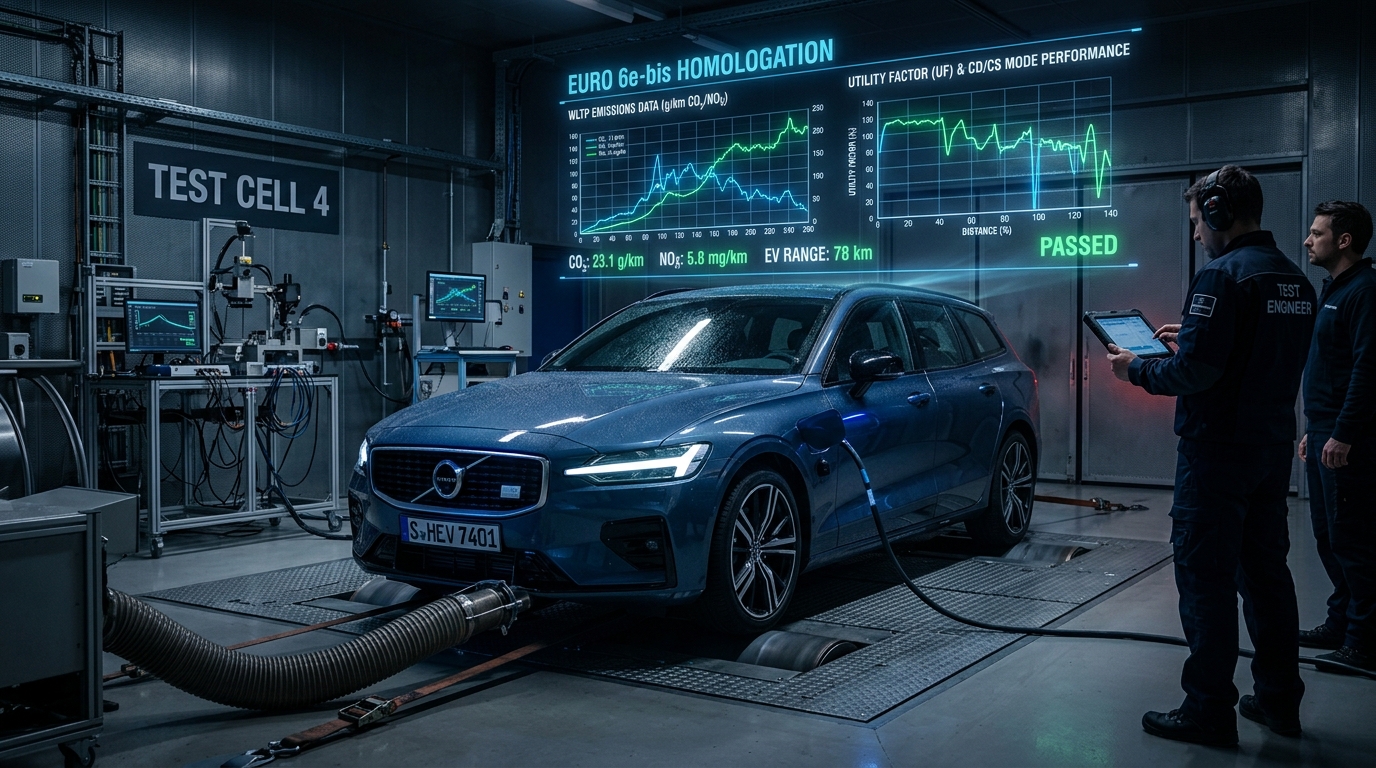
With the Euro 6e-bis (Euro 6e-bis-FCM) standard, the European Union has completely rewritten the homologation and emissions calculation rulebook for Plug-in Hybrid Electric Vehicles (PHEVs). Mandatory for all new vehicle type approvals since January 1, 2025, and for all new registrations across the EU from December 31, 2025, this regulation brings laboratory ratings into close alignment with real-world tarmac.
What does this regulatory earthquake mean in practice, how has it ignited a massive battery engineering race, and what fiscal surprises await company car drivers and private buyers across Europe?
The Reality Check: OBFCM Data Exposed the Charging Gap
Since 2021, the European Commission has mandated that every new car sold in the EU must be fitted with an OBFCM (On-Board Fuel Consumption Monitoring) device.
Whenever vehicles visit an authorized dealership for routine service or communicate via over-the-air fleet telematics, real-world fuel consumption and electric energy throughput are anonymized and sent directly to the European Commission. When the European Commission published its landmark findings based on hundreds of thousands of vehicles, the data was stark:
- Private PHEV Owners: Drove purely electric for approximately 45% to 49% of their total mileage.
- Company Car (Fleet) Drivers: Benefitting from employer-funded fuel cards, drivers rarely plugged in; electric driving dropped to an alarming 11% to 15%!
- The Verdict: Real-world CO2 emissions from plug-in hybrids were, on average, 3.5 times higher than official WLTP test figures!
To eliminate this discrepancy, EU policymakers overhauled the mathematical foundation of WLTP: the Utility Factor (UF).
Understanding the Utility Factor (UF): From 800 km to 2,200 km
Under standard testing, a plug-in hybrid cannot be measured with a simple exhaust tailpipe test. When the battery is full, it emits 0 g/km CO2 (Charge Depleting mode); when the battery is depleted, it runs on internal combustion (Charge Sustaining mode).
The official combined rating is determined by:
Official CO2 = (Electric Mode CO2 × UF) + (Depleted Engine CO2 × [1 - UF])
Under the previous WLTP framework (derived from older 2010 SAE J2841 assumptions), the Utility Factor curve assumed a short reference distance of 800 km between recharging events, implying the vehicle operated on electricity 75% to 85% of the time.
Under Euro 6e-bis:
- Extended Reference Distance: The simulated distance has been expanded from 800 km to 2,200 km, drastically reducing the mathematical weighting of the initial electric charge.
- Steeper Utility Curve: Combustion engine emissions carry significantly greater weight in the overall calculation.
- Phase 2 (Effective 2027): The European Commission will recalibrate the Utility Factor once more, linking it directly to empirical OBFCM fleet telematics.
The Homologation Matrix: Old WLTP vs. Euro 6e-bis vs. 2027 Phase 2
The table below demonstrates how official CO2 figures shift across different vehicle architectures without a single bolt on the vehicle being modified:
| Vehicle Architecture & Battery Size | Old WLTP (Euro 6d / 6e) | Euro 6e-bis (2025/2026) | 2027 Phase 2 Projection | Crucial 50 g/km Fiscal Threshold? |
|---|---|---|---|---|
| Small-Battery PHEV (12-14 kWh, ~50 km WLTP) | 28-32 g/km | 62-72 g/km | 95-115 g/km | ❌ Breaches Limit (Loses Subsidies & Tax Breaks) |
| Mid-Size PHEV (17-19 kWh, ~75 km WLTP) | 22-26 g/km | 48-56 g/km | 78-90 g/km | ⚠️ Borderline (Risks losing tier depending on trim/wheels) |
| Next-Gen Large-Battery PHEV (22-26 kWh, ~105 km WLTP) | 14-18 g/km | 22-28 g/km | 38-46 g/km | ✅ Safe (Strictly below 50 g/km) |
| Mega-Battery Executive PHEV (30-38 kWh, 130+ km WLTP) | 10-12 g/km | 15-19 g/km | 24-30 g/km | ✅ Future-Proof (Retains top-tier European benefits) |
The Fiscal Earthquake Across European Fleets
Across European taxation frameworks, the 50 g/km CO2 threshold is the holy grail. Crossing above 50 g/km triggers severe financial penalties:
1. Germany (0.5% Company Car Benefit-in-Kind)
In Germany, PHEVs qualify for the preferential 0.5% Dienstwagenbesteuerung (instead of the standard 1.0% ICE rate) only if they emit ≤ 50 g CO2/km OR offer a minimum pure electric range of 80 km. Older PHEVs that exceed 50 g/km under Euro 6e-bis and fail the 80 km hurdle immediately revert to the punitive 1.0% tax, doubling the driver’s monthly personal tax liability!
2. France (Malus au Poids & TVS / CO2 Penalties)
France’s weight tax (Malus au Poids) penalizes passenger cars weighing over 1,600 kg. PHEVs are granted crucial weight and ecological deductions, but only if their combined electric range reaches designated thresholds and CO2 numbers remain contained.
3. Belgium & The Netherlands (Faux-Hybrid Legislation)
Belgian fiscal authorities classify any plug-in hybrid with a battery capacity of less than 0.5 kWh per 100 kg of vehicle weight, or with CO2 emissions exceeding 50 g/km, as a "Fake Hybrid" (Faux-Hybride). Corporate tax deductibility plunges from 100% down to traditional fossil fuel penalties.
The Engineering Response: Why 20+ kWh Packs Are Taking Over
Automakers have responded with unprecedented engineering velocity:
- 20+ kWh Battery Packs in Compact SUVs:
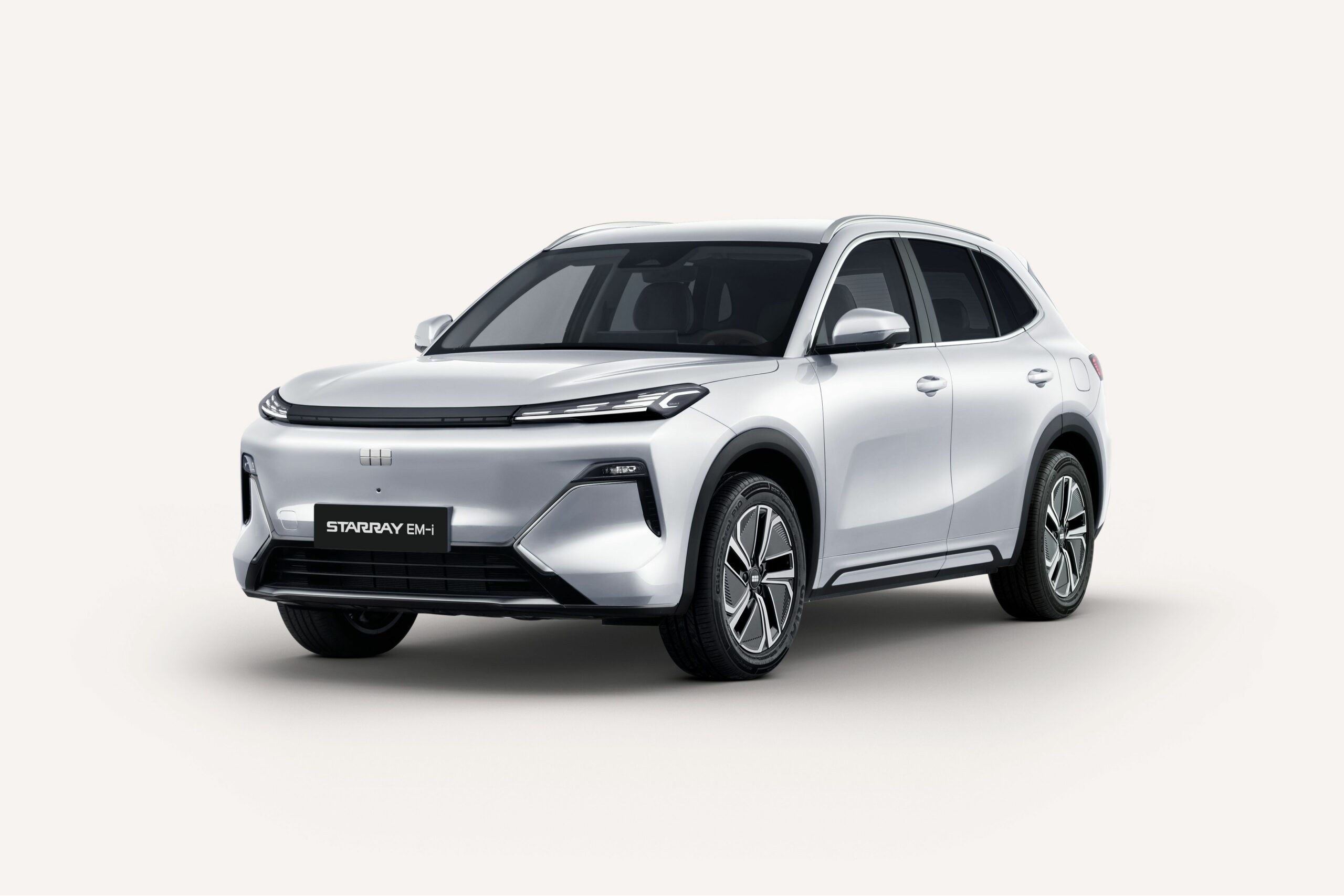
Where 10–13 kWh batteries once sufficed, manufacturers are rolling out massive packs. The all-new Toyota RAV4 Plug-in Hybrid (2026) packs 22.7 kWh, the Volkswagen Passat & Tiguan eHybrid feature 19.7 kWh usable, Geely Starray EM-i has 18.4 kWh, and executive sedans like the Mercedes-Benz C/E/GLC carry up to 31.2 kWh! - 50 kW DC Fast Charging as Standard:
With batteries approaching 25–30 kWh, charging solely via 3.7 kW AC wallboxes took 5 to 7 hours. Modern PHEVs now integrate CCS2 DC fast charging, allowing a 10% to 80% charge in just 20 to 30 minutes at motorway rest stops. - Record-Breaking Engine Thermal Efficiency:
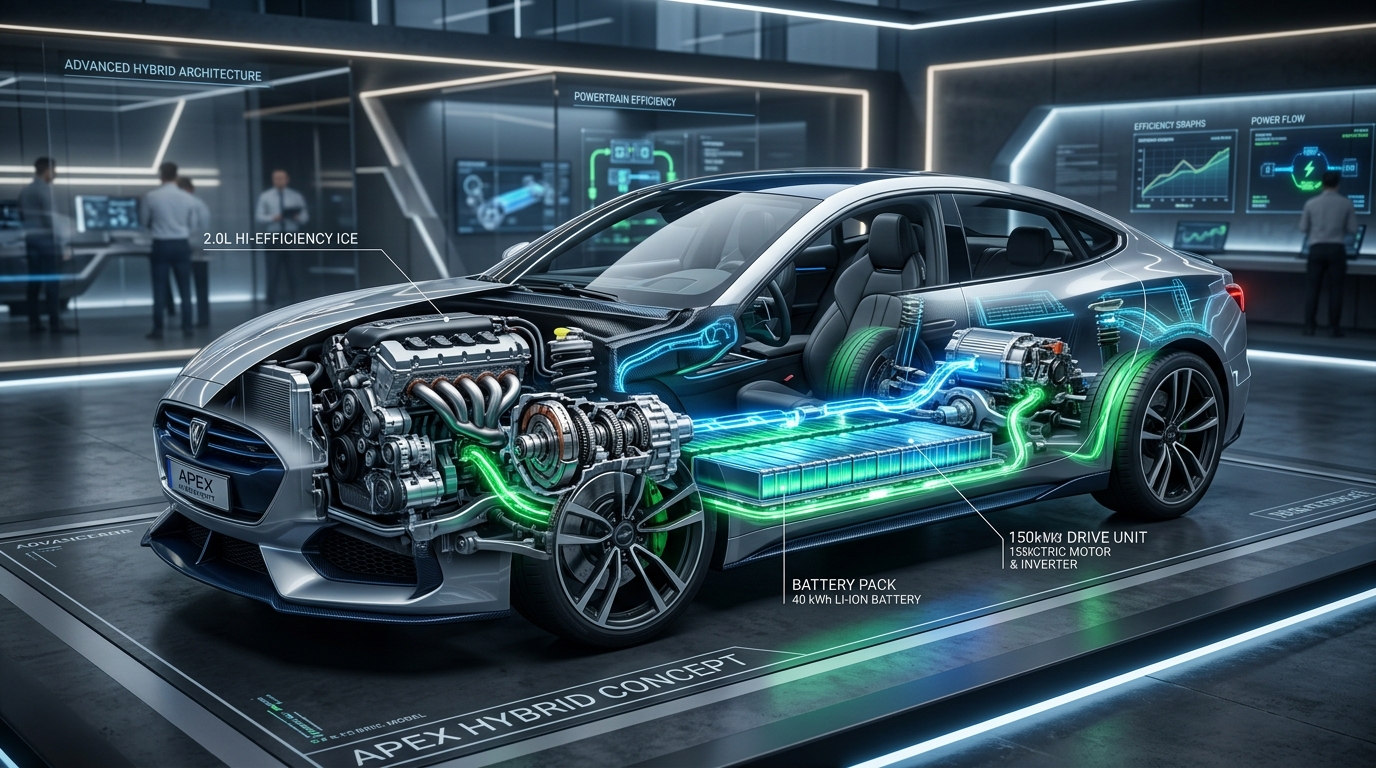
Combustion engines are being redesigned from the ground up as dedicated hybrid range-extenders and series-parallel units, achieving thermal efficiency benchmarks above 44% to 46.5%.
3 Golden Rules for Buying a PHEV in 2026
If you are leasing or purchasing a plug-in hybrid in Europe today, follow these three rules to ensure long-term residual value and low taxation:
- Target ≥ 80–100 km WLTP Electric Range: Vehicles offering under 65 km of range risk severe depreciation as Euro 6e-bis Phase 2 draws closer in 2027.
- Demand 50 kW DC Fast Charging: Real-world charging usability requires fast replenishment on longer intercity trips.
- Verify the Homologation Standard: Check the vehicle Certificate of Conformity (CoC) to confirm Euro 6e-bis compliance.