EU "Made in Europe" Act (IAA) & The PHEV Cost Trap: 15–35% Parts Cost Penalty, CAFE Fines, and the Unsustainable Dual-Powertrain Burden
The unvarnished reality behind the EU Industrial Accelerator Act (IAA) and CLEPA data: Why an 82% local content ratio masks a 15–35% European cost penalty, the Utility Factor battery-expansion spiral, and the dual-powertrain burden forcing automakers into consortiums.
The European Union's "Made in Europe" doctrine—crystallized through the Industrial Accelerator Act (IAA), the Net Zero Industry Act (NZIA), and modern Rules of Origin frameworks—has triggered a protective yet exceptionally costly restructuring across the continent’s automotive sector.
While charging infrastructure bottlenecks and subsidy retractions have positioned Plug-in Hybrid Electric Vehicles (PHEVs) on paper as an indispensable transition bridge toward pure electric vehicles (BEVs), industrial and financial data reveal a significantly harsher economic reality.
By packaging both an internal combustion engine and a high-voltage electric powertrain onto a single platform, PHEVs sit at the direct intersection of domestic content quotas, origin tracking, Euro 6e-bis / Euro 7 emission penalties, and battery supply-chain mandates—creating the most complex and cost-intensive regulatory compliance challenge in modern automotive manufacturing.
1. The Industrial Accelerator Act (IAA) and PHEV Domestic Sourcing Quotas
Drafted by the European Commission, the Industrial Accelerator Act directly ties public procurement tenders, national EV incentives, and corporate fleet taxation perks to verified intra-European value creation. To qualify for national tax reliefs—such as Germany’s 0.5% Dienstwagen company car taxation, the UK’s preferential Benefit-in-Kind (BiK) rates, or France's CO₂ malus exemptions—automakers face a strict, escalating localization roadmap:
| Regulatory & Compliance Dimension | Core Sourcing Thresholds & Legal Mandates | Implementation Timeline |
|---|---|---|
| Final Vehicle Assembly | Final vehicle assembly must physically occur within EU borders to access subsidies and public fleet tenders. | 6 months post-enactment |
| General Components Sourcing | Excluding the traction battery, at least 70% of parts value (calculated on an ex-works basis) must originate within the EU. | 6 months post-enactment |
| E-Powertrain & Electronics | Electric traction motors, inverters, and core electronic control units must achieve at least 50% EU origin by value. | 3 years post-enactment |
| Tiered Battery Localization | Tier 1: At least 3 major modules, including cells, must be EU-manufactured. Tier 2: At least 5 major layers, including cells, Cathode Active Material (CAM), and the BMS. |
Tier 1: Immediate Tier 2: 3 years post-enactment |
| Foreign Direct Investment (FDI) | Direct investments exceeding €100M from nations with >40% global market dominance (e.g., China) require mandatory technology transfer and a minimum 50% EU labor ratio. | Enactment ratification |
| Franco-German Compromise | Automotive provisions isolated in a dedicated mobility package: 2028 assembly rules, 70% content quota, and a 90% fleet CO₂ reduction target for 2035 to preserve hybrid manufacturing. | End-2026 negotiations / 2028 enforcement |
2. The 82% Local Sourcing Illusion vs. The 15–35% Cost Penalty Reality
Industry benchmarks conducted by the European Association of Automotive Suppliers (CLEPA) alongside Roland Berger reveal a statistic that appears favorable to PHEVs at first glance: a typical C-segment European PHEV currently contains an average of 82% EU-sourced components by value, with an optimization ceiling reaching 89% (compared to 75% baseline and 83% potential for pure BEVs).
However, a granular financial audit reveals this figure to be a profound cost trap:
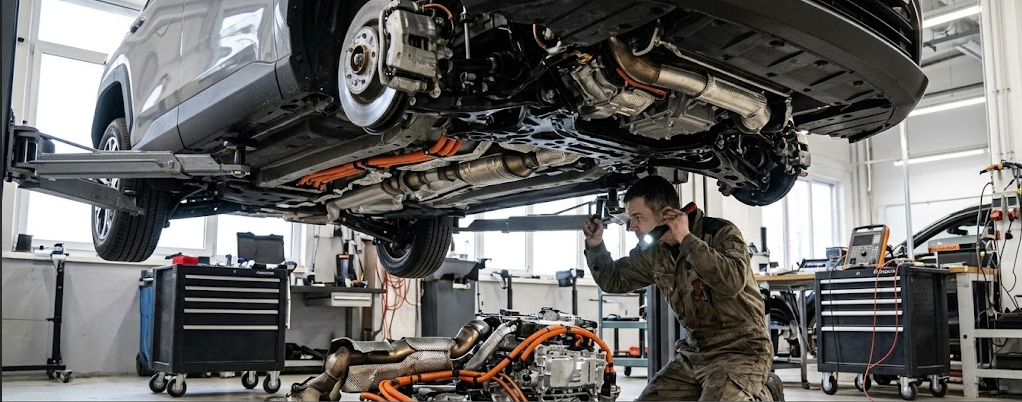
- The Mechanical Mask: PHEVs achieve higher localization figures not because Europe commands superiority in cell chemistry or semiconductors, but because traditional mechanical hardware—internal combustion engines, dual-clutch gearboxes, fuel systems, and exhaust aftertreatment—are historically fabricated within Europe.
- The 15% to 35% Cost Penalty: Squeezed by elevated European industrial electricity tariffs, strict environmental permitting, and higher labor overheads, EU-manufactured automotive components suffer a structural 15% to 35% cost disadvantage against Asian-manufactured counterparts.
- Value-Add & Employment Exposure: CLEPA impact assessments demonstrate that without domestic content quotas, European suppliers risk losing 23% of component value-add per vehicle and forfeiting up to 350,000 skilled jobs to Asia. Conversely, enforcing these quotas forces vehicle manufacturers to absorb the full 15–35% cost premium on domestic assemblies.
- Persistent Bottlenecks in Critical Electrification Hardware: While the baseline 70% threshold is readily satisfied via mechanical components, Europe remains critically dependent on Asian supply chains for traction battery cells, cathode precursors (pCAM), high-voltage Silicon Carbide (SiC) power modules, and heavy rare-earth motor magnets.
3. The Utility Factor (UF) Overhaul, CAFE Penalties, and the "Battery Weight Spiral"
The sharpest financial disruption confronting PHEV manufacturers originates not from trade tariffs, but from the regulatory recalibration of the Utility Factor (UF) formula:
- The Collapse of Official Electric Share: Phased in under Euro 6e-bis (2025/2026) and tightened drastically under Euro 7 (2026/2027), the regulatory reference distance for type-approval testing expands from 800 km first to 2,200 km, and ultimately to 4,260 km. This statistical shift slashes the assumed electric driving fraction of a given PHEV in official test cycles from 84% down to just 44%.
- Surging CO₂ Ratings & Tax Exposure: Plug-in hybrids previously certified at sub-30 g/km on paper are seeing official WLTP ratings surge into the 70 to 100 g/km territory. This exposes automotive groups to punitive multi-billion-euro CAFE fleet emission fines, while stripping commercial buyers of critical fleet tax incentives (such as Germany's 0.5% Dienstwagen tax and UK low-BiK band eligibility).
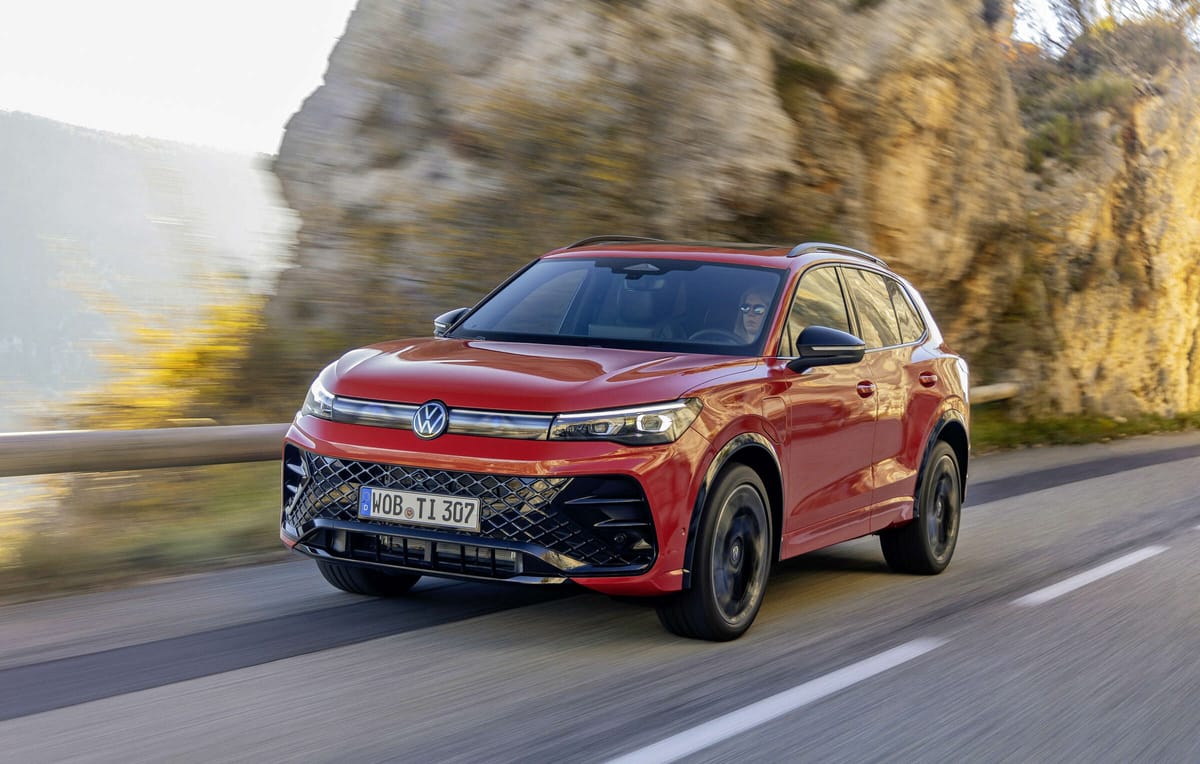
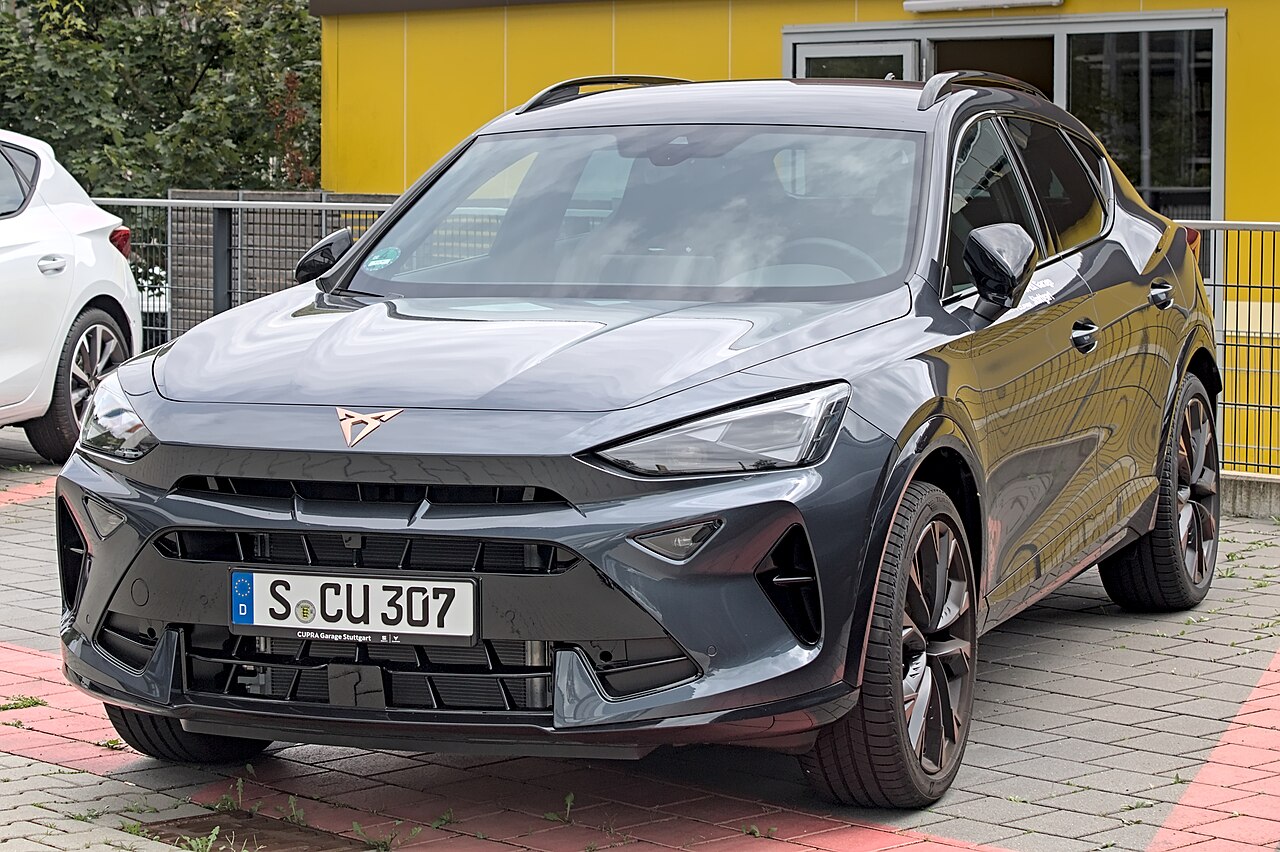
- Mandatory Battery Upsizing: To keep certified emissions below the statutory 50 g/km ceiling, OEMs have been forced to double battery capacities from traditional 10–13 kWh packs up to 20–26 kWh gross (exemplified by the latest Volkswagen Tiguan eHybrid and Cupra Formentor e-HYBRID deploying 25.7 kWh gross / 19.7 kWh net packs to secure 115–125 km WLTP ranges).
- The Compounding Weight and Cost Spiral: Doubling battery capacity triggers cascading engineering costs:
- On-board chargers (OBC) must be upgraded from single-phase 3.7 kW units to 11 kW three-phase AC and 50 kW DC rapid charging hardware,
- Heavier high-voltage cabling harnesses and dual-circuit thermal cooling loops are required,
- Higher curb weights (often exceeding 2,000 kg) necessitate costly structural aluminum castings and composites in chassis crash structures, driving PHEV production costs ever higher.
 2025
Tiguan eHybrid (2024+)
 2024🏆 126 km EV
Formentor 1.5 e-HYBRID 204hp
 2025
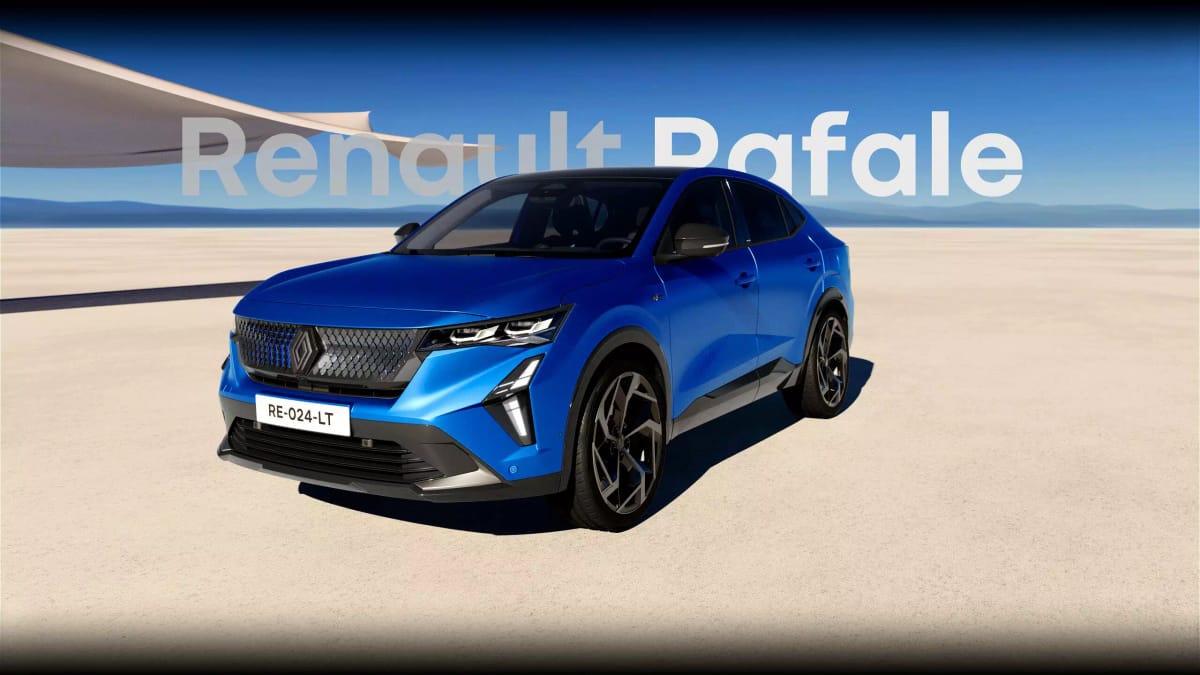
Rafale
4. February 2027 Digital Battery Passports & The Cathode Bottleneck
Under the binding provisions of the EU Battery Regulation (EU 2023/1542), every PHEV traction battery sold across the European single market from February 18, 2027 must carry an auditable Digital Battery Passport:
- The passport mandates full upstream supply-chain due diligence for lithium, cobalt, and nickel mining, verified recycled material thresholds, and cradle-to-gate life-cycle carbon footprint declarations.
- Cheap battery cells manufactured on carbon-intensive, coal-heavy power grids face outright exclusion from European public subsidies due to strict carbon threshold caps.
- However, because European domestic refining capacity for Cathode Active Material (CAM) and precursors (pCAM) remains severely underdeveloped, European automakers remain bound to Eastern European gigafactories operated by Asian cell manufacturers (CATL, LG Energy Solution, Samsung SDI). The IAA’s mandatory technology transfer and 50% EU labor mandates prevent these facilities from operating merely as "screwdriver" assembly hubs, further elevating production expenses.
5. Escaping the Dual-Powertrain Trap: The Rise of Engineering Consortiums
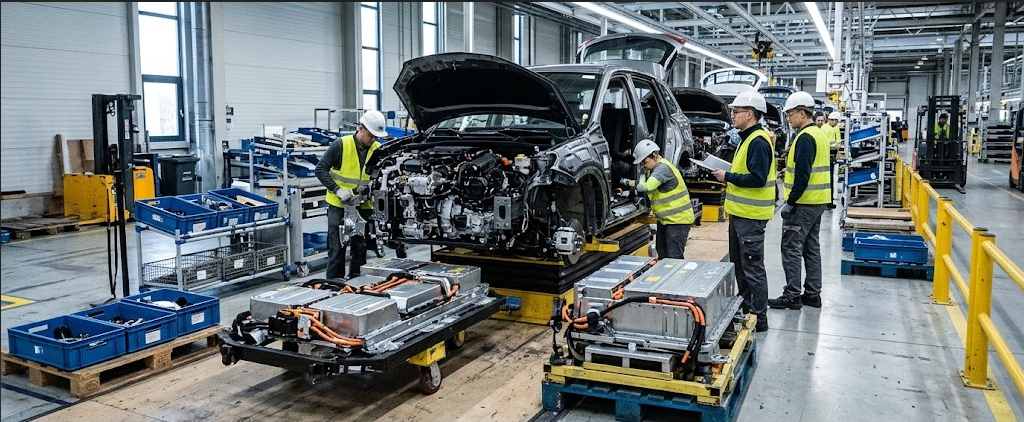
Crushed between a 15–35% European component cost disadvantage and the extreme R&D expenditures required to engineer dual internal-combustion and electric drivetrains, individual automakers can no longer shoulder the engineering bill alone.
- The HORSE Powertrain Paradigm: Established as a shared joint venture between Renault Group, Geely, and Aramco, HORSE Powertrain consolidates powertrain engineering across plants in Spain (Valladolid, Seville), Portugal (Aveiro), Romania (Bucharest R&D), and Turkey (Bursa). It supplies the HR18 hybrid engine, DB45S clutchless multi-mode transmission, and 5DH electric drive units to multiple competing brands.
- Only through massive cross-manufacturer platform alliances and shared scale can automotive groups amortize the dual-powertrain development costs and satisfy the 70% EU domestic content quota without rendering their vehicles commercially unviable.
Verdict: What the Data Mean for the Future of PHEVs
- The Era of Budget PHEVs Is Over: Small-battery (10 kWh) plug-in hybrids equipped with basic 3.7 kW chargers can no longer survive the Euro 6e-bis/Euro 7 Utility Factor calculations or retain enterprise fleet tax exemptions.
- A Political Lifeline Past 2035—At a High Price: The Franco-German push to soften the 2035 zero-emission mandate to a 90% fleet CO₂ reduction ensures that plug-in hybrid architecture will legally survive past 2035. However, bounded by "Made in Europe" sourcing quotas, mandatory Battery Passports, and required 20+ kWh battery packs, PHEVs are no longer a budget compliance stopgap—they are an advanced, heavily regulated, and premium-priced engineering undertaking.
Related Technical Analyses & Comparison Tools:
Stay Ahead on Next-Gen PHEV Releases & OTA Updates
Get notified when new European plug-in hybrid models premiere, along with real-world range benchmarks, battery chemistry insights, and software update breakdowns.
Related Models
Technical specs and live range simulations for models featured in this report
125 km EVTiguan eHybrid (2024+)
126 km EVFormentor 1.5 e-HYBRID 204hp
100 km EV