Volkswagen Tayron eHybrid vs. Škoda Kodiaq iV (2026): 25.7 kWh Battery, 50 kW DC Charging & Family SUV Showdown
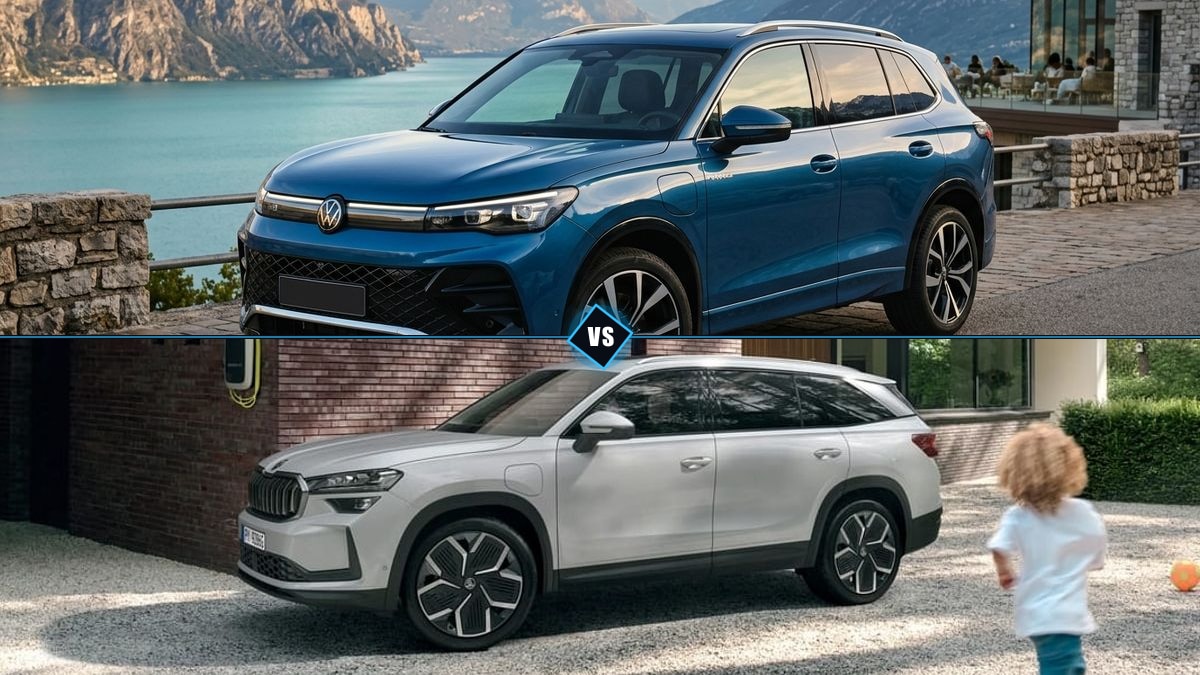
Comparing Volkswagen Tayron eHybrid (116 km) and Škoda Kodiaq iV (123 km) on the shared MQB Evo platform: 25.7 kWh pack, 50 kW DC charging, boot ergonomics, and tax benefits.
Introduction: Two MQB Evo Sibling Giants — Tayron eHybrid vs. Kodiaq iV
The Volkswagen Group's state-of-the-art MQB Evo architecture is resetting expectations across Europe's mid-size and three-row family SUV landscape. Stepping into the shoes of the retired Tiguan Allspace, the all-new Volkswagen Tayron eHybrid and the completely redesigned Czech flagship Škoda Kodiaq iV (2026) bring identical high-voltage engineering wrapped in distinctive styling and brand philosophies.
Both family crossovers feature one of the largest traction battery packs ever fitted to a production D-SUV: 25.7 kWh gross capacity, standard 50 kW DC rapid charging, and an official pure-electric WLTP range spanning 115 to 125 km (71 to 78 miles).
In this comprehensive head-to-head engineering guide, we dissect the shared plug-in hybrid powertrain, examine the aerodynamic factors behind the 116 km vs. 123 km range difference, evaluate boot space practicality, highlight the strict 7-seat packaging limitation caused by the battery, and outline lucrative company car tax savings.
Calculate vehicle tax brackets and annual fleet savings using our PHEV Tax Simulator.
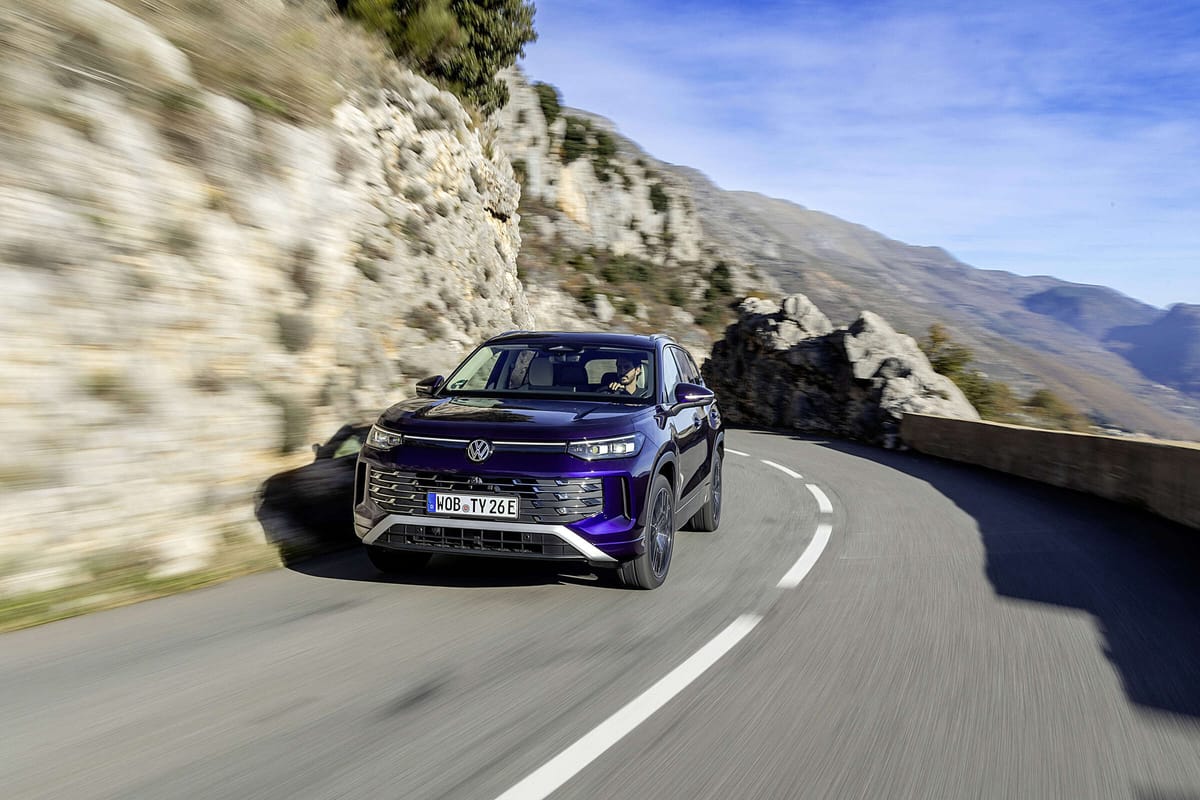 2025
Tayron eHybrid
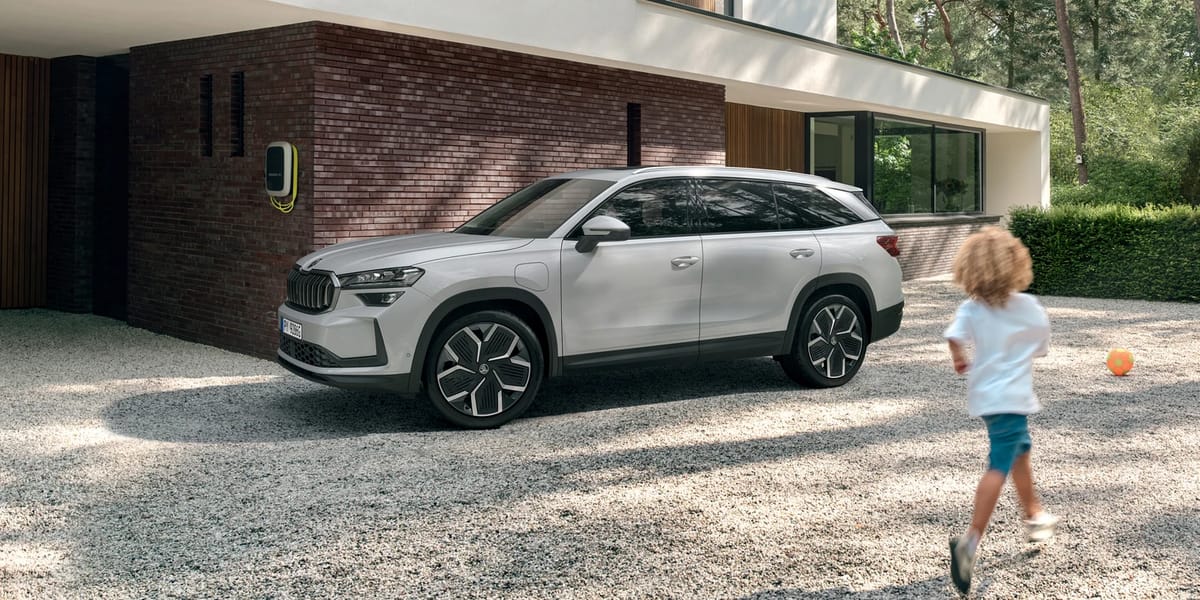 2025🏆 123 km EV
Kodiaq iV (2025)
Shared Powertrain & Battery Architecture: 25.7 kWh Pack & 50 kW DC Fast Charging
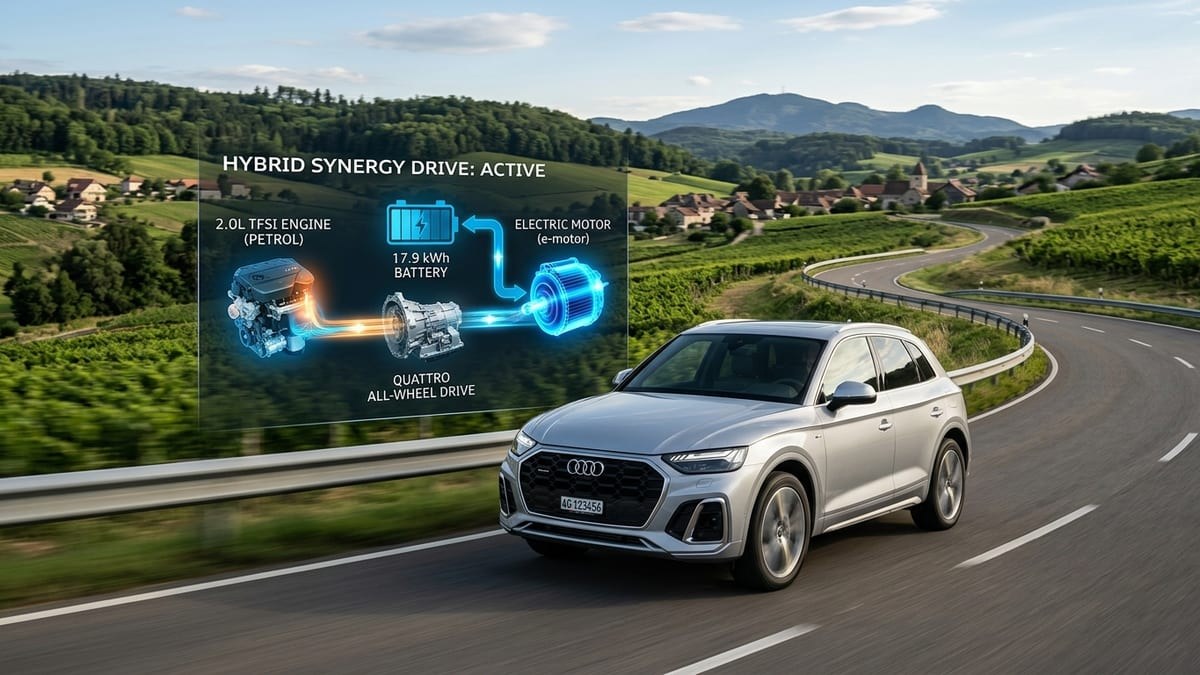
Beneath the bodywork, the Volkswagen Tayron eHybrid and Škoda Kodiaq iV share an identical high-voltage powertrain:
- 1.5 TSI evo2 Turbo Petrol Engine: A 1,498 cc 4-cylinder engine operating on an ultra-clean Miller thermodynamic cycle with variable turbine geometry (VTG), delivering 150 hp (110 kW) and 250 Nm of torque.
- Integrated Electric Motor: An 85 kW (115 hp) permanent-magnet synchronous motor housed directly within the 6-speed dual-clutch e-DSG transmission (DQ400e evo).
- Combined System Output: 204 hp (150 kW) and 350 Nm of torque delivered exclusively to the front wheels.
| Technical Metric & Comparison | Volkswagen Tayron eHybrid | Škoda Kodiaq iV (2026) |
|---|---|---|
| Battery Capacity (Gross / Usable Net) | 25.7 kWh / 19.7 kWh | 25.7 kWh / 19.7 kWh |
| Official WLTP Pure Electric Range | 116 km (72 miles) | 123 km (76 miles) |
| Real Winter Electric Range (-5°C / 23°F) | ~75 – 82 km | ~80 – 88 km |
| DC Fast Charging Power (Peak) | 50 kW (CCS2) | 50 kW (CCS2) |
| DC Rapid Charge Time (10% to 80%) | ~25 minutes | ~25 minutes |
| AC On-Board Charger Capacity | 11 kW (Three-Phase / 16A) | 11 kW (Three-Phase / 16A) |
| AC Full Charge Time (11 kW Wallbox) | ~2.5 hours | ~2.5 hours |
| Boot Space (PHEV Five-Seat Setup) | 705 Litres | 745 Litres |
| Adaptive Chassis Control | DCC Pro (Dual-Valve Dampers) | DCC Plus (Adaptive Dampers) |
Explore in-depth specifications and trims on our Volkswagen Tayron eHybrid and Škoda Kodiaq iV model pages.
[!NOTE]
Motorway Convenience of 50 kW DC Rapid Charging:
While most mainstream plug-in hybrids remain restricted to slow AC charging, the 50 kW CCS2 port on the Tayron and Kodiaq is a transformative road-trip feature. During a routine 25-minute coffee stop at motorway service hubs, drivers can restore 80% State-of-Charge, adding 80 to 90 km of zero-emission cruising. At home or destination chargers, the standard 11 kW three-phase AC unit completes a full charge in just 2.5 hours.
Range, Aerodynamics & Driving Dynamics: 116 km vs. 123 km Breakdown
Despite sharing the exact same 19.7 kWh usable battery and powertrain calibration, the Škoda Kodiaq iV is homologated with a 123 km WLTP range, whereas the Volkswagen Tayron eHybrid posts 116 km (a 7 km variance):
- Aerodynamic Drag Coefficient (Cd): Škoda aerodynamicists streamlined the Kodiaq with active radiator grille shutters, an elongated roof spoiler, and aero-optimized wheel designs, lowering its drag coefficient to 0.282 Cd. The Tayron features an upright front fascia and muscular haunches that result in a slightly higher 0.294 Cd.
- Ride Comfort & Cornering Poise: The Volkswagen Tayron benefits from the latest DCC Pro (dual-valve adaptive damper) system. By independently controlling compression and rebound damping via twin proportional valves, the Tayron controls secondary body pitch and float over undulating tarmac with greater authority. The Kodiaq iV adopts a softer springing rate focused on plush family cruising.
Simulate real-world driving range across various highway speeds and temperature conditions:
What is the Real-World Range of the Volkswagen Tayron eHybrid?
Official WLTP ratings are measured in a controlled 23°C laboratory. Test how winter sub-zero temperatures (-10°C), sustained 130 km/h highway speeds, and terrain elevation impact actual battery range on your specific commute.
Cabin Ergonomics, Boot Space & The 7-Seat Limitation: Practicality for Families
For growing families weighing these two large crossovers, one critical packaging reality must be kept in mind:
[!WARNING]
No 7-Seat Option on Plug-in Hybrid Variants:
While conventional petrol and diesel derivatives of both the Volkswagen Tayron and Škoda Kodiaq offer an optional third-row 7-seat configuration, neither the eHybrid nor the iV can be ordered with 7 seats. Packaging the substantial 25.7 kWh battery pack beneath the luggage floor physically displaces the underfloor folding mechanism required for third-row seating. Both PHEVs are strictly 5-seater vehicles.
Nevertheless, in 5-seat guise, both crossovers deliver vast luggage bays:
- Kodiaq iV: Leads with a cavernous 745 litres of boot capacity, complemented by clever storage solutions like door-mounted umbrellas, bag hooks, and tablet holders.
- Tayron eHybrid: Delivers 705 litres accompanied by a more upscale ambiance, boasting an available 15-inch central touchscreen, illuminated surface decor, and acoustic laminated glass.
Company Car Tax Incentives & Conclusion: Which Family SUV Takes the Crown?
Across Europe's major corporate fleet markets, the Tayron eHybrid and Kodiaq iV qualify for substantial financial perks:
[!IMPORTANT]
0.5% Company Car Tax Advantage (Dienstwagen & UK BiK):
Under German corporate vehicle taxation, plug-in hybrids boasting over 80 km of electric range and under 50 g/km CO2 emissions qualify for the halved 0.5% Dienstwagen tax rate (compared to 1.0% for ICE vehicles). In the UK, low BiK percentage bands generate immense monthly savings for company car drivers.
The PHEVs.eu Verdict:
- Choose the Škoda Kodiaq iV: If your priorities are maximum cargo utility (745 L), the longest electric range (123 km), and better value for money with a price tag approximately €2,500 to €3,000 lower.
- Choose the Volkswagen Tayron eHybrid: If you desire tighter dynamic body control courtesy of dual-valve DCC Pro suspension, a commanding exterior presence, and a more prestigious cabin.
Stay Ahead on Next-Gen PHEV Releases & OTA Updates
Get notified when new European plug-in hybrid models premiere, along with real-world range benchmarks, battery chemistry insights, and software update breakdowns.
Related Models
Technical specs and live range simulations for models featured in this report
116 km EVTayron eHybrid
123 km EV