Official EU Safety Gate Recall for Volkswagen (48VS / KBA 17016R): 2.15M Vehicles Affected — Full Model Breakdown
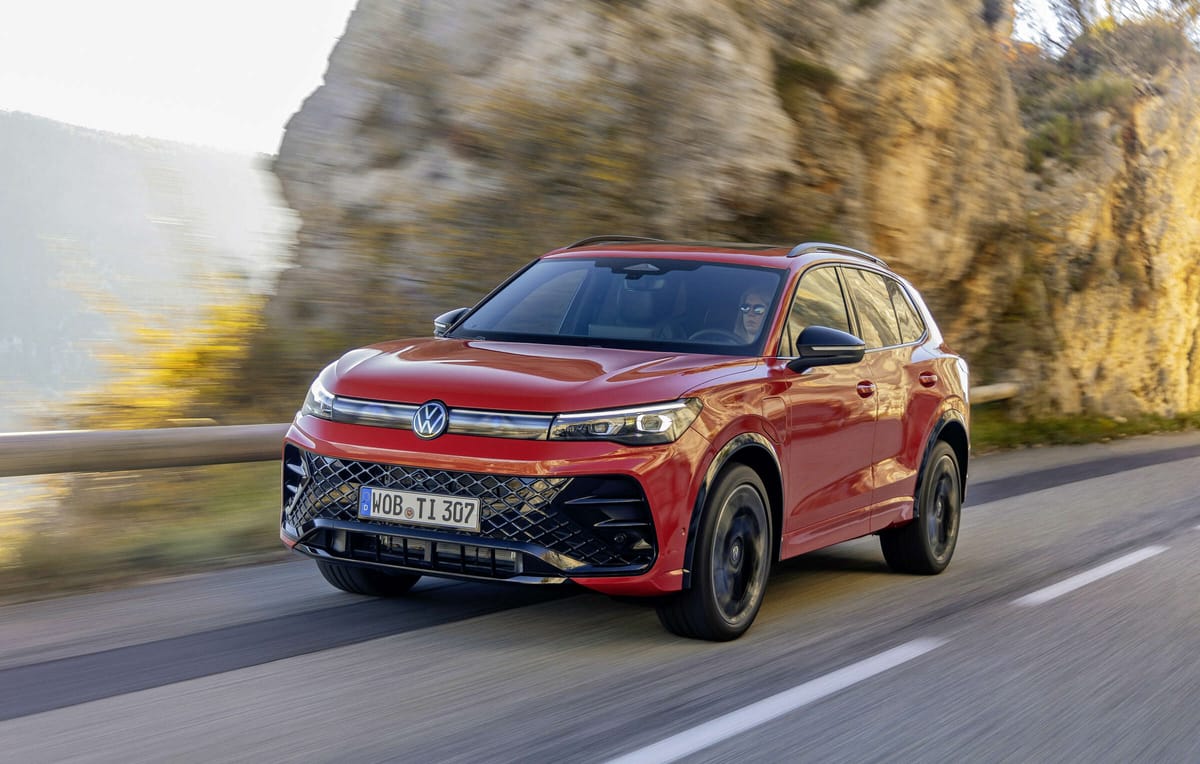
Official EU Safety Gate bulletin SR/02935/26 (KBA 17016R / VW 48VS) covers steering rack bolt shear across 2.15M MQB vehicles. Full model breakdown (Caddy, Golf Variant, Touran, Tiguan) and deep engineering analysis for Tiguan eHybrid.
The European Commission's rapid alert network for dangerous non-food consumer products, Safety Gate (formerly RAPEX), has officially published a massive global safety recall bulletin regarding the Volkswagen brand in its late October 2026 notification round.
Registered under alert reference SR/02935/26 and backed by German Federal Motor Transport Authority campaign KBA 17016R, the action carries Volkswagen's internal technical service recall code 48VS. The campaign covers an astonishing 2.15 million Volkswagen vehicles worldwide (expanding to over 2.8 million vehicles across the broader Volkswagen Group when including mechanically identical models from Audi and SEAT).
[!IMPORTANT]
Executive Summary & Scope Clarification:
While Campaign 48VS spans an extensive 11-year manufacturing window (September 2013 to July 2024) across popular petrol and diesel family and utility models—including the Caddy, Golf Sportsvan, Golf Variant 7, Touran, Tiguan, and Tiguan Allspace—it presents critical engineering implications for the Volkswagen Tiguan eHybrid (5N platform). Due to the substantial additional front-axle curb weight of the plug-in hybrid powertrain, affected eHybrid models generate significantly higher dynamic shear stresses on the steering rack mounting fasteners, accelerating failure risks under environmental road-salt corrosion.
In this exhaustive technical briefing, the PHEVs.eu Engineering Desk breaks down this recall across two key scopes:
- The Broad Scope: Full catalog of all 2.15M affected MQB utility and passenger vehicles, chassis codes, and the metallurgical cause behind the 11-year window.
- The Electrified Deep Dive: Why the Tiguan eHybrid (and platform siblings Audi Q3 45 TFSI e and SEAT Tarraco e-HYBRID) experiences amplified mechanical vulnerability, plus unaffected modern platforms.
Section 1: Official Safety Gate Bulletin (48VS / KBA 17016R) Overview
The table below details the official regulatory metrics filed with European market surveillance authorities:
| Parameter | Official Regulatory Specification |
|---|---|
| Safety Gate Alert Reference | SR/02935/26 |
| Volkswagen Internal Recall Code | 48VS |
| KBA Reference Number | 17016R |
| Submitting Notifying Authority | Federal Motor Transport Authority (Kraftfahrt-Bundesamt — KBA, Germany) |
| Legal Basis | Regulation (EU) 2019/1020 & Directive 2001/95/EC (General Product Safety) |
| EC-Type Approvals Covered | 1T (Touran), 5N (Tiguan / Tiguan Allspace), AUV (Golf Variant / Sportsvan), 2K (Caddy) |
| Production Window | 04 September 2013 – 01 July 2024 |
| Affected Global Volume | ~2,150,000 Volkswagen vehicles (~850,000 registered in EU-27 & EFTA) |
| Total VW Group Volume | >2,800,000 vehicles (including Audi Recall 48LG & SEAT Recall 48T7) |
| Risk Classification | Injuries / Total Loss of Directional Steering Control |
| Remedy Status | Mandatory Safety Recall — 100% Free of Charge to Owners |
The official Safety Gate alert specifically warns:
"Due to corrosion, the bolts securing the steering gear to the subframe may break under load. As a result, the steering gear could become loose or displaced, leading to an unexpected impairment or complete loss of steering control and increasing the risk of an accident."
Section 2: Complete List of All Affected Volkswagen Models (The Broad Scope)
To clear up confusion across European vehicle registries, this campaign is not isolated to one single vehicle line. It encompasses multiple best-selling high-volume vehicles built on the first-generation Modular Transverse Matrix (MQB A1 / MQB A2) platform:
| Model Name | Platform / Type Code | Model Years | Engine & Powertrain Variants Covered |
|---|---|---|---|
| Volkswagen Caddy Mk4 | 2K / SA |
2015 – 2020 | 1.0 TSI, 1.2 TSI, 1.4 TSI, 1.4 TGI (CNG), 1.6 TDI, 2.0 TDI (Panel Van & Kombi) |
| Volkswagen Golf Sportsvan | AUV / 1K |
2014 – 2020 | 1.0 TSI, 1.2 TSI, 1.4 TSI, 1.5 TSI Evo, 1.6 TDI, 2.0 TDI |
| Volkswagen Golf Variant 7 | AUV |
2013 – 2020 | 1.0 TSI, 1.2 TSI, 1.4 TSI, 1.5 TSI Evo, 1.6 TDI, 2.0 TDI, 2.0 TSI R (Estate) |
| Volkswagen Touran Mk2 | 1T |
2015 – 2024 | 1.2 TSI, 1.4 TSI, 1.5 TSI Evo, 1.6 TDI, 2.0 TDI |
| Volkswagen Tiguan Mk2 | 5N |
2016 – 2024 | 1.4 TSI, 1.5 TSI Evo, 2.0 TSI, 2.0 TDI, 1.4 TSI eHybrid (PHEV) |
| Volkswagen Tiguan Allspace | 5N |
2017 – 2024 | 1.5 TSI Evo, 2.0 TSI, 2.0 TDI (Long Wheelbase 7-Seater) |
Why Does an 11-Year Production Window (2013–2024) Exist?
Automotive recalls typically target narrow manufacturing batches lasting a few months. However, Bulletin 48VS covers over a decade of production because this is not an immediate assembly defect or sudden tool calibration error:
- Long-Term Corrosion Fatigue: The failure mechanism relies on slow, progressive environmental degradation.
- Galvanic Interaction: The contact junction between the steel fastener shank and the aluminum subframe casting creates a bimetallic galvanic couple.
- Multi-Season Winter Exposure: Vehicles operating in Northern, Central, and Eastern Europe undergo repeated winter cycles where liquid de-icers (calcium chloride $CaCl_2$ and sodium chloride $NaCl$) seep into the fastener thread interface. The sacrificial surface plating on original fastener batches gradually wears away, initiating stress corrosion cracking (SCC) that takes several years of dynamic road vibrations to propagate into complete shear fracture.
Section 3: The PHEV Engineering Deep Dive (Tiguan eHybrid & Electrified MQB)
While standard petrol and diesel models are vulnerable to bolt fracture over extended timeframes, the Volkswagen Tiguan eHybrid (5N platform) operates under an entirely different mechanical stress regime.
+---------------------------------------------------------------------------------------------------+
|                        MQB FRONT AXLE STEERING GEAR LOAD DYNAMICS                                 |
+---------------------------------------------------------------------------------------------------+
|                                                                                                   |
|    [1.4 TSI EA211 Petrol Engine] + [DQ400e e-Motor (85 kW)] + [Power Electronics / Inverter]      |
|                                                  │                                                |
|                                                  ▼                                                |
|                               Front-Axle Static Load: ~1,180 kg                                   |
|                        (+150 kg to +200 kg vs Conventional 1.5 TSI FWD)                           |
|                                                  │                                                |
|                Dynamic Weight Transfer + Hybrid Regenerative Braking Torque (40 kW)               |
|                                                  │                                                |
|                                                  ▼                                                |
|      +─────────────────────────────────────────────────────────────────────────────────────+      |
|      │        STEERING RACK SUBFRAME MOUNTING BOLTS (Campaign 48VS Failure Point)          │      |
|      │   - Dynamic Cyclic Shear Loads: Elevated by ~22% to 28%                             │      |
|      │   - Galvanic Road-Salt Brine Ingress (CaCl2 / NaCl Electrolyte)                     │      |
|      │   - Stress Corrosion Cracking (SCC) -> Accelerated Fastener Head Shear             │      |
|      +─────────────────────────────────────────────────────────────────────────────────────+      |
|                                                  │                                                |
|                                                  ▼                                                |
|               [Subframe Misalignment / Steering Binding / Loss of Directional Control]            |
|                                                                                                   |
+---------------------------------------------------------------------------------------------------+
1. The Front-Axle Weight Penalty: +150 to +200 kg
In the Tiguan eHybrid, packaging an electrified powertrain within an existing transverse architecture concentrates substantial mass directly over the front subframe:
- DQ400e Hybrid Transmission: Integrates the internal combustion decoupling clutch and a permanent magnet synchronous electric motor (85 kW / 115 PS / 330 Nm) directly inside the transmission bell housing.
- Auxiliary High-Voltage Hardware: The DC-DC converter, pulse-width modulation inverter, and heavy shielded high-voltage orange copper cabling are all mounted directly above the front subframe crossmembers.
- Curb Weight Disparity: A standard Tiguan 1.5 TSI front-wheel-drive registers a front-axle static curb load of approximately 980 kg. By contrast, the Tiguan eHybrid front-axle static load approaches 1,180 kg—a persistent +150 to +200 kg mass penalty acting directly upon the front suspension cradle.
2. Mechanical Shear, Regenerative Torque Transitions & SCC
Steering rack mounting hardware is engineered to withstand lateral cornering loads transferred through the tie-rods. On the Tiguan eHybrid, however, dynamic shear is magnified by hybrid-specific kinematics:
- Regenerative Braking Torque Reversals: Under initial brake pedal depression, the electric motor acts as a high-torque generator (recovering up to 40 kW). This generates sudden forward longitudinal inertial torque across the subframe before mechanical friction brakes clamp down.
- Cyclic Shear Multiplication: Combined with the higher sprung mass, every dynamic braking and turn-in event subjects the steering rack mounting bolts to 22% to 28% higher cyclic shear stress than on a base Golf Variant or Caddy.
- Stress Corrosion Cracking (SCC) Acceleration: High continuous tensile and shear preloads accelerate SCC propagation exponentially. When de-icing salts compromise the zinc surface barrier, micro-cracks form at the bolt thread roots far faster under hybrid load cycles than under standard passenger car duty.
3. Platform Cousins: Audi Q3 TFSI e and SEAT Tarraco e-HYBRID
Because the Volkswagen Group relies on shared platform modularity, this structural vulnerability extends across brand boundaries:
- Audi Q3 45 TFSI e & Q3 Sportback 45 TFSI e: Audi issued official recall 48LG (KBA 17014R). The Q3 plug-in hybrid shares the exact same MQB subframe stamping, steering gear casting, and fastener part numbers.
- SEAT Tarraco e-HYBRID: SEAT issued official recall 48T7 (KBA 17015R). The 7-seater-based electrified SUV carries the identical DQ400e powertrain and steering mounting geometry.
4. Critical Exemptions: What Vehicles Are NOT Affected?
Owners often wonder whether the latest generation models share this risk. The following are fully exempt:
- Volkswagen Tiguan Mk3 eHybrid (2024+): Built on the redesigned MQB evo architecture (incorporating the 1.5 TSI evo2 engine, 19.7 kWh battery, and an overhauled subframe mounting geometry with upgraded metallurgical specifications).
- Audi Q5 50/55 TFSI e: Built on the longitudinal MLB evo platform, which uses an entirely different five-link front suspension and separate steering rack layout.
- Volkswagen Golf 7 GTE (Hatchback): While sharing MQB, the Golf 7 GTE 5-door hatchback used a lighter front subframe configuration not encompassed by the specific type approvals listed under 48VS.
Section 4: What Owners Must Do (Action Guide)
If you own a Volkswagen vehicle manufactured between September 2013 and July 2024—especially a Tiguan eHybrid—take the following structured steps:
Step 1: Verify Your 17-Digit VIN
Locate your Vehicle Identification Number (at the lower corner of the windscreen or on your vehicle registration certificate) and run it through official checking portals:
- Volkswagen Official Service Campaign Checker: Volkswagen Recalls & Service Actions
- German KBA Public Database: KBA Rückruf-Datenbank (Search code 17016R or 48VS).
- National Registration Portals: UK DVLA recall checker, French Ministère de la Transition Écologique, Polish CEPiK, or German TÜV/DEKRA inspection systems.
Step 2: What Happens at the Authorized Dealership?
The remedial procedure is standardized across all authorized Volkswagen service centers:
- Visual & Ultrasonic Subframe Inspection: Technicians hoist the car and inspect the steering gear housing and subframe contact faces for galvanic pitting, displacement marks, or micro-cracks.
- Bolt Extraction & Discard: All factory-fitted steering rack mounting bolts are unthreaded and permanently scrapped.
- Installation of Upgraded Fasteners: Technicians install newly engineered high-tensile steel bolts coated with a superior multi-layer zinc-nickel / zinc-flake anti-corrosion barrier specifically formulated to resist aggressive calcium and sodium road salts.
- Torque-Angle Tightening & Calibration: Fasteners are secured using an updated factory torque-plus-angle tightening sequence. Finally, front-axle geometry is verified and the Steering Angle Sensor (SAS) is recalibrated using ODIS diagnostic systems.
Step 3: Workshop Duration and Cost
- Service Duration: The complete inspection and replacement process requires between 60 and 90 minutes.
- Remedy Cost: In compliance with EU General Product Safety regulations, the campaign is 100% free of charge to the owner, covering all parts, diagnostic hookups, and specialized labor.
Interactive PHEVs.eu Resources for Tiguan eHybrid Owners
Evaluate your vehicle's real-world efficiency and track ongoing manufacturer campaigns:
⚡ Next-Gen Tiguan eHybrid (Mk3 2024+) Range Simulator:
Note: Official recall 48VS applies to pre-July 2024 Mk2 models. This simulator evaluates the latest Mk3 generation (19.7 kWh battery pack):
- Technical Model Overview: Volkswagen Tiguan eHybrid Technical Specs & Battery Degradation
- Direct SUV Head-to-Head: Compare VW Tiguan eHybrid with Rival Plug-in Hybrid SUVs
- Safety Tracker Database: Monitor all European recalls, BMS firmware updates, and TPI service bulletins on our PHEV Software & Safety Tracker.
What is the Real-World Range of the Volkswagen Tiguan eHybrid (2024+)?
Official WLTP ratings are measured in a controlled 23°C laboratory. Test how winter sub-zero temperatures (-10°C), sustained 130 km/h highway speeds, and terrain elevation impact actual battery range on your specific commute.
Stay Ahead on Next-Gen PHEV Releases & OTA Updates
Get notified when new European plug-in hybrid models premiere, along with real-world range benchmarks, battery chemistry insights, and software update breakdowns.
Related Models
Technical specs and live range simulations for models featured in this report
125 km EVTiguan eHybrid (2024+)
125 km EV