Why Did the BYD Sealion 5 Score Only 3 Stars in ANCAP? 2026 Crash Protocols and PHEV Battery Safety
BYD’s new compact plug-in hybrid SUV, the Sealion 5, unexpectedly scored just 3 stars in the 2026 ANCAP crash testing. How did touchscreen-only climate controls, driver monitoring gaps, and a delayed high-voltage battery isolation trigger this rating? Here is the full technical breakdown.
In recent years, BYD has witnessed a meteoric rise across global automotive markets, emerging as a powerhouse in the electric and plug-in hybrid arena. However, the Chinese automaker has just received an unexpected setback in the latest safety rating released by ANCAP (Australasian New Car Assessment Program).
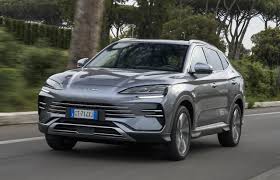
The brand's popular compact plug-in hybrid SUV, sold as the BYD SEALION 5 in Australia and New Zealand (known as the Song Pro DM-i / Sealion 05 DM-i in China and other global markets), scored only 3 STARS in its 2026 safety assessment.
Achieving 5 stars has long been considered an industry baseline and a cornerstone of new car marketing. Missing this mark by two entire stars highlights critical vulnerabilities and delivers urgent lessons for both plug-in hybrid (PHEV) engineering and modern crash assessment protocols.
Why did the BYD Sealion 5 drop to 3 stars? Is it structural failure, or the penalty for the automotive industry's obsession with extreme touchscreen digitalization? Here is the complete technical analysis.
The Strict 2026–2028 Protocol: The Era of Automatic 5 Stars Is Over
Every three years, ANCAP and its European counterpart Euro NCAP dramatically tighten their testing criteria. The 2026–2028 protocols, which took effect at the beginning of 2026, place far harsher demands on in-cabin driver ergonomics, post-crash high-voltage electrical safety, and the real-world competence of Advanced Driver Assistance Systems (ADAS).
The Sealion 5 achieved the following scores across the four assessment pillars:
- Safe Driving (Driver Monitoring & Ergonomics): 48% (5-star threshold is typically 70%)
- Crash Avoidance (AEB & Active Safety): 51% (5-star threshold is typically 70%)
- Crash Protection (Crashworthiness & Occupants): 79% (5-star threshold is typically 80%)
- Post Crash (Rescue Information & Battery Risk): 74% (5-star threshold is typically 80%)
The vehicle failed to clear the minimum score threshold required for a 5-star rating in any of the four key evaluation areas.
1. The "Touchscreen Trap": Absence of Physical Buttons Penalized
The most significant reform in the 2026 guidelines is the aggressive push against driver distraction caused by touchscreen overload. Safety authorities now explicitly recognize that forcing drivers to interact with screens for basic vehicular functions represents an acute collision hazard.
While the BYD Sealion 5 retains physical stalks for wipers, indicators, and a gear selector:
- Climate control fan speed and temperature adjustments,
- Headlight levelling and lighting modes,
- Interior dome lights
are entirely routed through the central touch interface. Forcing the driver to take their eyes off the road during everyday driving scenarios led directly to significant point deductions.
Furthermore, the on-board Driver Monitoring System (DMS), while capable of warning against general drowsiness, failed to detect mobile phone usage and could not execute a safe stopping intervention if the driver became completely unresponsive.
2. High-Voltage PHEV Battery: Delayed Post-Crash Isolation Penalty
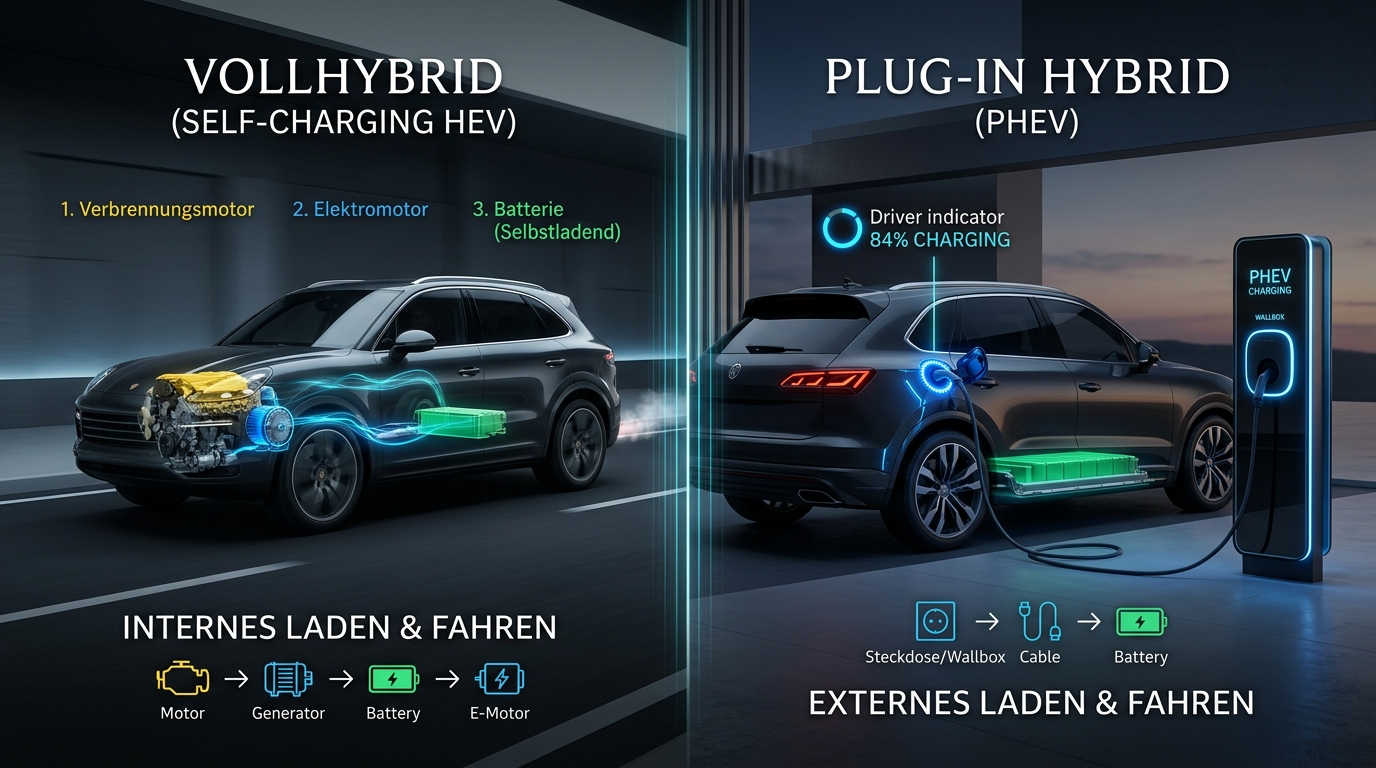
In electrified vehicles, the single most dangerous post-crash risk is an energized 400V/800V battery leaking current into the chassis or initiating thermal runaway. Safety standards require pyrofuses to sever the high-voltage circuit within fractions of a second upon severe impact, discharging voltage down to a safe potential.
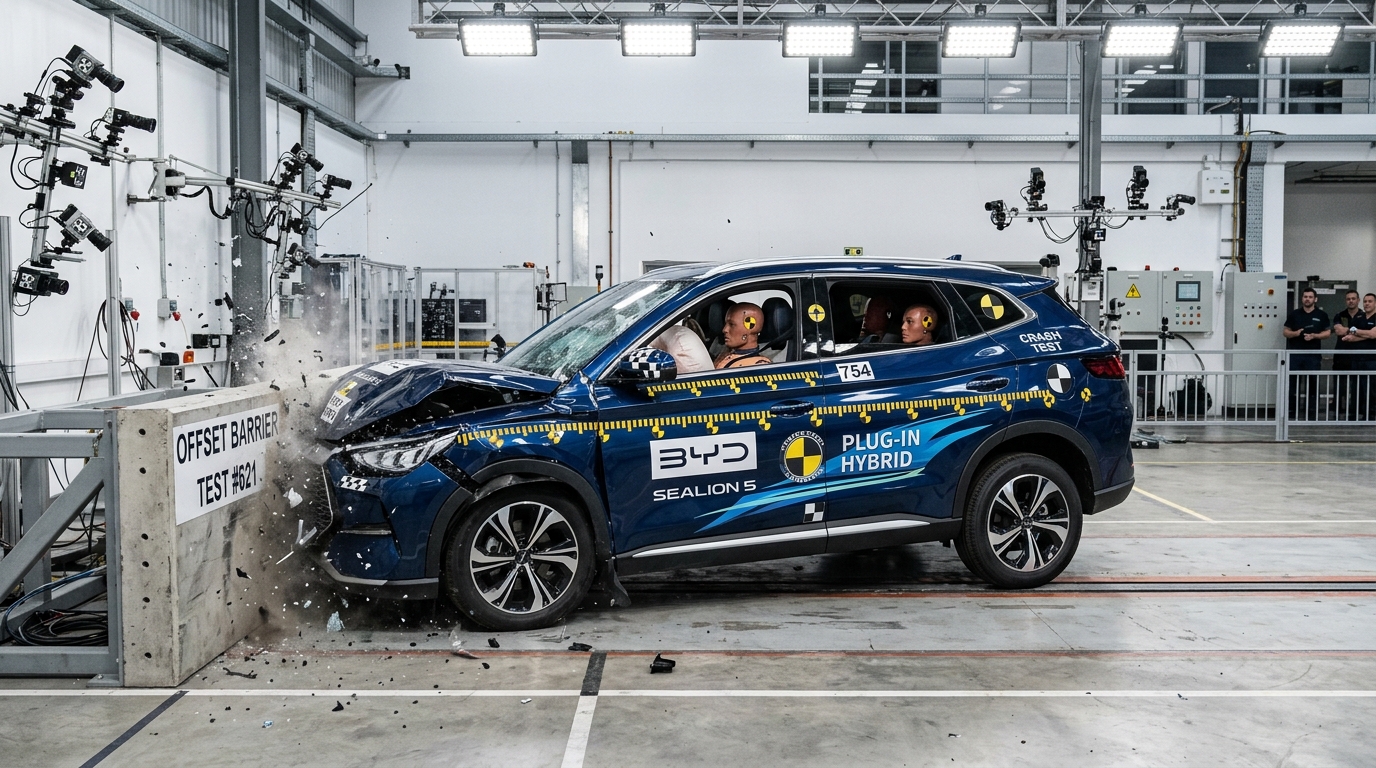
According to ANCAP's test data, the Sealion 5 successfully isolated the battery in three out of four destructive crash tests. However, in the Full-width frontal barrier test, battery voltage did not decrease to the prescribed safety limit within the required timeframe. ANCAP inspectors applied a direct penalty deduction due to electric shock hazard for first responders and occupants.
Compounding this, BYD could not provide engineering verification that the power windows would remain operable if the vehicle became submerged in water, pulling the Post-Crash rating down to 74%.
3. Occupant Protection in Destructive Impact Tests
With a 79% score in Crash Protection, structural integrity remained decent, but several high-risk biomechanical points were noted on crash test dummies:
- Frontal Offset Impact: A high risk of injury was recorded for the driver's chest and lower legs, as well as the front passenger's neck. Rigid dashboard structures beneath the steering column were identified as potential sources of knee and femur trauma.
- Crash Compatibility: The front crash structures of the Sealion 5 were deemed overly aggressive toward oncoming smaller passenger cars in head-on collisions, incurring a compatibility penalty.
- Rollover Curtain Airbag: While oblique pole test protection was adequate, BYD failed to supply documentation proving that the curtain airbags would deploy or stay inflated for the mandatory duration during a multi-axis rollover incident.
4. Active Crash Avoidance Limitations
While Autonomous Emergency Braking (AEB) performed acceptably in straightforward car-to-car rear-end tests, it struggled in complex intersection scenarios:
- Turning across oncoming traffic in front of oncoming cars or motorcyclists,
- Detecting pedestrians while executing a low-speed turn.
Reverse AEB only prevented collisions in a fraction of test runs. Furthermore, at speeds exceeding 70 km/h, the Lane Support System failed to actively steer away from unpaved road edges, capping Crash Avoidance at 51%.
How Does the Seal U (5 Stars) Compare to the Sealion 5 (3 Stars)?
Prospective buyers often ask: "How did the BYD Seal U DM-i score 5 stars in Euro NCAP, while the Sealion 5 only managed 3 stars?"
The difference lies entirely in the Assessment Timeline and Testing Protocol:
- The BYD Seal U was evaluated under the older 2023 protocol, which lacked current penalties for touchscreen ergonomics and high-speed intersection AEB.
- The BYD Sealion 5 is one of the very first vehicles tested under the strict 2026–2028 rules.
Had the older 5-star vehicles been re-tested under today's 2026 criteria, several would have similarly dropped to 3 or 4 stars.
Key Takeaway for PHEV Buyers
The BYD Sealion 5's 3-star rating does not mean the car is structurally brittle, but it represents a watershed moment for the auto industry. Safety agencies are officially pushing back against carmakers replacing cost-effective physical switches with cheap software screens, and deploying ADAS suites that have not been perfected for high-stress driving realities.
When purchasing a modern plug-in hybrid, buyers must look beyond the star count and verify which test year and protocol generated that score. We await BYD's forthcoming software and hardware revisions to see if a re-test will be submitted.